





















There is something quietly satisfying about washing clothes the way people did long before electricity reached every household. A washboard, a sturdy stick, or even a flat river stone can clean a shirt just as well as a machine, and in many cases it does the job using a fraction of the water and none of the electricity.
If you have ever stood in front of your washing machine wondering whether there is a gentler way to handle a small load, the answer is yes, and you may find there is no need to wait for a full drum before you can get your laundry done.
There are tools, techniques, and small workflow adjustments that make hand washing with simple equipment not only doable but genuinely efficient. People have used these methods for centuries, refining them long before detergent bottles had instructions printed on the back, and a surprising amount of that old knowledge still holds up today.

Whether you are trying to cut down your utility bill, living somewhere without reliable electricity, or just curious about a slower, more deliberate way of caring for your fabrics, this guide covers the practical side of things, from tools and setup to the washing technique itself and how to dry everything without undoing all that hard work.
Why Hand Washing Still Makes Sense
Washing machines are convenient, but if you spend a lot of time in the outdoors like me, that convenience is not available most of the time.
Also, if you do the math you realize that a standard top loading machine can use anywhere from 30 to 45 gallons of water per cycle, and even efficient front loaders still need a meaningful amount of water and electricity to heat, agitate, and spin a load. These are carefully considerations if you live off-grid or if you want to save water and cut down on utilities costs.
When you wash by hand with a washboard or a stick, you control the water volume directly, and a single basin can clean several pieces of clothing before it needs to be changed, especially if you wash in stages from lightly soiled items to heavily soiled ones.
There is also the matter of wear and tear on fabric. Machines rely on mechanical agitation that twists and pulls fibers in ways that gradually weaken seams and stretch elastic. Hand washing, done with reasonable care, tends to be gentler on delicate items like wool sweaters, silk blouses, and anything with hand stitching.
People who hand wash regularly often report that their clothes simply last longer, which over time offsets the extra effort with fewer replacement purchases.
Then there is the independence factor. If your power goes out during a storm, if you live off the grid, or if you are traveling somewhere laundromats are scarce, knowing how to wash clothes with nothing but a board, a stick, a stone, and some water gives you a backup plan that never fails. This is a skill that does not depend on infrastructure, and once you learn it, you carry it with you indefinitely.
The Tools: Washboards, Sticks, and Stones Explained
The Washboard
A washboard is a ridged surface, traditionally made from galvanized metal, glass, or wood, mounted on a frame that leans into a basin or tub. The ridges create friction against the fabric, which helps lift dirt and oils out of the fibers when you rub the cloth against the surface. Metal washboards are durable and widely available secondhand, while wooden boards are gentler on more delicate fabrics. If buying one new, look for a stable base and rounded ridge edges so you are not putting unnecessary stress on fabric over repeated use.
Using a washboard properly means working in sections rather than scrubbing the entire garment at once. Concentrate on collar lines, underarms, cuffs, and visible stains first, since these areas need the most friction. The rest usually just needs a quick pass to loosen general grime before rinsing.
The Laundry Stick
A laundry stick, sometimes called a punch dolly or a washing paddle, is essentially a long handle attached to a wider base, often shaped like a small stool with legs or a perforated paddle. You push the stick into a tub of soapy water and clothes, then twist and lift repeatedly. The motion forces water through the fibers under pressure, which does a surprisingly good job of dislodging dirt without any direct rubbing.
This tool spares your hands and back from the bent over posture that washboard scrubbing requires, and it works well for bulkier items like towels, jeans, and bedding. If you do not have a purpose built stick on hand, a sturdy wooden dowel or a broom handle can be adapted for the same plunging motion, provided it is long enough that you are not bending over the tub the entire time.
Stones for Beating and Scrubbing
This is the oldest method on the list, and it is still practiced in many parts of the world along riverbanks and streams. Clothes are soaked, soaped if soap is available, and then beaten against a flat stone or rubbed across a textured rock surface. The technique relies on impact and friction rather than chemical cleaning power, which means it works even without detergent, though a bit of soap helps with oilier stains.
Look for a smooth, flat stone with a slightly textured surface, large enough to hold a folded garment without it sliding off the edges, and avoid sharp or cracked stones that can snag and tear fabric. The beating motion should be controlled, more of a firm tap than a violent swing, especially with anything that has buttons, zippers, or delicate trim.
Setting Up an Efficient Washing Station
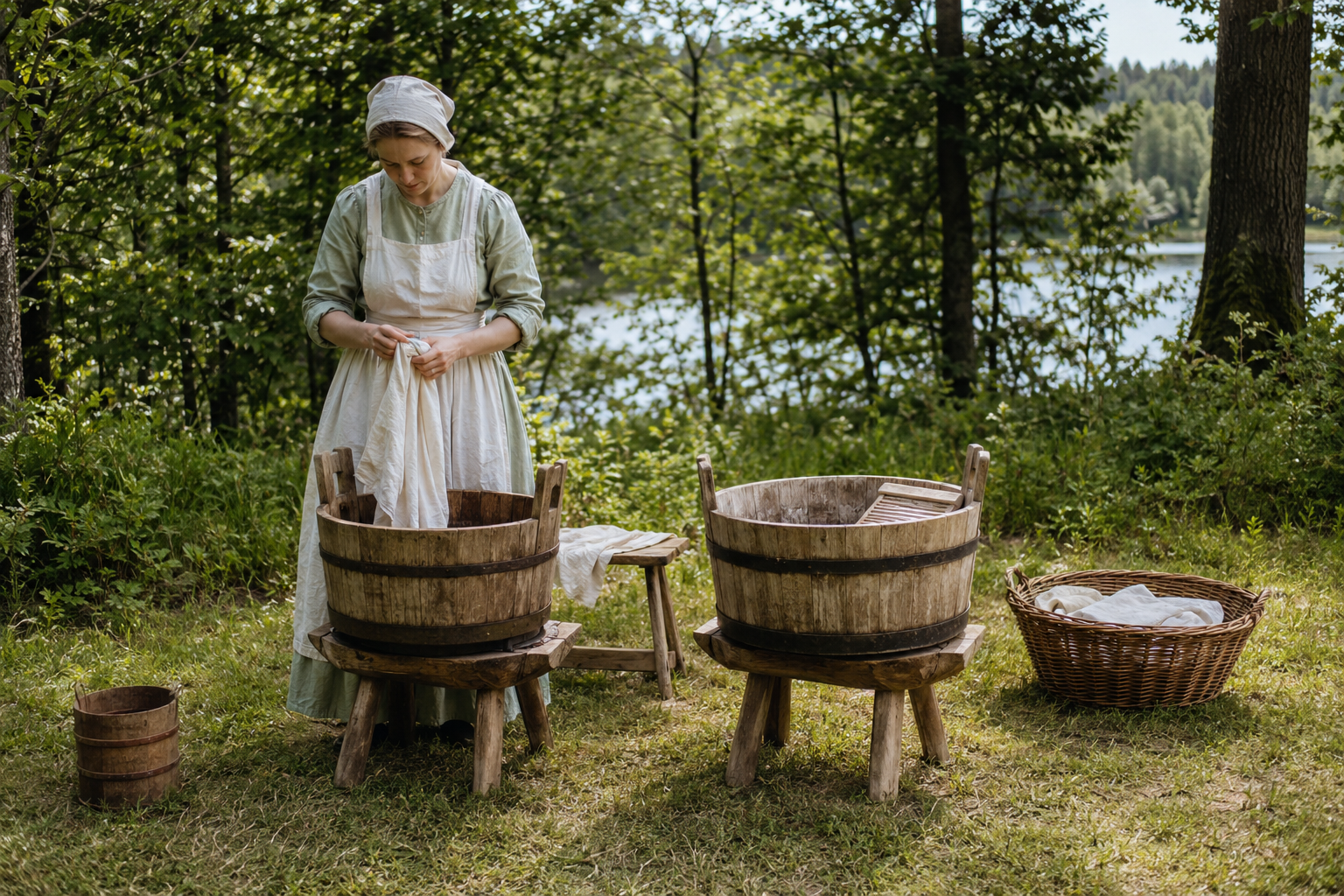
Efficiency in hand washing comes down to layout just as much as technique. Set up three containers if you can manage it: one for the initial soapy wash, one for a first rinse, and one for a final rinse. This staged approach means you are not constantly draining and refilling a single basin, and it lets you reuse water intelligently, since the final rinse water from one load can become the first rinse water for the next.
Position your washboard or stick station at a height that does not force you to hunch over for long periods. A sturdy table, a raised basin stand, or a low stool to sit on can make a real difference over a session that might run thirty minutes or longer. Comfort matters more than people expect, since back strain is the most common complaint among beginners, not tired arms.
Sort your laundry before you start, the same way you would for a machine. Group items by soil level and fabric type, wash the lightly soiled and delicate pieces first while the water is clean, and save heavily soiled work clothes for last, since you will be replacing the water anyway by then.
A Workflow That Actually Saves Water
The biggest water savings come from batching and reuse rather than from using less water in any single step. Start by soaking all your laundry together in one basin for ten to fifteen minutes before you pick up the washboard. Soaking loosens dirt on its own, which cuts down the scrubbing time needed afterward and means you spend less time agitating water you will eventually need to replace.
Once soaking is done, work through items lightest soil to heaviest. Use the washboard or stick only on the parts of the garment that actually need it, rather than scrubbing every inch uniformly. This targeted approach means each piece spends less time in the wash water, which keeps the water cleaner for longer and reduces how often you need to change it.
For rinsing, resist the urge to run fresh water continuously. A two bucket rinse system, where you dunk and wring in one bucket and then do a final dunk in a cleaner second bucket, removes soap residue just as effectively as a running tap and uses a fraction of the water. Wringing thoroughly between rinses matters too, since each twist removes soapy water that would otherwise dilute your rinse bucket and force you to refill it sooner.
Greywater reuse is another angle worth considering if your setup allows it. Rinse water, once free of heavy soap, can often go straight onto garden beds or potted plants instead of down the drain. Just be mindful of what detergent you are using, since some formulas are not plant friendly, and skip this with anything that contained bleach or strong stain removers.
Choosing Soap and Detergent Wisely
Not every detergent behaves well in hand washing. Heavy duty machine detergents are formulated for the mechanical agitation of a drum, and many are slow to rinse out by hand, meaning you end up using more water just clearing the suds. A simple bar soap, a liquid castile soap, or a detergent labeled for hand washing rinses out faster and with less effort.
Dissolve your soap into the wash water before adding clothes rather than rubbing a bar directly onto fabric for everything. Pre-dissolving spreads the cleaning agent evenly, so you need less of it overall and avoid concentrated spots that take extra rinsing to remove. For stubborn stains, rub a small amount of soap directly onto the spot and let it sit a few minutes rather than dumping in extra soap for the whole load.
Drying Without Undoing Your Water Savings
All the water you save during washing means little if you turn around and use a power hungry dryer afterward. Line drying is the natural companion to hand washing and carries benefits beyond saving electricity. Sunlight has a mild bleaching and disinfecting effect that helps with odor and light staining, and air drying is far gentler on elastic and fabric structure than the heat and tumbling of a machine dryer.
Before hanging anything, wring items as thoroughly as you can. Twist the garment into a tight rope and hold that twist for several seconds rather than just giving it a quick squeeze. This removes considerably more water and shortens drying time, which matters if you live somewhere humid or are drying indoors during colder months.
If outdoor drying is not an option, a drying rack near a window or in a well ventilated room works almost as well. Spacing items out so air can move between them speeds up drying considerably compared to piling everything onto one rack, and rotating heavier items like jeans or towels halfway through helps them dry evenly without developing a musty smell from trapped moisture.
Common Mistakes Worth Avoiding
Beginners often scrub too aggressively, assuming more force means cleaner clothes, when excessive scrubbing on a washboard or stone actually wears down fabric and fades colors faster than gentle, repeated friction would. Overloading a single basin is another common mistake, since it prevents water from circulating properly and means clothes near the bottom never really get clean.
Smaller batches, done more frequently, almost always outperform one large overstuffed load. People also tend to underestimate how much soap residue affects the final feel of fabric. Clothes that are not rinsed thoroughly enough can feel stiff or sticky once dry, and over time that buildup can irritate skin, so the extra few minutes for a proper second rinse pays off.

Concluding
After spending dozens of hours with a washboard, a stick, and even a flat stone by the edge of a creek, I have come around to thinking this old approach deserves more credit than it usually gets.
Yes, it certainly takes more physical effort than tossing a load into a machine and walking away, but the tradeoff is real control over water use, gentler treatment of your favorite clothes, and a skill that never depends on having power running through the wall.
Also, the workflow improvements matter just as much as the tools themselves. Soaking first, staging your rinse water, wringing properly, and drying outdoors when you can will save more water than any fancy gadget ever could. There is also genuine value in slowing down and doing something with your hands that connects you to how laundry was handled for most of human history.
And believe me when I say that you do not need to abandon your washing machine entirely and you only need to learn how to wash your laundry without the use of modern appliances for those rare scenarios of “what if”. Even using these methods once a week for delicates adds up over a year and improves your skills. Give it a try with one load before judging the whole approach as “outdated” or “useless” in today’s modern world.
Others Are Watching Now:












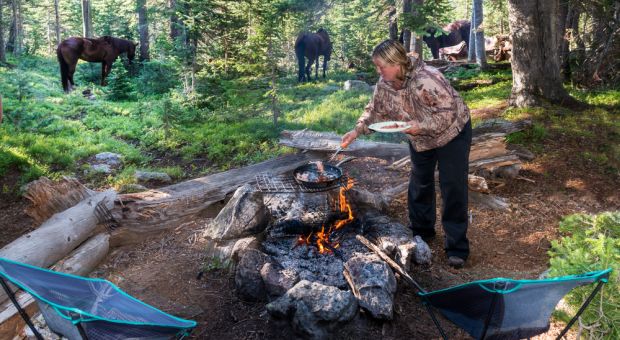









































The camping drier – I have tarp clips. They’re lightweight, strong plastic with long ridges to grip and a thumb screw to tighten it as tight as needed. I can even hang a heavy soaking wet sleeping bag from being washed in strong wind which can’t detach it tied onto strong tree branches, so there’s zero chance it can be blown onto the muddy ground!
I’m one who objects to backpacking heavy as a matter of principle, though I’m athletic and can carry heavy IF I choose, but tarp clips are so very useful in many ways and very lightweight that they’re worth having. There’s the many primitive solutions,but for a $500 GoreTex breathable camouflage suit, the tarp clips don’t damage it at all. They just don’t let go. I even use them to dry things behind the boat going very fast—quite a test. Wet things flapping in the wind will pull off of anything else, but never from tarp clips!