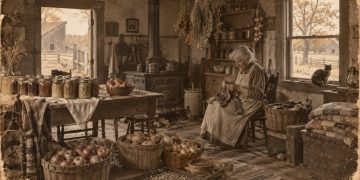










I grew up in a world where grease was something you drained off, wiped out of the pan, and eventually threw away.
The older I get, the stranger that seems.
For most of human history animal fat was valuable. People cooked with it and baked with it. They turned it into candles and soap, greased tools, protected metal, treated leather, and found uses for the parts of an animal that a modern household would send straight to the trash.
A bucket of fat was not waste. It was a household resource.
That is one of those old habits I think preppers should understand, even if none of us are going back to living the way our grandparents did.
Tallow And Lard Are Not The Same Thing
The words get used loosely, but there is a real difference.
Tallow is rendered fat from ruminant animals, most commonly beef. Lard is rendered pork fat.
Both start as raw animal fat heated slowly until the usable fat separates from water, connective tissue, bits of meat and other solids. Once those solids come out, what is left can be a remarkably useful cooking fat.
The quality depends enormously on what you start with. For beef tallow, the hard fat around the kidneys and loins, usually called suet, is especially prized. With pork, leaf fat from around the kidneys produces a particularly mild lard.
Whatever I am rendering, I want it fresh and clean. Blood, meat, membranes and other tissue shorten storage life and push stronger flavors into the finished fat.
So I trim carefully before I ever turn on the heat.
There Are Two Ways To Render It
Dry rendering
This is the straightforward method and the one I would start with.
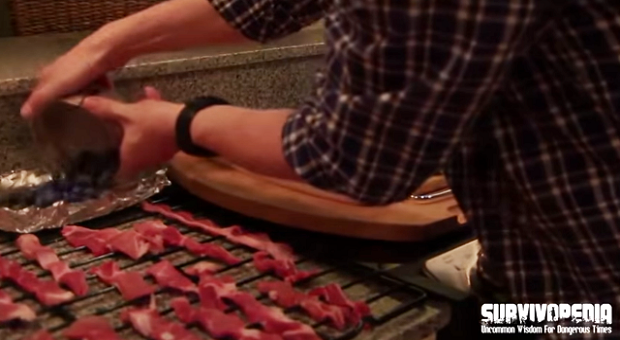
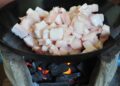
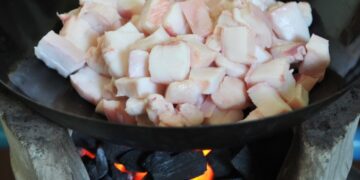
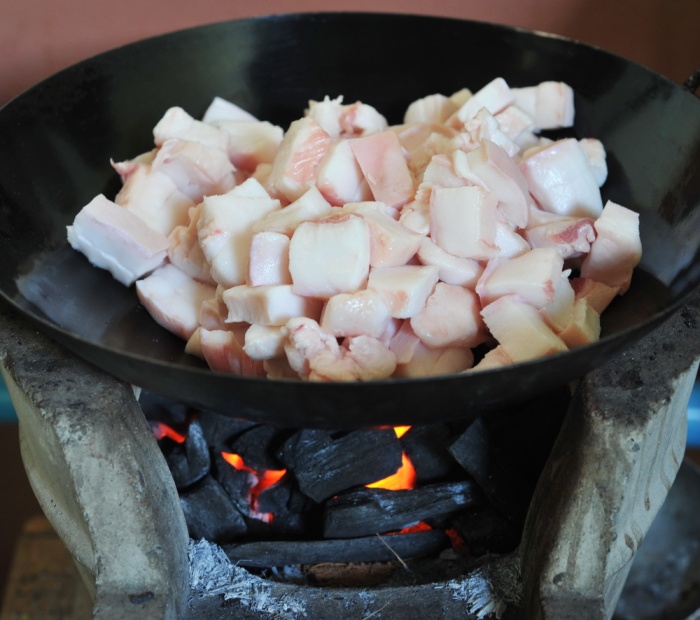
I chop the fat small and put it in a heavy pot, a slow cooker, or a low oven, then heat it slowly. As the fat melts, liquid collects in the bottom and the solid tissue shrinks. What finally remains are the browned pieces usually called cracklings.
The liquid fat gets strained while still warm, through a fine strainer or a cloth, into a clean container. As it cools, beef tallow generally sets firm and pale. Lard tends to stay softer.
Low heat is the whole game here. I am trying to melt fat out of the tissue, not fry the entire batch until it tastes scorched.
Wet rendering
The second method brings water into the process.
The water helps prevent scorching and can carry off some impurities. Once the fat has melted and the mixture cools, the fat separates from the water and lifts away cleanly. Some people run the process more than once to produce a milder, cleaner fat.
The drawback is obvious enough. If I want the fat to keep, I do not want water left in it, so wet-rendered fat has to be separated and dried carefully before it goes into storage.
One practical warning that applies to both methods. You are working with a pot of hot liquid fat, which burns far worse than hot water and holds its heat longer. Any water in a wet render goes in at the beginning, with the fat, never poured into fat that is already hot. Water hitting hot grease turns to steam instantly and throws the grease out of the pot.
Whichever method I use, the goal is the same. Clean fat, with as little meat, debris and moisture left in it as I can manage.
Storage Is Where People Get Too Confident
You will hear it said that properly rendered tallow lasts forever.
I would not plan a pantry around that.
Fat goes rancid eventually. Heat, light, oxygen, moisture and leftover impurities all shorten its useful life. Tallow generally keeps better than lard, because beef fat carries a greater proportion of saturated fats, but neither one deserves careless treatment.
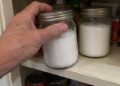
So I pour clean fat into clean containers, cover them tightly, and keep them away from heat and light. For anything I expect to hold onto for a while, I would rather refrigerate or freeze it.
There are plenty of traditional accounts of rendered fat keeping for long stretches in a cool pantry, and very clean tallow genuinely can. But home rendering carries variables a commercial plant does not have.
Did I get every piece of meat out? Did any moisture stay behind? How clean was that jar, honestly? And how warm does that pantry get in July?
I would rather put a few jars in the freezer than find out six months later that the whole batch smells like old paint.
If rendered fat develops a clearly rancid or unpleasant odor, I do not cook with it. That one is not worth debating with yourself.
Cooking Was Only The Beginning
The obvious use was food, and it was not a small thing. Tallow and lard delivered calories at a time when calories were expensive to come by.
Lard went into biscuits, pie crusts, frying pans and breads. Tallow handled frying and roasting. That alone gave a household reason enough to save every bit of it.
But our ancestors had an advantage over us that has nothing to do with skill.
They did not automatically sort everything into separate commercial products. We buy cooking fat in one aisle, candles in another, soap somewhere else, leather conditioner from a specialty shop and rust preventive from a hardware store. Earlier households looked at the material already in their possession and asked what else it could do.
Animal fat answered that question surprisingly often.
Tallow Kept The Lights On
Before cheap petroleum-based candles became common, tallow candles were ordinary household lighting. Rendered tallow was melted and formed around a wick, either by dipping repeatedly or pouring into molds.
They were not luxurious. Tallow candles could smoke, soften in warm weather, and produce a smell that would empty a modern candle shop.
But they made light, and that mattered.
If I kept livestock and had no electric grid, turning a byproduct of meat production into hours of illumination would make complete sense to me.
Today I would reach for LEDs, rechargeable lights and solar charging long before I started dipping wicks. The lesson still stands though. A household material could have a second life when another system failed.
Fat Became Soap
This was the more important transformation, and I would argue the more valuable one.
Animal fat can be combined with a strong alkali through a chemical process called saponification to produce soap. Historically that meant a household could turn fat and lye into something needed for washing clothes, cleaning equipment and personal hygiene.
There is a reason I am not casually handing anybody a kitchen recipe for it.
Traditional soapmaking commonly involves sodium hydroxide or potassium hydroxide, and both can cause severe chemical burns. Measurements, protective equipment, ventilation and proper procedure all matter, and none of that belongs in a paragraph of a magazine article.
But the underlying idea fascinates me.
What looked like a bucket of grease was also potential sanitation. During a long disruption, sanitation becomes a serious problem very quickly, and our ancestors knew how to manufacture part of that system themselves.
Grease Protected Tools
Bare steel and moisture have never been friends.
Before the shelves filled with specialized rust inhibitors, oils and greases did the job. A very thin film of grease isolates steel from moisture and oxygen, which is all rust really needs. Farm tools, blades, fittings and machinery all benefited from some kind of protective coating.
Would I put kitchen tallow on an expensive firearm or a precision tool today?
No. Modern corrosion inhibitors are better designed for that work and far more predictable in how they behave.
But if the choice were bare steel in a wet barn or a light coating of whatever grease was to hand, I understand exactly why earlier generations reached for the grease.
The principle still belongs in preparedness. Clean the metal. Dry it. Protect it.
Fat Could Shed Water
Animal fats also went into traditional mixtures for waterproofing and weather protection. Leather boots, harnesses and working equipment were sometimes treated with fatty or waxy preparations to help repel moisture and keep the material flexible.
Here I would add a modern warning, and a firm one.
I would not take rendered kitchen fat and work it into a good pair of leather boots without knowing exactly what I was doing. Animal fats can oxidize, go rancid, darken the material, attract dirt, and in some cases damage leather over time. Conservators are particularly wary of indiscriminate use of traditional fat-based dressings, and they have good reason to be.
For leather I care about, I use a product formulated for that type of leather.
The historical lesson survives the caveat, though. People maintained things. A pair of boots was expected to last. Tools were kept from rusting, leather was cleaned and conditioned, and nothing was neglected until it failed and then replaced with a button press.
Even The Cracklings Had Value
Rendering leaves behind those browned solid pieces with most of the fat cooked out of them, and even those were not thrown away.
Depending on what was rendered and how it was prepared, people ate the edible ones.
The point was to pull as much value as possible out of an animal that had cost land, feed, time and work to raise.
Modern abundance has made that harder to appreciate. When meat arrives trimmed, wrapped and lit by fluorescent tubes, fat looks like something that got left attached by mistake.
On a farm it looked like stored energy.
One Animal Produced A Shelf Full Of Useful Things
That is what actually interests me about rendering, and it is not nostalgia. I have no desire to give up refrigeration so I can spend my evenings making candles.
What I want back is the mentality. People looked at what they had and tried to use all of it.
Meat became meals. Bones became stock. Fat became cooking grease. Some of that grease became soap, and some of it became light.
Other materials got saved, repaired, reused, and put back into service.
What that produces is a household that needs less from outside, which is the whole point of everything else we do.
Render Fat Once, Just To See It
Not because civilization is about to collapse and we will all be dipping wicks by spring. Because the exercise teaches something an article cannot.
Take a few pounds of clean beef or pork fat. Trim it. Cut it small. Render it slowly, and watch what happens.
A pile of scraps that looked close to worthless turns into jars of usable cooking fat.
Once you have watched that happen with your own hands, you start looking at waste differently. That may be the most valuable part of the whole thing.
Preparedness gets presented as buying more. Our grandparents practiced a different version of it, which was learning to get more uses out of what they already owned.
That old bucket of grease is as good an example as any. It could help cook supper, light a room, make soap, keep tools from rusting, and protect materials a family could not afford to replace.
They did not save fat because they were primitive.
They saved it because throwing away something useful made no sense.
I think we could stand to remember that.
Others Are Watching Now: