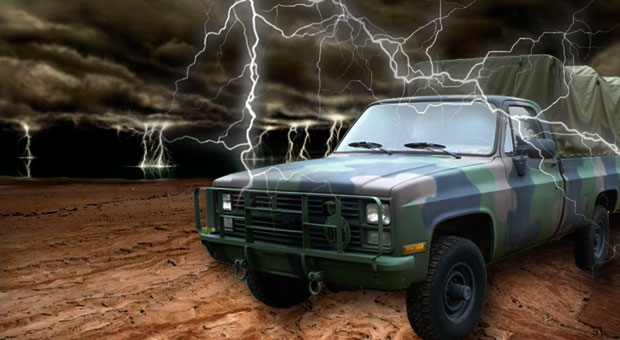












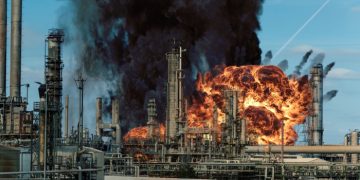



If a major EMP knocked out large parts of the electrical grid tomorrow morning, most Americans would notice within seconds.
The lights would go out. Internet service could disappear, card readers could stop working, and cell networks could become unreliable. Gas stations could lose the pumps that move fuel. Refrigerators would start warming. And if the outage lasted, water systems, stores, warehouses, communications, and transportation could all become much harder to operate.
Now imagine the same morning on an Old Order Amish farm.
Breakfast still needs making. Animals still need feeding. Water still needs moving. Work still needs doing.
The difference is that many of those families already organize daily life around the assumption that electricity from the public grid will not be there.
They are not secretly preparing for an EMP. They simply built their lives around systems that require less of the infrastructure the rest of us take for granted.
There is a great deal a prepper can learn from that.

The Grid Is Already Optional
This is the biggest advantage, and everything else follows from it.
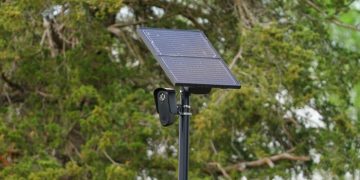
Most Old Order Amish communities do not connect their homes to public utility electricity. That does not mean they reject all electricity. Depending on the community, batteries, solar panels, generators, compressed air, propane, and other technologies may all be in use.
The important difference is not the equipment. It is the dependence.
If my entire household needs constant 120-volt power to function, a grid failure changes everything about my day immediately. If electricity is already something I use selectively, losing the grid removes fewer pieces of ordinary life.
That is the lesson I actually care about. I do not need to become Amish. I do want to know how many important systems in my own house stop working the second the power does, because I suspect most of us have never counted.
It Is A Decision, Not A Rejection
There is a detail here that matters more than any particular piece of equipment, and it is the one outsiders miss most often.
These are not communities that rejected technology in one sweep and stopped thinking about it. Decisions about what to permit are made locally and deliberately, which is exactly why practice varies so much from one settlement to the next. One group may allow something the group down the road does not. The question being weighed is whether a given technology strengthens the household and the community or quietly works against them.
You can disagree with the conclusions and still find the habit worth stealing.
Most of us have never made a single conscious decision about any of this. We adopted whatever arrived, in the order it arrived, and our dependencies assembled themselves while we were looking at something else. A household that asks that question on purpose, even once a year, ends up built very differently from one that never asks it at all.
Food Does Not Live Behind One Cord
Most modern families have several hundred dollars of food sitting behind a single electrical cord. No power means the clock starts running immediately, and everything in that freezer becomes a race.
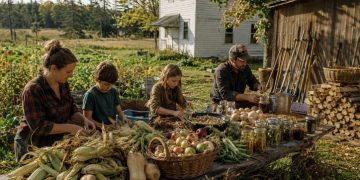
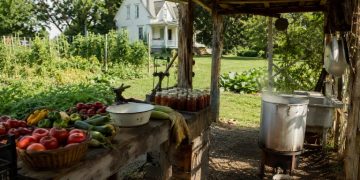
Amish households have traditionally leaned much harder on preservation that does not need an electric freezer. Canned food, dry goods, root-cellar storage, and fermentation can keep a real portion of the household food supply usable without continuous electricity. Some communities also use propane or gas refrigerators, while others rely on ice and other cooling methods.
That gives me an obvious goal, and it is one of the cheapest in preparedness.
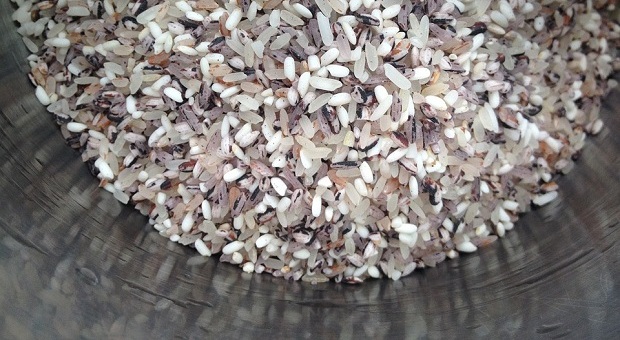
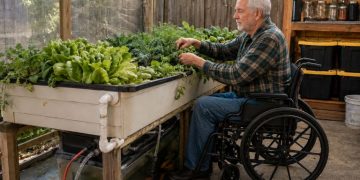
I want enough food living outside the refrigerator and freezer that a long outage does not turn into a scramble to eat everything before it spoils. Rice, beans, canned meat, home-canned food, flour, oats, dried fruit, stored vegetables. Food that sits quietly in the dark until the day I need it and does not care whether the power is on.
Cooking Continues Without An Electric Stove
If your stove, microwave, coffee maker, and toaster all need electricity, meal preparation changes the moment a blackout starts.
Traditional Amish households already run on alternatives. Propane and natural gas appliances are common in some communities, and wood-burning equipment remains in use in others.
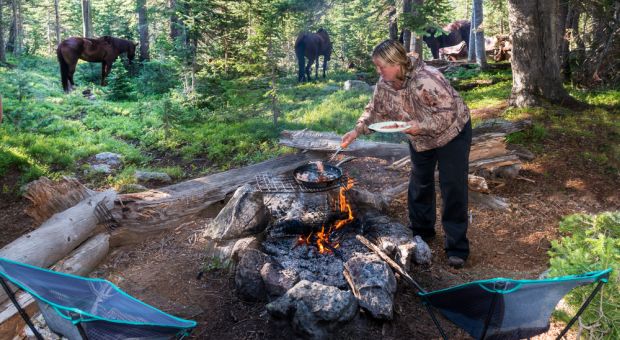
For a prepper, the specific Amish method matters far less than having a tested second method of your own. I want to know exactly how I will boil water and cook a meal if the kitchen goes dark, and I want the fuel for it already stored safely rather than on a shopping list.
That plan has to exist before the outage, because fuel-burning equipment can produce deadly carbon monoxide. Outdoor-only equipment stays outdoors, with no exceptions, and anything used inside has to be genuinely approved for indoor use.
Water Has Its Own Backup System
This is where people sometimes romanticize Amish life a little too much, so it is worth being accurate.
Many Amish homes have plumbing. Many also use pumps, and those pumps may run from batteries, solar systems, small engines, compressed air, or other arrangements permitted locally. An EMP or an equipment failure could absolutely still create problems for them.
But there is a real lesson underneath that.
Their water system often does not depend on the same single grid connection powering everything else in the house. That separation is the part I want to copy.
Stored water gives me one layer. A filter gives me another. A well with an independent pumping option may give me a third. No household should discover during a blackout that losing electricity also means losing every usable gallon of water at the same moment.
Transportation Does Not Begin At The Gas Pump
This is the most visible difference, and also the one most likely to be taken too literally.
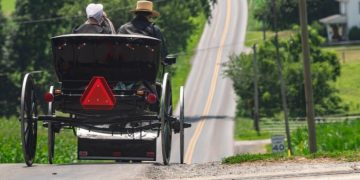
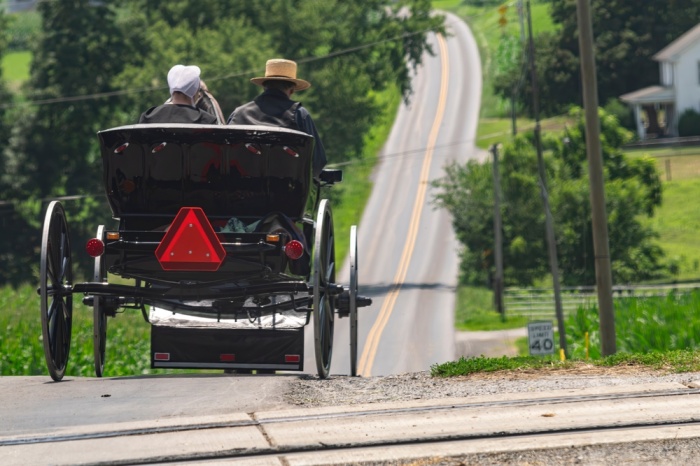
A horse does not need gasoline, and a buggy does not need an electronic control module. Most of us are not about to trade the family pickup for a horse, and I am not suggesting anybody should.
The principle still matters. Our transportation depends on several systems working at once: vehicles need fuel, fuel stations need electricity, modern cars are full of electronics, and road networks increasingly rely on electronic communication and control. The Amish maintain a form of local transportation that sits outside most of that chain.
For me the modern equivalent is far less dramatic. Keep the fuel tank from living near empty. Keep bicycles usable. Know what is genuinely within walking distance of the house, own shoes you could actually walk it in, and know your local roads well enough that you are not helpless without GPS.
Manual Skills Are Still Normal Skills
An EMP would create an unusual problem for most Americans because we have automated so much ordinary work out of our own hands.
The Amish retained far more manual competence as a matter of routine. Repairing equipment, working with hand tools, preserving food, managing animals, growing food, sewing, woodworking, cooking from basic ingredients, and doing all of it without an app narrating each step.
Those skills become a great deal more valuable the moment powered systems stop doing the work for us.
I think every prepared household should deliberately keep some manual skills alive, and use them occasionally rather than just intending to. The tool drawer matters. The knowledge behind it matters considerably more, and unlike the tools, it cannot be bought in an afternoon.
Their Community Is Part Of The Backup
This may be harder to copy than anything else on the list, and it is certainly harder than buying another generator.
Amish families generally live inside dense local networks of relatives, neighbors, church members, businesses, and tradesmen. One person knows woodworking, another repairs equipment, another keeps animals, another grows something you do not. Help does not have to travel across the country before it reaches the farm.
A large infrastructure failure would still hurt an Amish community badly. Stores, outside suppliers, hospitals, hired transportation, and local businesses would all be affected.
But strong local relationships give people more ways to solve a problem without waiting for a distant system to come back. That is preparedness that never appears on a shopping list, which is probably why so few of us work on it.
An EMP Would Still Hurt Them
I am not going to turn this into a fantasy where the Amish wake up after an EMP and barely notice.
They would notice. Some Amish households use batteries, solar equipment, electronic controls, generators, power tools, and telephones. Their businesses depend on outside suppliers. Modern medicine still matters to them. Propane and fuel still have to come from somewhere, and that somewhere is the same strained system everyone else is relying on.
An EMP severe enough to damage national infrastructure would eventually reach almost everybody through shortages, transportation failures, communication problems, and economic disruption. Nobody is sitting outside that.
The difference is the starting point. Many Amish households simply begin with fewer essential functions wired directly to the grid, and that head start is what buys resilience.
I Would Copy The Structure, Not The Lifestyle
I am not going to start driving a buggy. I am not giving up my refrigerator. And I appreciate electricity every single time I flip a switch.
The useful part of this is not imitation. It is a question worth running through the whole house.
Take every essential household function and ask what happens to it without the grid: water, food, cooking, heat, lighting, transportation, communication, and sanitation. Eight items, and most people cannot answer for more than two or three of them.
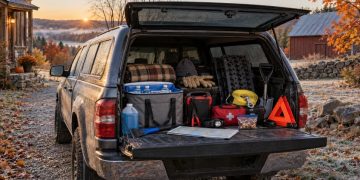
Then give the important ones another way to work. That might mean a water filter, stored food, a wood stove, propane cooking, battery lights, a hand tool, a bicycle, printed maps, some cash, a garden, and a few weeks of supplies that need no outside system to function.
None of that is exotic. It is simply the difference between a house with one point of failure and a house with several ways to keep going.

Prepare For The Outage, Whatever Causes It
Nobody knows exactly how a future EMP would unfold. Even federal planning documents acknowledge real uncertainty about the precise effects on individual devices and on larger infrastructure.
That uncertainty does not bother me much, and I would rather not spend my time arguing about it.
I do not need to know whether the next long blackout arrives from an EMP, a cyberattack, an ice storm, a hurricane, an equipment failure, or something nobody has thought of yet. The cause changes the headlines. It does not change what my family needs on the second morning without power.
That is where I think the Amish have been teaching the rest of us something for generations without ever setting out to. Build a household where losing one system does not mean losing all of them, keep the essential skills and the essential supplies close, know your neighbors well enough to ask for help, and make sure some part of your life still works when the wall outlet does not.
Others Are Watching Now: