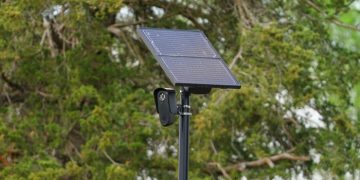


























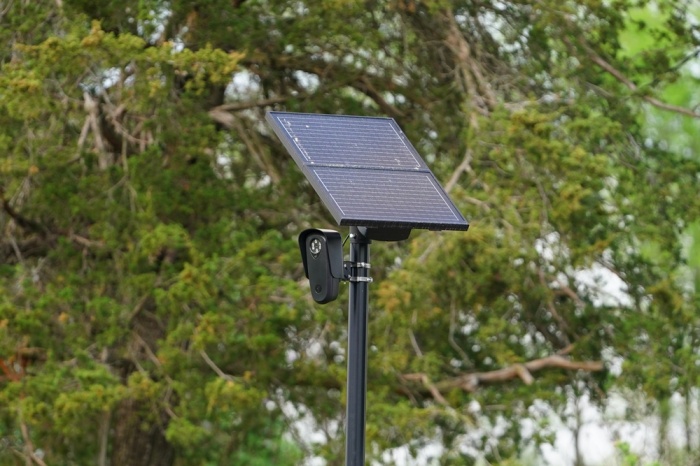
There are cameras appearing along American roads that do not issue speeding tickets and do not care whether you ran a red light.
They are looking at your vehicle instead. The license plate, the make and color of the car, where it was seen, and the exact time it passed.
Most drivers go underneath them without giving them a second thought. I have started giving them considerably more.
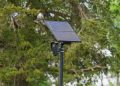
Flock Safety’s license plate reader system is being used by police departments, businesses, neighborhoods, and other organizations across the country. The company says its cameras capture a point-in-time image of a vehicle rather than identifying the driver, and its own policy lists plate images, vehicle images and characteristics, plate number and state, time, date, and camera location among the data collected.
I understand why police departments want that information. What concerns me is what happens when thousands upon thousands of individual observations become searchable together.
This Is More Than A Camera Looking At Traffic
A normal security camera records what happens in front of it. A license plate reader turns what it sees into searchable data, and that is a different kind of tool entirely.
If my truck passes one of these cameras, the useful information is no longer buried somewhere inside hours of video. The plate and the vehicle characteristics can be indexed alongside the time and the location, which makes the system extremely useful when police are searching for a stolen vehicle, a missing person, or a car connected to a serious crime.
It also creates something worth thinking about.
The overwhelming majority of vehicles passing these cameras belong to people who are simply driving to work, taking children to school, visiting family, attending church, going to the doctor, or buying groceries. Their vehicles are recorded too.
One Camera Does Not Concern Me. The Network Does.
This is the part I think changes the discussion. One camera at one intersection produces one observation. Large networks produce patterns.
Civil-liberties groups including the ACLU and the Electronic Frontier Foundation have raised concerns that widespread ALPR networks can allow searches across jurisdictions and reveal a great deal about where a vehicle has traveled. EFF says Flock technology is used by more than 5,000 police departments across 49 states.
Flock rejects the description of its system as mass surveillance. The company says the cameras capture individual vehicle events rather than continuous GPS-style tracking, that customers control sharing, and that private users cannot search law-enforcement data.
Both of those points deserve to be understood properly.
A photograph of my truck passing one intersection is not the same thing as somebody quietly installing a GPS tracker underneath it. But enough searchable observations from enough locations can still reveal a great deal about where a person goes and when.
That is where my concern begins.
The Retention Period Matters
How long these records stay searchable is one of the most important details in the whole arrangement.
Flock previously used a 30-day default retention period. In August 2026 the company announced it was reducing its recommended default to seven days for new law-enforcement customers, while allowing specific evidence connected to investigations to be preserved. Existing customers can keep retention periods their communities already established, and private-sector accounts may operate under different terms.
Seven days is clearly less concerning to me than indefinite storage. But I still want to know what my own town actually chose.
Seven days, or thirty, or longer? Who approved it, who has the authority to extend it, and what happens to a record once it is preserved as evidence?
These should not be technical details that only the vendor and the police department understand. The people whose vehicles are being recorded should understand them too.
Sharing Is Where Local Surveillance Becomes Something Bigger
Suppose my local police department installs cameras because the town has been dealing with stolen cars. That is one decision. Allowing other agencies to search those cameras is a separate decision, and it deserves to be treated that way.
Flock says its customers control data sharing, and it has introduced additional controls allowing agencies to limit the kinds of offenses for which partner agencies can access shared camera networks. It also now requires case codes and stronger auditing for law-enforcement searches.
Those changes tell me something useful. Access controls matter precisely because access itself carries risk.
A system built for catching car thieves can become something much broader once enough agencies are permitted to search it. Information does not stay in the box it was collected for, and the question quickly becomes who should be allowed to use it and for what.
Misuse Is Not A Hypothetical Problem
This is where I stop being comfortable with assurances that only authorized people will use a system properly. People misuse tools. That is not cynicism, it is simply what happens when a powerful capability is handed to a large number of users.
The ACLU and other critics have documented allegations involving inappropriate ALPR searches, cross-state data sharing, stalking, and access for purposes communities did not necessarily expect when the cameras went up. Those concerns became serious enough that the U.S. Senate Judiciary Committee held a hearing on September 23, 2026 titled “Always Watching: Flock’s Nationwide AI Surveillance Network.”
Flock has responded by strengthening audit requirements, requiring multi-factor authentication, adding abnormal-use detection, and introducing controls intended to restrict inappropriate searches and sharing.
I am glad those safeguards exist. I would be more comfortable if strong safeguards had been treated as mandatory from the beginning rather than arriving after the criticism did.
Accuracy Matters Too
A database does not become infallible because a computer created it.
License plates can be misread. Vehicles share colors and models. People borrow cars, cars get sold, and plates get stolen. Any one of those can leave you with a data point that is perfectly accurate while the conclusion drawn from it is completely wrong.
That matters a great deal when automated systems are used to generate investigative leads. I want human judgment sitting between an automated alert and serious government action against somebody.
Technology can narrow a search. It should not replace common sense.
I Want To Know What My Own Town Is Doing
This is where I think preppers should get more involved locally, because this is the level where these decisions are actually made.
I would start by finding out whether my city, county, sheriff’s office, HOA, or neighborhood association uses automatic license plate readers at all. Then I would ask a handful of plain questions: what data is collected, how long it is retained, which agencies can search it, whether federal or out-of-state agencies can reach it, whether searches are audited, whether every search requires a case number or a documented reason, what happens when somebody misuses the system, who approved the contract, and whether the public can see usage and audit statistics without exposing private driver information.
Those are reasonable questions, and the answers should already exist somewhere.
You do not have to hate police to ask them. You do not have to hate technology either.
This Is A Policy Problem, Not A Reason To Play Games With Cameras
I want to be clear about something, because this is where these conversations sometimes go wrong.
Concern about surveillance does not justify damaging cameras, obscuring license plates, interfering with police equipment, or trying to defeat lawful systems. That accomplishes very little and can create serious legal problems of its own.
The proper tools are far less dramatic and considerably more effective. Public-records requests, city council meetings, contract reviews, state privacy laws, retention limits, audit requirements, clear warrant standards where the law requires them, and public debate before a surveillance network becomes permanent infrastructure.
Once thousands of cameras are already installed, every one of those conversations gets harder to have.
Preppers Should Watch Systems That Grow Quietly
I spend a lot of time thinking about systems that become dependencies before most people notice them. Digital identification, cashless payments, centralized records, smart infrastructure, and now increasingly capable surveillance.
Each one may begin with a perfectly reasonable purpose. That does not mean we should ignore what the same system could become after ten years of expansion.
Flock says its technology helps solve crimes and find missing people, and I have no reason to dismiss those benefits. I also do not believe public safety requires citizens to stop asking questions about privacy.
Those two concerns can exist at the same time, and in my experience the people most worth listening to are the ones holding both of them at once.

Pay Attention To The Pole Beside The Road
That is my biggest takeaway from all of this.
Major changes in surveillance almost never arrive with somebody announcing that Americans will now be tracked everywhere they drive. They arrive one camera at a time. One police contract, one neighborhood, one shopping center, one intersection. Then one day we look around and discover that an enormous amount of infrastructure has quietly become normal.
Maybe your community decides the benefits justify it. Maybe it decides stronger restrictions are necessary. Either way, that decision belongs to the community, and it should be made with open eyes rather than discovered after the fact.
I am a prepper because I believe in paying attention to a system before it becomes a problem. Flock cameras deserve exactly that kind of attention, and they deserve it now, while the questions still have somewhere to land.
Others Are Watching Now: