





Survivopedia
  • HOME
  • GENERAL PREP
    • All
    • Disaster Scenarios
    • EMP
    • Natural Disasters
    • Survival News
    • Survival Skills

    The Strangest Things People Stockpiled, And Why They Were Right

    Why I Keep My Whole Backup Kit In One Faraday Dry Bag

    How The Amish Would Handle A Sudden EMP Better Than Most Of Us

    Flock Cameras Aren’t Speed Cameras: What They Record, Keep, And Share

    The First Frost Kit: What Goes In The Truck By Mid-October

    What The Old Women Did Between Harvest And Frost

    Twenty-Five Years Later: Teaching A Generation That Wasn’t There

    The Day Preparedness Changed: What 9/11 Still Teaches Us 25 Years Later

    Mental Walkthroughs: Running Realistic Drills In Your Head Before The Crisis Hits

    • SHTF SCENARIOS
      • Survival Skills
      • Disaster Scenarios
      • Natural Disasters
      • WATER
      • FINANCIAL
      • WAR & CONFLICTS
      • emp
    • EQUIPMENT
      • Bug-Out-Vehicle
      • Firearms
      • COMMUNICATION
    • ENERGY
      • ENERGY
      • Energy Sources
      • Electric Equipments
      • Consumption Control
  • WEAPONS
    • All
    • Cold Weapons
    • Firearms
    • Regulations

    When Chickens, Wood Stoves, And Burn Barrels Become Violations

    Field Reloading

    Field Reloading

    Fully Automatic Firearms? No Thanks!

    Are Alternative Weapons Practical in a Post-Disaster World?

    How To Travel With A Firearm

    The Ultimate Survival Knife: How to Pick the Right One

    A Sharp Edge: Choosing the Best Survival Knife for Prepping and Self-Defense

    Is There a Place for “Fast Draw” in Survival?

    Indispensable Gear for your EDC Core Layer

    • Firearms
    • Cold Weapons
    • Defense
    • Privacy & Data Protection
    • Regulations
  • FOOD
    • All
    • Cooking
    • Farm Animals
    • Farming
    • Food Storage
    • Hunting
    • Plants & Gardening

    Why Your Steak Keeps Getting More Expensive, And Why Prices Won’t Drop Anytime Soon

    Why Our Grandparents Never Threw Away Cooking Fat

    10 Wild Mushrooms Worth Knowing: Food, Health, And Traditional Uses

    Farm Bankruptcies Are An Early Warning

    Export Bans Are The Loudest Signal In Food

    Why So Much Of Your Supply Chain Runs Through A Single Building

    Waist High, No Weeding: Aquaponics For Elderly And Disabled Preppers

    The Hidden Cost Of Inflation: How Shrinking Products Warn You About Scarcity

    7 Survival Foods I Always Keep, And How Much Is Too Much

    • Food Storage
    • Cooking
    • Farm Animals
    • Hunting
    • Plants & Gardening
  • Store
  • Newsletter
No Result
View All Result
Survivopedia
No Result
View All Result
Home WATER

Why Safe Water May Be The Most Important Thing I Store

If you asked me to choose between another case of food and another reliable source of safe water, I would take the water first.

Food is the easy one, because people see an empty pantry and understand the problem immediately. Water is different because we are surrounded by it. It comes out of the faucet, sits in the water heater and falls out of the sky, and after a flood there is water everywhere you look.

Almost none of that guarantees I can safely put it into my family’s bodies, and safe water has jobs all over this house that go uncounted until the tap stops being trustworthy.
Drinking Is Only The First Job

How much water a person needs is not a fixed number. Heat, hard work, fever, vomiting, diarrhea, pregnancy, nursing and age all push the requirement up.

CDC’s guidance is to store at least one gallon per person per day for three days, and to try for a two-week supply if you can manage it. It also says to store more for pregnant women, people who are sick, pets, or households in a hot climate. Four people at a gallon each is twelve gallons for three days, and fifty-six gallons for the two weeks.

That gallon is also supposed to cover more than drinking. A shelf of rice, beans, oats and dehydrated meals is really a shelf of things that need water added before anybody eats, so some emergency foods quietly increase what a household needs. And I do not want to spend my last bottled water rehydrating dinner.

People also remember not to drink from the tap during a boil-water notice, then brush their teeth with it. CDC’s list of things not to do with unsafe water covers drinking, brushing teeth, washing dishes, washing or preparing food, washing hands, making ice and making baby formula. A household can improvise many things in an emergency, and the water used to feed a baby is not one of them.

Not every job needs drinking-quality water, and CDC notes that water unsafe to drink can sometimes be used for bathing. So I reserve the treated supply for anywhere there is a real route into the body: food, the mouth, open wounds and medical equipment.

Once I understood that, I stopped treating a water filter as camping gear.

Medicine And Wounds Both Run On Clean Water

Swallowing tablets takes water, and so does mixing powdered medication and helping somebody feverish drink enough to stay ahead of what he is losing. If a person has vomiting or diarrhea during a disaster, dehydration becomes a second emergency on top of the first one.

Disasters also produce cuts, since storms leave broken glass and cleanup brings nails, splinters and scrapes from debris.

Open wounds exposed to contaminated water can become infected, and CDC’s guidance is to avoid contact with flood water, salt water or brackish water if you have an open wound, including cuts and scrapes. Keep wounds clean with soap and clean water, cover them with a waterproof bandage, and get medical attention if redness, swelling or oozing appears.

A Flood Can Surround The House And Still Leave You Short

Flooding shows why treatment capability matters more than volume, because water can stand in the yard while safe water becomes the scarcest thing here.

Floodwater may carry sewage, animal waste, chemicals, fuel and microorganisms. A private well that was good yesterday may not be safe after being inundated, and appearance tells you almost nothing, because clear water can still be loaded with dangerous organisms.

The other half of the problem is electricity. Pumping, treatment and pressure all draw power, so after a hurricane the pumps may be down, the mains damaged and the roads closed to deliveries. Cold weather does the same with frozen pipes and pumps that stop when the power does, and on a private well I can have hundreds of gallons underneath this property and no way to reach it.

That is when a gravity filter, or any method that works without an outlet, earns its place. I cannot substitute coffee or canned soup indefinitely for safe water.

Know What To Look For On The Label

CDC is more specific about filters than most packaging, and its advice amounts to a shopping list.

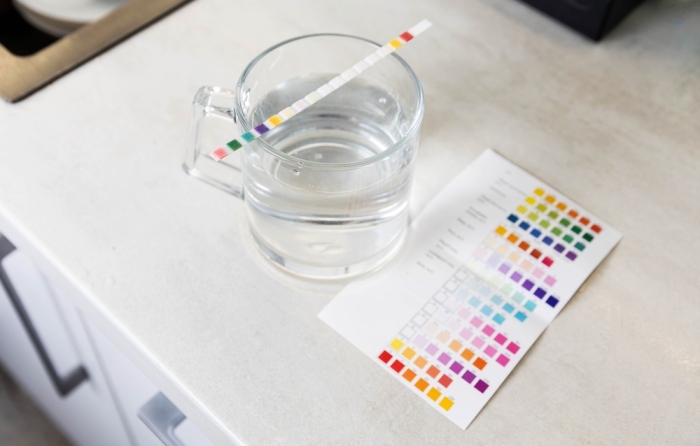
For parasites such as Giardia and Cryptosporidium, it says to look for a filter certified to NSF standard 53 or 58 for cyst reduction, or an absolute pore size of one micron or smaller, or reverse osmosis. CDC stresses that word absolute, because a filter advertising a nominal or mean pore size of one micron can still let larger particles through. That distinction separates serious equipment from the cheap end of the shelf.

Bacteria call for an absolute pore size of 0.3 micron or smaller. Viruses are the one thing an ordinary filter will not catch, which is why CDC recommends adding a chemical disinfectant after filtering. The better answer is a grade up, because a product certified to NSF/ANSI P231 is tested as a microbiological purifier against the EPA guide standard of six-log bacteria, four-log virus and three-log cyst reduction.

Chemicals are not the blind spot people assume either, since NSF standard 53 covers lead, mercury, VOCs and asbestos.

What no household method handles is water carrying fuel, toxic chemicals or radioactive material. You cannot make that safe by boiling or disinfecting it, and EPA says the same of heavy metals and salts. That is not a filter shortcoming but a limit on every method in the house, and the answer is a different source.

So I read the label, and I run layers: stored water for the first hours, a certified filter for the long middle, and disinfection if I am drawing from anything that may have met sewage.
Food Keeps Me Fed. Safe Water Keeps The House Working.

Water is not one category of preparedness alongside the others, because it runs underneath nearly all of them. Medical care, food storage, sanitation and infant care all need it. Illness and heat make us need more, floods contaminate it, outages stop it, and an injury turns the absence of clean water into an infection problem.

I still store food, keep medical supplies, and prepare for heat, cold, outages and storms. Underneath almost all of those plans is the same unmentioned requirement.

Give me a supply of water I can trust, and I can solve a surprising number of the problems that come after it.

Others Are Watching Now:

Resources

CDC. How to Create and Store an Emergency Water Supply.
https://www.cdc.gov/water-emergency/about/how-to-create-and-store-an-emergency-water-supply.html

CDC. How to Make Water Safe in an Emergency.
https://cdc.gov/water-emergency/about

CDC. Guidelines for Personal Hygiene During an Emergency.
https://www.cdc.gov/water-emergency/safety/guidelines-for-personal-hygiene-during-an-emergency.html

CDC. A Guide to Water Filters.
https://www.cdc.gov/parasites/crypto/gen_info/filters.html

EPA. Emergency Disinfection of Drinking Water.
https://www.epa.gov/ground-water-and-drinking-water/emergency-disinfection-drinking-water

ShareTweet
Darren Kelburn

Darren Kelburn

Darren Kelburn is a hands-on experimenter and backyard problem-solver who writes about practical self-reliance. When he’s not testing small-scale food or power systems, he’s usually fixing something around the house or hiking local trails with his family.

Leave a Reply Cancel reply

Your email address will not be published. Required fields are marked *

  • Trending
  • Comments
  • Latest
How To Make Pemmican, The Ultimate Survival Food (Video)

How To Make Pemmican, The Ultimate Survival Food (Video)

January 12, 2026

How the Amish Would Respond to Grid Down

November 17, 2025
Top 10 Vehicles For Your EMP Survival

Top 10 Vehicles For Your EMP Survival

May 19, 2026
Chloroform

How To Make Chloroform For Survival

October 13, 2025
The Ugly Part of Water Purification: Top 5 Mistakes You Make
The Ugly Part of Water Purification: Top 5 Mistakes You Make
September 29, 2025

How to Preserve Eggs Like the Pioneers Did

How to Preserve Eggs Like the Pioneers Did

October 14, 2025

Top 6 Survival Rifles And Why You Need One

Top 6 Survival Rifles And Why You Need One

429
Top 5 Bug Out Locations In The US

Top 5 Bug Out Locations In The US

257
Top 10 Vehicles For Your EMP Survival

Top 10 Vehicles For Your EMP Survival

162
10 Items You Need To Hoard

10 Items You Need To Hoard

148
How To Store Flour, Sugar And Rice For Survival

How To Store Flour, Sugar And Rice For Survival

141
alaska landscape

A Prepper’s Story: Headed To Alaska To Survive Off-grid

118

Why Safe Water May Be The Most Important Thing I Store

November 5, 2026

Why Your Steak Keeps Getting More Expensive, And Why Prices Won’t Drop Anytime Soon

November 3, 2026

Why Our Grandparents Never Threw Away Cooking Fat

November 2, 2026

Keeping Peace At The Table Through The Midterms

October 30, 2026

The Strangest Things People Stockpiled, And Why They Were Right

October 30, 2026

The Forgotten Healing Uses of Passover’s Bitter Herbs

October 29, 2026

No Result
View All Result


  • Privacy Policy
  • Terms&Conditions
  • Contact
  • Newsletter

© 2026 SURVIVOPEDIA

No Result
View All Result
  • HOME
  • GENERAL PREP
    • SHTF SCENARIOS
      • Survival Skills
      • Disaster Scenarios
      • Natural Disasters
      • WATER
      • FINANCIAL
      • WAR & CONFLICTS
      • emp
    • EQUIPMENT
      • Bug-Out-Vehicle
      • Firearms
      • COMMUNICATION
    • ENERGY
      • ENERGY
      • Energy Sources
      • Electric Equipments
      • Consumption Control
  • WEAPONS
    • Firearms
    • Cold Weapons
    • Defense
    • Privacy & Data Protection
    • Regulations
  • FOOD
    • Food Storage
    • Cooking
    • Farm Animals
    • Hunting
    • Plants & Gardening
  • Store
  • Newsletter

© 2026 SURVIVOPEDIA