





Survivopedia
  • HOME
  • GENERAL PREP
    • All
    • Disaster Scenarios
    • EMP
    • Natural Disasters
    • Survival News
    • Survival Skills

    What The Old Women Did Between Harvest And Frost

    Twenty-Five Years Later: Teaching A Generation That Wasn’t There

    The Day Preparedness Changed: What 9/11 Still Teaches Us 25 Years Later

    Mental Walkthroughs: Running Realistic Drills In Your Head Before The Crisis Hits

    Infrastructure On The Edge: Bridges, Dams, And Grids That Are Past Their Expiration Date

    Seasonal Rhythms: How Native, Pioneer, And Amish Families Planned Their Year

    The 5 Injuries You’ll Actually See After A Disaster

    Emergency Declarations That Never End: How To Live Under Permanent Temporary Rules

    Emergency Declarations That Never End: How To Live Under Permanent Temporary Rules

    A Digital Fast For The Whole Family: Unplugging To Reconnect

    • SHTF SCENARIOS
      • Survival Skills
      • Disaster Scenarios
      • Natural Disasters
      • WATER
      • FINANCIAL
      • WAR & CONFLICTS
      • emp
    • EQUIPMENT
      • Bug-Out-Vehicle
      • Firearms
      • COMMUNICATION
    • ENERGY
      • ENERGY
      • Energy Sources
      • Electric Equipments
      • Consumption Control
  • WEAPONS
    • All
    • Cold Weapons
    • Firearms
    • Regulations

    When Chickens, Wood Stoves, And Burn Barrels Become Violations

    Field Reloading

    Field Reloading

    Fully Automatic Firearms? No Thanks!

    Are Alternative Weapons Practical in a Post-Disaster World?

    How To Travel With A Firearm

    The Ultimate Survival Knife: How to Pick the Right One

    A Sharp Edge: Choosing the Best Survival Knife for Prepping and Self-Defense

    Is There a Place for “Fast Draw” in Survival?

    Indispensable Gear for your EDC Core Layer

    • Firearms
    • Cold Weapons
    • Defense
    • Privacy & Data Protection
    • Regulations
  • FOOD
    • All
    • Cooking
    • Farm Animals
    • Farming
    • Food Storage
    • Hunting
    • Plants & Gardening

    Export Bans Are The Loudest Signal In Food

    Why So Much Of Your Supply Chain Runs Through A Single Building

    Waist High, No Weeding: Aquaponics For Elderly And Disabled Preppers

    The Hidden Cost Of Inflation: How Shrinking Products Warn You About Scarcity

    7 Survival Foods I Always Keep, And How Much Is Too Much

    Seasonal Rhythms: How Native, Pioneer, And Amish Families Planned Their Year

    The Summer Kitchen: Cooking All August Without Heating Your House

    Losing The Harvest: Native, Pioneer, And Amish Responses To Crop Failure In The First 72 Hours

    Generosity From The Stockpile: Giving Without Gutting Your Reserves

    • Food Storage
    • Cooking
    • Farm Animals
    • Hunting
    • Plants & Gardening
  • Store
  • Newsletter
No Result
View All Result
  • HOME
  • GENERAL PREP
    • All
    • Disaster Scenarios
    • EMP
    • Natural Disasters
    • Survival News
    • Survival Skills

    What The Old Women Did Between Harvest And Frost

    Twenty-Five Years Later: Teaching A Generation That Wasn’t There

    The Day Preparedness Changed: What 9/11 Still Teaches Us 25 Years Later

    Mental Walkthroughs: Running Realistic Drills In Your Head Before The Crisis Hits

    Infrastructure On The Edge: Bridges, Dams, And Grids That Are Past Their Expiration Date

    Seasonal Rhythms: How Native, Pioneer, And Amish Families Planned Their Year

    The 5 Injuries You’ll Actually See After A Disaster

    Emergency Declarations That Never End: How To Live Under Permanent Temporary Rules

    Emergency Declarations That Never End: How To Live Under Permanent Temporary Rules

    A Digital Fast For The Whole Family: Unplugging To Reconnect

    • SHTF SCENARIOS
      • Survival Skills
      • Disaster Scenarios
      • Natural Disasters
      • WATER
      • FINANCIAL
      • WAR & CONFLICTS
      • emp
    • EQUIPMENT
      • Bug-Out-Vehicle
      • Firearms
      • COMMUNICATION
    • ENERGY
      • ENERGY
      • Energy Sources
      • Electric Equipments
      • Consumption Control
  • WEAPONS
    • All
    • Cold Weapons
    • Firearms
    • Regulations

    When Chickens, Wood Stoves, And Burn Barrels Become Violations

    Field Reloading

    Field Reloading

    Fully Automatic Firearms? No Thanks!

    Are Alternative Weapons Practical in a Post-Disaster World?

    How To Travel With A Firearm

    The Ultimate Survival Knife: How to Pick the Right One

    A Sharp Edge: Choosing the Best Survival Knife for Prepping and Self-Defense

    Is There a Place for “Fast Draw” in Survival?

    Indispensable Gear for your EDC Core Layer

    • Firearms
    • Cold Weapons
    • Defense
    • Privacy & Data Protection
    • Regulations
  • FOOD
    • All
    • Cooking
    • Farm Animals
    • Farming
    • Food Storage
    • Hunting
    • Plants & Gardening

    Export Bans Are The Loudest Signal In Food

    Why So Much Of Your Supply Chain Runs Through A Single Building

    Waist High, No Weeding: Aquaponics For Elderly And Disabled Preppers

    The Hidden Cost Of Inflation: How Shrinking Products Warn You About Scarcity

    7 Survival Foods I Always Keep, And How Much Is Too Much

    Seasonal Rhythms: How Native, Pioneer, And Amish Families Planned Their Year

    The Summer Kitchen: Cooking All August Without Heating Your House

    Losing The Harvest: Native, Pioneer, And Amish Responses To Crop Failure In The First 72 Hours

    Generosity From The Stockpile: Giving Without Gutting Your Reserves

    • Food Storage
    • Cooking
    • Farm Animals
    • Hunting
    • Plants & Gardening
  • Store
  • Newsletter
No Result
View All Result
Survivopedia
No Result
View All Result
Home FOOD

Export Bans Are The Loudest Signal In Food

I pay attention to food prices, harvest reports, droughts, and whatever is missing from the grocery shelves. But there is one signal that gets my attention faster than almost anything else.

A government telling its own farmers or companies to stop exporting food.

When a country starts limiting wheat, rice, corn, cooking oil, fertilizer, or another basic commodity, I assume somebody inside that government is worried about future supply or about domestic prices. That does not mean American grocery stores will be empty next week. It does mean I start looking at my pantry, because by the time a price increase reaches the supermarket, the warning may have been visible overseas for months.
Governments Usually Want Exports

Countries normally like selling their products abroad. Exports bring money into the economy, farmers and manufacturers gain customers, and governments collect taxes while supporting domestic industry.

So when a country voluntarily restricts exports, something has changed. The government may be trying to keep more grain at home. It may be worried that domestic food prices are climbing too fast. A poor harvest may be coming. War may have disrupted transportation, or fertilizer may have become scarce.

Whatever the specific reason, the message underneath is much the same. Somebody in a position to know wants to stop valuable supplies from leaving the country. That is a far louder warning than another television segment telling me groceries are getting expensive.

The Bigger The Exporter, The More I Care

If a country that supplies a tiny share of the world’s wheat restricts exports, the effect may be limited. If one of the largest exporters does the same thing, I pay much closer attention.

Global food markets function because producing countries ship enormous quantities of staples to countries that cannot grow enough themselves. Take a major supplier out of that system and the buyers still need food. They simply start competing for whatever remains available.

That pressure can lift international prices even in countries that do not directly import much from the nation imposing the restriction. Food markets are connected, and a shortage halfway around the world can change what an American processor, feedlot, bakery, or supermarket ends up paying.

Wheat, Rice, And Corn Are My First Watch List

I start with the major grains, because they run through almost everything else. Wheat becomes bread, pasta, cereal, crackers, flour, and countless processed foods. Corn becomes food, animal feed, sweeteners, industrial ingredients, and fuel. Rice feeds an enormous share of the world directly.

When one of those markets tightens, the effects spread well beyond one bag on a grocery shelf. Corn is the clearest example. Higher feed costs eventually work their way into chicken, pork, beef, eggs, and dairy.

That is why I never look at a grain export restriction and think that we do not eat much corn in this house. I ask what else depends on it.

Cooking Oil Can Move Fast

Edible oils deserve the same attention. Sunflower, soybean, palm, and canola oil are used throughout the food industry, often in products where nobody thinks about them.

If one major source becomes restricted, processors may switch to another oil. Now demand rises for the substitute as well, and the price follows it. That is how a problem in a single commodity spreads into several at once.

So when I start seeing governments limit exports of major vegetable oils while harvest problems are developing somewhere else, I make sure the fats my household actually uses are reasonably stocked. I do it while there are still choices left on the shelf.

Fertilizer Is A Warning About The Next Harvest

Food export bans tell me about the pressure that exists today. Fertilizer tells me something about tomorrow.

Farmers need nitrogen, phosphate, and potash to hold yields on many major crops. If fertilizer production falls, exports are restricted, or prices climb to painful levels, farmers may apply less or plant something different. The consequences may not appear for a season, because the real effect arrives with the next harvest rather than this one.

That makes fertilizer one of the longer-range signals I watch. When fertilizer trouble shows up at the same time as drought, high fuel prices, war, or grain export restrictions, I take the combination much more seriously. One problem can usually be absorbed. Several stacking together can move markets quickly.

Watch For Quotas And Taxes Too

A complete export ban is easy to spot. Governments have quieter tools available, and those get far less coverage.

They can set quotas, require special export licenses, raise export taxes, establish minimum export prices, or restrict certain grades and product types. Any of those may draw almost no attention in American news, but the purpose can be identical: keeping more supply inside the producing country.

I do not need to become an international commodities trader to follow this. I simply watch for the language, which tends to repeat itself — export restriction, export quota, temporary export ban, export duty, licensing requirement, protecting domestic supply. When several of those phrases start appearing around the same staple, I pay attention.

The Second Country Matters More Than The First

One export restriction gets my attention. The second or third concerns me considerably more.

Governments watch each other closely. If one large producer restricts exports and prices begin climbing, another country may decide it needs to protect its own domestic supply before the situation gets worse. Now even more food disappears from the international market, which pushes prices higher still and gives the next government the same idea.

That is the point where a problem starts feeding on itself. Multiple countries restricting the same commodity is one of the strongest signals I know that it is time to review what I have at home.

I Do Not Respond By Emptying A Store

Early warning is valuable precisely because it lets me stay calm about it.

If I normally keep six bags of rice and I am down to two, I replenish them. If flour has been running low, I buy flour. If cooking oil is approaching the level where I would restock anyway, I move that purchase forward a few weeks. I may add some extra canned meat, beans, or oats to give the family alternatives if one category gets expensive.

I do not need three shopping carts to do any of that. Small purchases made early build a surprisingly deep pantry, and that is the whole advantage of acting before the crowd does.

Stock The Substitutes Too

I never want a pantry built around a single commodity. If wheat prices jump, we have rice, oats, potatoes, and other options. If fresh meat gets expensive because feed costs rose, we have beans and canned meat. If one cooking oil becomes scarce, another fat will do the job.

The goal is not predicting exactly which food will become expensive. It is making sure that one price shock cannot wreck the entire family menu. Flexibility remains one of the cheapest forms of food security available to an ordinary household.
Watch What Governments Do, Not Just What They Say

Governments can tell the public that food supplies are perfectly adequate while simultaneously taking steps to protect domestic reserves. The action interests me a great deal more than the reassurance.

When a major producer starts restricting exports, I ask why. When several countries do it within a short period, I go check my pantry. When fertilizer problems, poor harvests, high energy costs, and export controls all start appearing together, I raise my attention again.

I may never see an empty American grocery store because of any of it, and that is fine. My goal was never to predict catastrophe. It is to recognize pressure early enough that my family never has to make an important food purchase in the middle of a price spike.

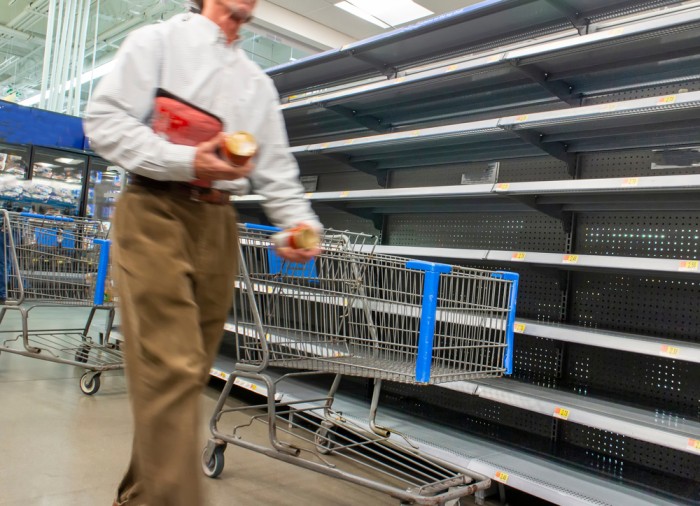
The supermarket shelf is usually one of the last places a food problem becomes obvious. Sometimes the first warning comes from thousands of miles away, when a government quietly decides that the food leaving its borders has become too valuable to let go.

Others Are Watching Now:

ShareTweet
Alec Deacon

Alec Deacon

Alec Deacon is the owner of Backyard Liberty.com. He’s very passionate about survival and he’s constantly looking for the best ways to protect his family - his wife Ana and the two boys, David and Andrew, that are the world to him. He used to work as a hygiene officer in a well-known US company, being in charge with food safety. In the time spent there he learned a lot about food: cooking, storing, freezing, transporting… basically everything that has to do with food safety. He is also a huge fan of outdoor living. Fishing carp is one of the things he loves most and it just happens that fishing is also one of the oldest and most basic survival skill.
Leave a Reply Cancel reply

Your email address will not be published. Required fields are marked *

  • Trending
  • Comments
  • Latest
How To Make Pemmican, The Ultimate Survival Food (Video)

How To Make Pemmican, The Ultimate Survival Food (Video)

January 12, 2026

How the Amish Would Respond to Grid Down

November 17, 2025
Top 10 Vehicles For Your EMP Survival

Top 10 Vehicles For Your EMP Survival

May 19, 2026
Chloroform

How To Make Chloroform For Survival

October 13, 2025
The Ugly Part of Water Purification: Top 5 Mistakes You Make

The Ugly Part of Water Purification: Top 5 Mistakes You Make

September 29, 2025
How to Preserve Eggs Like the Pioneers Did

How to Preserve Eggs Like the Pioneers Did

October 14, 2025
Top 6 Survival Rifles And Why You Need One

Top 6 Survival Rifles And Why You Need One

429
Top 5 Bug Out Locations In The US

Top 5 Bug Out Locations In The US

257
Top 10 Vehicles For Your EMP Survival

Top 10 Vehicles For Your EMP Survival

162
10 Items You Need To Hoard

10 Items You Need To Hoard

148
How To Store Flour, Sugar And Rice For Survival

How To Store Flour, Sugar And Rice For Survival

141
alaska landscape

A Prepper’s Story: Headed To Alaska To Survive Off-grid

118

Export Bans Are The Loudest Signal In Food

September 29, 2026

Michaelmas: When September 29 Meant Settling Up

September 25, 2026

Why So Much Of Your Supply Chain Runs Through A Single Building

September 22, 2026

What The Old Women Did Between Harvest And Frost

September 18, 2026

When Chickens, Wood Stoves, And Burn Barrels Become Violations

September 15, 2026

Twenty-Five Years Later: Teaching A Generation That Wasn’t There

September 11, 2026

No Result
View All Result


  • Privacy Policy
  • Terms&Conditions
  • Blogroll
  • Contact
  • Newsletter

© 2025 SURVIVOPEDIA

No Result
View All Result
  • HOME
  • GENERAL PREP
    • SHTF SCENARIOS
      • Survival Skills
      • Disaster Scenarios
      • Natural Disasters
      • WATER
      • FINANCIAL
      • WAR & CONFLICTS
      • emp
    • EQUIPMENT
      • Bug-Out-Vehicle
      • Firearms
      • COMMUNICATION
    • ENERGY
      • ENERGY
      • Energy Sources
      • Electric Equipments
      • Consumption Control
  • WEAPONS
    • Firearms
    • Cold Weapons
    • Defense
    • Privacy & Data Protection
    • Regulations
  • FOOD
    • Food Storage
    • Cooking
    • Farm Animals
    • Hunting
    • Plants & Gardening
  • Store
  • Newsletter

© 2025 SURVIVOPEDIA