























Mushrooms are one of the wild foods I respect most.
Some can put a remarkable amount of food on the table. Others have been used traditionally for generations and are now being studied for compounds that may affect immunity, inflammation, or brain health.
A few can also kill you.
That last part is why I never treat mushroom hunting like picking blackberries. I do not eat a wild mushroom because an app, a photograph, or an internet post says it looks right. If I am learning a new species, I want confirmation from somebody who genuinely knows mushrooms in that region.
With that rule firmly in place, these are ten wild mushrooms I think are worth learning about.
10. Morels
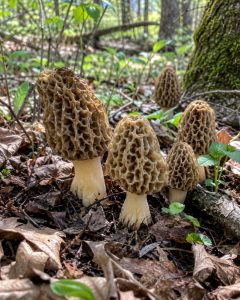
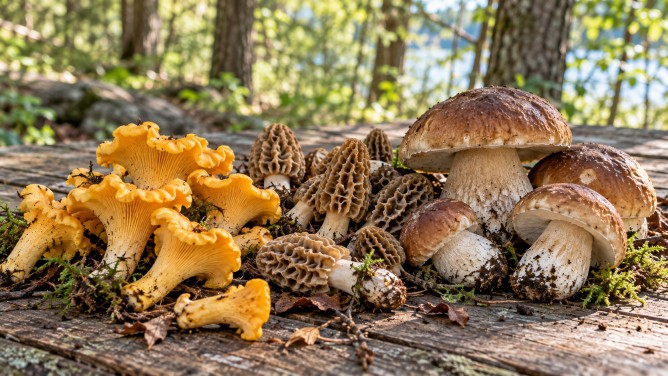
Morels are one of the first wild mushrooms many people want to learn.
They appear in spring rather than fall and are prized for their deep, earthy flavor. They work well sautéed, dried, added to soups, or cooked with meat and eggs.
From a preparedness standpoint, their biggest value is food. Drying them also turns a short seasonal harvest into something that will store and still be useful months later.
Morels must be cooked. Raw or undercooked morels can cause illness, and false morels create another identification hazard on top of that.
Main value: Excellent wild food and easy to preserve by drying.
9. Chanterelles
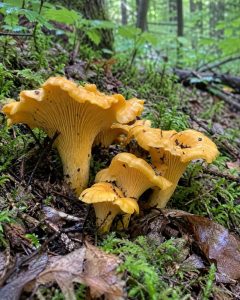
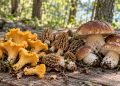
Chanterelles are another mushroom I think of primarily as food.
They have a distinctive flavor that works well with eggs, meat, potatoes, soups, and sauces, and they also provide fiber and various micronutrients.
The danger is assuming every yellow-orange woodland mushroom is a chanterelle. Jack-o’-lantern mushrooms and other species can confuse an inexperienced forager badly.
I would learn the entire mushroom, including how it grows and what is underneath the cap, before ever thinking about the frying pan.
Main value: High-quality seasonal food.
8. Black Trumpets
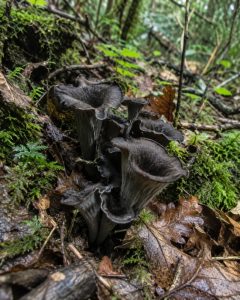
Black trumpets do not look particularly impressive.
That may be part of their appeal.
They are thin, dark mushrooms related to chanterelles, valued for a strong, rich flavor. A small amount can add a great deal to soups, sauces, rice, eggs, and meat dishes, and they dry extremely well.
For a prepper, I like foods that can be gathered during a short season and turned into something that lasts for months.
Main value: Flavoring, food, and excellent drying potential.
7. Oyster Mushrooms
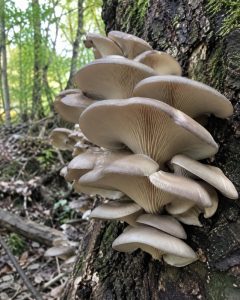
Wild oyster mushrooms commonly grow in clusters on dead or dying wood.
They are one of the more useful culinary mushrooms because they have a substantial texture. They can be fried, roasted, added to stew, or cooked with eggs and vegetables.
Oyster mushrooms also contain dietary fiber and beta-glucans, compounds common in many mushrooms that are being studied for their biological effects. Reviews of edible and medicinal mushrooms identify beta-glucans among their major bioactive components.
Main value: Versatile food with useful nutritional compounds.
6. Chicken Of The Woods
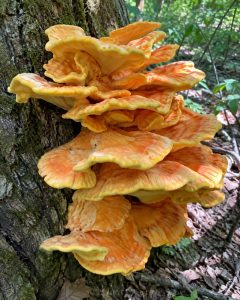
The first time you see a good chicken-of-the-woods specimen, you understand the name.
When young and properly prepared, the texture can be surprisingly substantial and chicken-like. It works in soups, stews, fried dishes, tacos, and plenty of recipes where meat would normally carry the plate.
That makes it especially interesting from a food-security standpoint.
Some people do experience gastrointestinal reactions even to correctly identified chicken of the woods, so I would always try a small cooked portion first.
Main value: One of the best wild mushrooms for replacing meat texture in a meal.
5. Hen Of The Woods
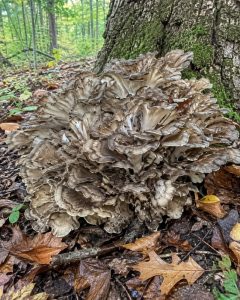
Hen of the woods, also called maitake, can form large clusters around the bases of certain trees. A single mature cluster can provide a considerable amount of food.
It has a rich flavor and works in soups, stir-fries, roasted dishes, and dried mushroom mixtures.
Maitake also contains beta-glucans and has attracted interest for possible immune and metabolic effects. Human evidence remains limited, however, so I regard those possibilities as research interest rather than a reason to treat illness with mushrooms.
Main value: Large edible harvest plus interesting medicinal research.
4. Lion’s Mane
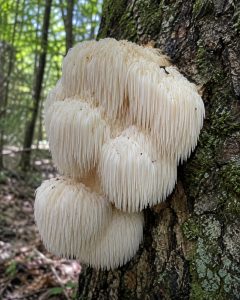
Lion’s mane may be the most interesting mushroom on this list.
It is edible, has a substantial texture, and is often described as having a mild seafood-like quality.
But lion’s mane has become especially well known because it contains compounds called hericenones and erinacines. Researchers are studying these for possible effects involving nerve growth and brain function.
The important word is possible.
A recent scientific review found that much of the evidence still comes from laboratory and animal studies, with human evidence far less developed.
I would happily eat lion’s mane as food. I would not treat it as a miracle brain medicine.
Main value: Excellent edible mushroom with promising neurological research.
3. Turkey Tail
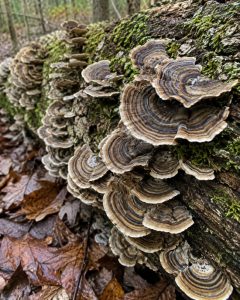
Turkey tail grows on dead wood and is far too tough for me to think of as a normal frying-pan mushroom. Its interest comes from traditional use and medicinal research instead.
Turkey tail contains polysaccharides, including a compound known as PSK. PSK has been studied extensively in Japan and has been used there alongside conventional cancer treatment.
That does not mean wild turkey tail cures cancer. The National Cancer Institute notes that turkey tail products are not FDA-approved treatments in the United States, and research on medicinal mushrooms still has important limitations.
Traditionally, turkey tail is more likely to be prepared as a tea or an extract than eaten as food.
Main value: Medicinal research and traditional use rather than calories.
2. Reishi
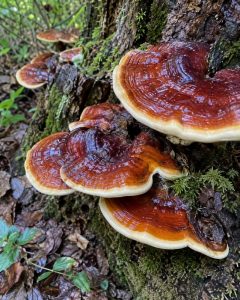
Reishi is another mushroom I regard more as a medicinal fungus than as food.
It becomes woody and tough, so people traditionally use it in teas, decoctions, powders, and extracts.
Reishi contains polysaccharides, beta-glucans, triterpenoids, and several other biologically active compounds, and researchers have investigated possible immune, anti-inflammatory, metabolic, and other effects.
There is a great deal of laboratory research here and far less strong clinical evidence than the advertising around reishi sometimes suggests. Scientific reviews specifically note that better-quality human studies are still needed.
Main value: Traditional medicinal use and an interesting source of bioactive compounds.
1. Porcini And Other Choice Boletes
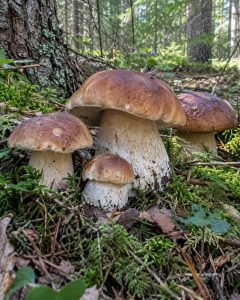
If I were learning wild mushrooms mainly to add food to the table, good edible boletes would sit high on my list.
Porcini are thick, substantial mushrooms with a rich flavor. They can be sautéed, added to soup, cooked with meat, or sliced and dried.
Dried porcini are particularly useful because the flavor concentrates, and a small amount can transform a pot of rice, beans, gravy, or stew.
There are many different boletes, however, and some are inedible or can make you sick.
Knowing that a mushroom has pores instead of gills is nowhere near enough identification.
Main value: Serious culinary value, good texture, and excellent preservation by drying.
The Most Important Mushroom Skill Is Knowing When To Walk Away
I like wild mushrooms because they can provide something most wild plants cannot.
- Substantial food.
- Flavor.
- Nutrients.
And, in several species, compounds interesting enough that scientists are still working out what they may eventually be useful for. But mushrooms punish overconfidence.
I never use one photograph as identification. I do not trust folklore about poisonous mushrooms turning silver black, being safe because animals eat them, or becoming harmless once they are cooked. Those tricks can get somebody killed.

Poison Control is very clear about this. Some deadly species can look like edible mushrooms, symptoms may not appear for hours, and cooking does not necessarily destroy the toxins.
So I learn one mushroom at a time. Where it grows, what it grows on, what the cap, underside, stem, and base should look like, and which dangerous lookalikes grow in the same area.
Then I have an experienced person confirm it before I ever eat it. There is plenty of free food growing in the woods. There is no reason to gamble your liver to get it.
Others Are Watching Now: