



















Pain changes the shape of an emergency. A person who could walk becomes unwilling to move, somebody who should be resting cannot sleep, then fear arrives and everything feels worse than it did ten minutes ago.
Most people assume pain control starts with medication, and I think it starts earlier. Something else is worth knowing first, because it changes how this conversation should feel.
For acute pain from musculoskeletal injuries, the joint guideline from the American College of Physicians and the American Academy of Family Physicians suggests against opioids, including tramadol, except for severe injury or when first-line treatment is not tolerated. So for the sprains, strains and bruised joints most of us will face, you are not improvising a substitute. The recommended treatment is already in the cabinet.

Fix The Position Before You Reach For Anything
Before medication, I ask why the person hurts. A twisted ankle hurts more hanging unsupported, a fractured arm hurts when somebody bumps it, and an injured back can be miserable in one position and tolerable in the next.
So the first form of pain control is mechanical. Support the injured area, stop unnecessary movement, and use pillows, blankets or proper splinting to hold the person where it hurts least. A splint is not only protecting a bone, because it cuts pain by stopping the injury being jostled every few seconds.
I pad around the injury, support the limb as I found it, and keep checking fingers or toes for color, warmth and sensation. With major deformity, loss of circulation, an open fracture or severe trauma, this has stopped being home care, and the job becomes getting help while keeping the injury still.
Ice is the cheapest pain control there is, and on a fresh sprain or swollen joint it reduces pain and swelling. I wrap the pack in cloth rather than putting ice on bare skin, and never leave it on indefinitely, because cold injures tissue too. Heat is for something else, meaning muscle tightness and aching that eases as tissues relax, and I keep it off a newly swollen injury or skin where sensation is reduced, because a burn can happen unnoticed. Treat the source, not the number somebody gives you on a pain scale.
Fear Makes Pain Worse, And You Can Work On That
I would never tell a man with a broken leg that his pain is imaginary, because it is not. But the brain does shape how pain is experienced, fear produces tension, and rapid breathing leaves people panicked. So I work on slowing everything down, and I say what I am about to do before touching the injury, because pain is harder to bear when somebody thinks something terrible is happening and nobody has a plan. Distraction sounds too simple to work, and music, conversation or prayer all pull attention off the injury. The guideline also recognizes specific acupressure and nerve stimulation as effective nonpharmacologic options.
The Guideline’s First Choice Is Probably In Your Cabinet
For localized muscle and joint injuries, topical NSAIDs such as diclofenac are the guideline’s first-line therapy, with or without menthol gel. ACP and AAFP call them among the most effective medications available and the only ones to improve every outcome measured, with far less systemic exposure than a pill. I use them on intact skin only.
Acetaminophen is the other staple, useful for mild to moderate pain without the stomach and bleeding risks NSAIDs carry. Its danger is the liver, and the figure most people carry in their heads is wrong. The general adult ceiling is 4,000 mg in 24 hours, but the manufacturer lowered Extra Strength labeling to 3,000 mg a day, and people with liver disease are told to stay under 2,000 mg. The bottle in your hand governs, not the number you remember.
The easy way to overdose is accidental duplication, where a cold-and-flu product already contains acetaminophen and somebody adds Tylenol on top without noticing.
Oral NSAIDs such as ibuprofen earn their place where inflammation drives the pain, but they raise the risk of stomach bleeding and are a problem with kidney disease, some cardiovascular conditions, ulcers, blood thinners and pregnancy. So I ask what conditions and medications somebody has first. And combining acetaminophen with an oral NSAID does not appear to beat either alone, so I pick the one that fits, follow the label and write down what was taken and when. At three in the morning that log matters more than another bottle.
Willow Bark And Arnica Deserve A Straight Answer
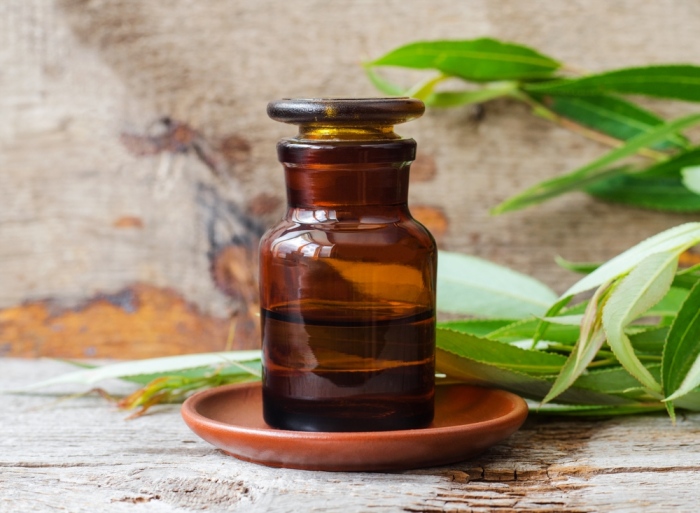
The European Medicines Agency recognizes willow bark dry extract for short-term lower back pain, with traditional use for minor joint pain and headaches, for no more than four weeks.
It is also the clearest proof that natural does not mean harmless. EMA restricts it to adults only, says children and adolescents must not take it, and rules it out in the third trimester of pregnancy. It is contraindicated with aspirin or NSAID allergy, salicylate-sensitive asthma, clotting disorders, active stomach ulcers, severe liver or kidney dysfunction and G6PD deficiency. This is a herb with real pharmacology, which is why it deserves respect.
Arnica is recognized by EMA only for topical use on bruises, sprains and localized muscle pain, in those over twelve, and on long-standing use rather than trial evidence, which EMA calls insufficient. So it is an optional rub for minor closed injuries, never deep wounds and never internally.
Nothing in my cabinet is natural morphine, and that phrase sells products rather than helping anybody decide anything.
Pain Is Also Information
This is the part that matters most, because I do not want to suppress pain so well that I stop hearing what it is telling me.
Severe pain after trauma can mean a fracture, internal injury, crush injury, burn or compartment syndrome. Sudden severe chest pain is not treated with willow tea, a severe headache with neurological changes is not solved with a cold pack, and worsening abdominal pain needs evaluation. Pain alongside weakness, numbness, difficulty breathing, heavy bleeding, altered consciousness or major trauma is another category entirely.
There are injuries where morphine is the right answer, and severe burns and major trauma are obvious examples. I am not pretending ice and a breathing exercise replace that. But pain control has more layers than most people realize, and if help is delayed I want all of them. Sometimes the best pain medicine in the room is a properly supported limb, a cold pack, a calm voice and somebody who knows what to do next.
Others Are Watching Now:





Resources
ACP/AAFP. Management of Acute Pain from Non-Low Back Musculoskeletal Injuries.
https://aafp.org/afp/2020/1201/p697.html
American College of Physicians (ACP). ACP, AAFP Release New Guideline for Treatment of Non-Low Back Pain from Musculoskeletal Injuries.
https://www.acponline.org/acp-newsroom/acp-aafp-release-new-guideline-for-treatment-of-non-low-back-pain-from-musculoskeletal-injuries-in
European Medicines Agency (EMA). Willow Bark: Summary for the Public.
https://www.ema.europa.eu/en/documents/herbal-summary/willow-bark-summary-public_en.pdf
European Medicines Agency (EMA). Arnicae Flos.
https://www.ema.europa.eu/en/medicines/herbal/arnicae-flos
Drugs.com. Maximum Daily Acetaminophen Dosage.
https://www.drugs.com/medical-answers/how-tylenol-you-take-day-3578621/