























Every fall I move a few things out of the garage before the first hard freeze. Not because I am worried about the cold itself, but because of what the cold does quietly.
A can of paint may look perfectly fine until spring, when I open it and find lumps. A bottle of glue may never bond properly again. A water container can split. Canned food can freeze hard enough to damage the seal. And a medication that was supposed to sit at room temperature may spend half the winter running through temperature swings it was never designed for.
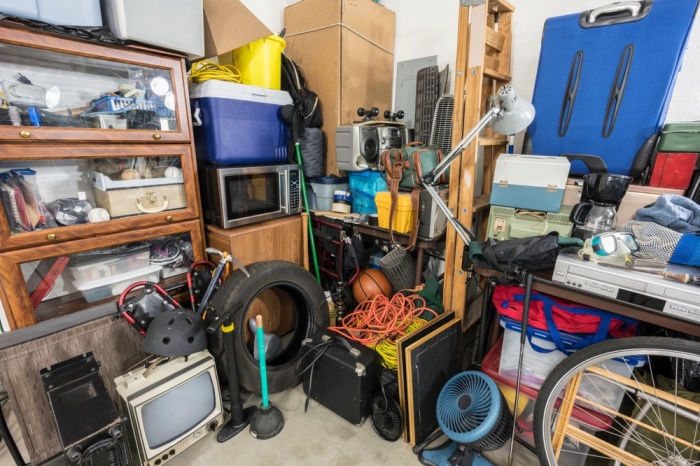
The garage feels like storage space. In winter it can behave more like a freezer.
These are the things I check first.
1. Canned Food
A lot of preppers keep canned food in the garage because the shelves are convenient and the house is full. I do not like doing that if the garage freezes.
The food does not instantly become poisonous when it freezes, but the contents expand, and that expansion is the problem. It can swell a can, stress the seams, break glass jars, or damage a seal you were counting on.
USDA specifically warns that accidentally frozen cans can present problems, and that a can with burst seams or rust should be discarded. USDA also recommends storing shelf-stable food away from temperature extremes, which includes cold garages and basements.
>>Check out the canned beef that is good to eat even after 25 years of storage.<<
My rule is simple. If I expect the garage to drop below freezing, the canned food comes into the house.
That includes home-canned food, because freezing can reduce quality and compromise the jar or the seal just as easily. A cool pantry is useful. A frozen pantry is not.
2. Batteries
Batteries are a little more complicated, and the honest answer is less dramatic than people expect.
Cold does not automatically destroy ordinary alkaline batteries. What it does is slow the chemical reaction inside, which reduces performance while they are cold. Manufacturers including Duracell recommend storing batteries at room temperature in a dry place rather than exposing them to temperature extremes.
For me that is reason enough to bring the important ones inside. I particularly do not want the batteries for my emergency flashlights sitting at freezing temperatures all winter and then being asked to perform on the one night I need them.
Rechargeable lithium packs deserve more care than that. The exact limits depend on the battery and the charger, so I follow the manufacturer’s instructions and I do not charge a cold lithium battery unless the manufacturer specifically says it is allowed.
A battery can be in perfectly good condition and still disappoint you when it is cold. That matters a great deal when it is powering something you actually need.
3. Paint
This is one of the easiest ways to waste money in a garage, and it happens every winter.
Latex and other water-based paints can be ruined by freezing. The water inside freezes, the mixture separates, and after thawing the paint may come back grainy, lumpy, or impossible to stir into anything usable.
Sherwin-Williams specifically warns that freeze-thaw cycles can ruin latex paint, and recommends keeping it in a temperature-controlled location rather than an unheated garage.
So before winter, leftover paint moves somewhere dry that stays above freezing. I also label the cans while I am handling them, because a half gallon of matching wall paint saves a lot of trouble later, and it is worth the thirty seconds it takes to write on the lid.
4. Glues, Caulks, And Adhesives
This category catches people because the container usually looks completely normal after winter. The chemistry inside may not be.
Many water-based adhesives are labeled protect from freezing, and they mean it. Some will thicken, separate, or become unusable after a stretch of cold. 3M, for one, warns that certain water-based adhesives can become unusable after low-temperature storage.
So I read the label on every adhesive, sealant, wood glue, caulk, and specialty compound I keep out there. If it says protect from freezing, it comes indoors.
That eight-dollar tube seems unimportant right up until the middle of a repair, when I discover it has turned to rubber inside the container and the job stops.
5. Medications
I would never use an unheated garage as long-term medication storage, and I would not treat it as a short-term option either.
Most household medicines are meant to be kept within specific temperature ranges, usually around normal room temperature unless the label says otherwise. FDA warns that extreme temperatures can damage medications or reduce their effectiveness, and recommends following the storage conditions printed on the product.
That covers considerably more than prescription pills. Liquid medicines, first aid creams, eye drops, insulin, some antibiotics, and any medical supply containing liquid all belong in that category.
Anything important enough to depend on during an emergency is important enough to store properly. Mine stay inside the house in a cool, dry place, out of reach of children.
6. Fire Extinguishers
This one depends entirely on the extinguisher, and it is the item where I would push back on the usual advice.
A good dry chemical extinguisher may tolerate temperatures far below freezing. Kidde, for example, specifies a storage range of -40°F to 120°F for its extinguishers, and notes that storing one colder than that can crack the valve or the hose. Other types, especially anything with water-based contents, may have very different limits.
So I do not automatically drag every extinguisher indoors. I read the label instead.
If the garage regularly gets colder than the unit’s rated storage temperature, it moves somewhere that is both within range and still easy to reach in a hurry. Those two conditions matter equally, because an extinguisher buried in a closet is not emergency equipment anymore.
I want it working at full capacity on the day I reach for it.
7. Stored Water
Water itself handles freezing just fine. The container may not.
Water expands as it freezes, and a completely full rigid container has nowhere to put that expansion. Plastic can deform, seams can fail, caps can leak, and glass can break outright.
CDC guidance recommends keeping stored emergency water somewhere cool, ideally in the range of 50°F to 70°F, out of direct sunlight and away from chemicals such as gasoline and pesticides. Older emergency-storage guidance also specifically recommends a location not subject to freezing wherever that is possible.
That is another reason I prefer keeping drinking water inside the house when I can. If some of it genuinely has to stay somewhere cold, I use suitable food-grade containers and leave real expansion space rather than filling them to the cap.
And I never store emergency drinking water beside gasoline, pesticides, solvents, or other chemicals, whatever the temperature is doing.
Propane Is The Exception
Propane belongs on this list for the opposite reason, because I watch people do exactly the wrong thing with it every winter.
The thinking goes something like this. It is getting cold, so I should move the propane cylinders into the garage where they will be protected.
Do not do that.
The Propane Education & Research Council says small propane cylinders should be stored outside, not in a garage, basement, shed, tent, or any other enclosed space. Even a cylinder that feels empty can still hold enough propane to create a hazard in a confined area.
Cold weather is generally not the enemy of the cylinder itself. Enclosed storage is the real concern, and it is the one that can hurt somebody.
So I keep propane upright, outdoors, secured against tipping, and well away from ignition sources. It is the one item on this list that moves out of the garage rather than into the house.
I Do One Cold-Weather Storage Walk Every Fall
The whole job takes about twenty minutes.
I walk through the garage and look at everything containing food, water, chemicals, medicine, batteries, or liquid of any kind. Then I read the labels rather than guessing from memory.
Canned food, paint, freeze-sensitive adhesives, and medications all come inside. Important batteries go into dry room-temperature storage. Water gets either moved or prepared properly for freezing. Extinguishers get checked against their own temperature rating instead of a rule of thumb. And the propane goes out to proper outdoor storage.
The mistake worth naming is assuming that because something survived last winter it will survive the next one. A mild December proves very little about a hard January.
Freezing damage is quiet, and that is what makes it expensive. You may not discover it for months, until the power is out, the pipe is leaking, the wall needs patching, or somebody in the house needs the supply you were certain was safe on a garage shelf.
I would rather spend the twenty minutes now.
Others Are Watching Now: