





Survivopedia
  • HOME
  • GENERAL PREP
    • All
    • Disaster Scenarios
    • EMP
    • Natural Disasters
    • Survival News
    • Survival Skills

    A Digital Fast For The Whole Family: Unplugging To Reconnect

    How I Build A Culture Of Gratitude In A Prepared Family

    What To Do in the First Five Minutes of Any Emergency

    Local Crime Maps As A Prep Tool: What Your Police Blotter Is Really Telling You

    The Two Supplies That Keep A Family Standing When Everything Else Fails

    When Automated Infrastructure Fails: The First 48 Hours

    How To Train A Dog As A Useful Survival Companion, Not Just A Pet

    If The Roads Closed Overnight: How Each Culture Would Respond To Sudden Isolation

    Firecraft In Community Life – How Native, Pioneer, and Amish Families Used Fire Beyond Cooking

    • SHTF SCENARIOS
      • Survival Skills
      • Disaster Scenarios
      • Natural Disasters
      • WATER
      • FINANCIAL
      • WAR & CONFLICTS
      • emp
    • EQUIPMENT
      • Bug-Out-Vehicle
      • Firearms
      • COMMUNICATION
    • ENERGY
      • ENERGY
      • Energy Sources
      • Electric Equipments
      • Consumption Control
  • WEAPONS
    • All
    • Cold Weapons
    • Firearms
    • Regulations
    Field Reloading

    Field Reloading

    Fully Automatic Firearms? No Thanks!

    Are Alternative Weapons Practical in a Post-Disaster World?

    How To Travel With A Firearm

    The Ultimate Survival Knife: How to Pick the Right One

    A Sharp Edge: Choosing the Best Survival Knife for Prepping and Self-Defense

    Is There a Place for “Fast Draw” in Survival?

    Indispensable Gear for your EDC Core Layer

    Best 17 silent weapons for when SHTF

    Best 17 silent weapons for when SHTF

    • Firearms
    • Cold Weapons
    • Defense
    • Privacy & Data Protection
    • Regulations
  • FOOD
    • All
    • Cooking
    • Farm Animals
    • Farming
    • Food Storage
    • Hunting
    • Plants & Gardening

    The Summer Kitchen: Cooking All August Without Heating Your House

    Losing The Harvest: Native, Pioneer, And Amish Responses To Crop Failure In The First 72 Hours

    Generosity From The Stockpile: Giving Without Gutting Your Reserves

    How To Turn A Normal Kitchen Into A Grid Down Cooking Center

    Why Stored Canned Meat Belongs In Every Crisis Pantry

    Cooking On A Hearth Or Open Fire: Old World Kitchen Skills For Modern Preppers

    Clay Pot Refrigeration: Old Tech That Still Cools Food

    From Farm to Faith: What Homesteading Teaches Us About God and Grit

    How I Finally Became Food Independent

    How I Finally Became Food Independent

    • Food Storage
    • Cooking
    • Farm Animals
    • Hunting
    • Plants & Gardening
  • Store
  • Newsletter
No Result
View All Result
  • HOME
  • GENERAL PREP
    • All
    • Disaster Scenarios
    • EMP
    • Natural Disasters
    • Survival News
    • Survival Skills

    A Digital Fast For The Whole Family: Unplugging To Reconnect

    How I Build A Culture Of Gratitude In A Prepared Family

    What To Do in the First Five Minutes of Any Emergency

    Local Crime Maps As A Prep Tool: What Your Police Blotter Is Really Telling You

    The Two Supplies That Keep A Family Standing When Everything Else Fails

    When Automated Infrastructure Fails: The First 48 Hours

    How To Train A Dog As A Useful Survival Companion, Not Just A Pet

    If The Roads Closed Overnight: How Each Culture Would Respond To Sudden Isolation

    Firecraft In Community Life – How Native, Pioneer, and Amish Families Used Fire Beyond Cooking

    • SHTF SCENARIOS
      • Survival Skills
      • Disaster Scenarios
      • Natural Disasters
      • WATER
      • FINANCIAL
      • WAR & CONFLICTS
      • emp
    • EQUIPMENT
      • Bug-Out-Vehicle
      • Firearms
      • COMMUNICATION
    • ENERGY
      • ENERGY
      • Energy Sources
      • Electric Equipments
      • Consumption Control
  • WEAPONS
    • All
    • Cold Weapons
    • Firearms
    • Regulations
    Field Reloading

    Field Reloading

    Fully Automatic Firearms? No Thanks!

    Are Alternative Weapons Practical in a Post-Disaster World?

    How To Travel With A Firearm

    The Ultimate Survival Knife: How to Pick the Right One

    A Sharp Edge: Choosing the Best Survival Knife for Prepping and Self-Defense

    Is There a Place for “Fast Draw” in Survival?

    Indispensable Gear for your EDC Core Layer

    Best 17 silent weapons for when SHTF

    Best 17 silent weapons for when SHTF

    • Firearms
    • Cold Weapons
    • Defense
    • Privacy & Data Protection
    • Regulations
  • FOOD
    • All
    • Cooking
    • Farm Animals
    • Farming
    • Food Storage
    • Hunting
    • Plants & Gardening

    The Summer Kitchen: Cooking All August Without Heating Your House

    Losing The Harvest: Native, Pioneer, And Amish Responses To Crop Failure In The First 72 Hours

    Generosity From The Stockpile: Giving Without Gutting Your Reserves

    How To Turn A Normal Kitchen Into A Grid Down Cooking Center

    Why Stored Canned Meat Belongs In Every Crisis Pantry

    Cooking On A Hearth Or Open Fire: Old World Kitchen Skills For Modern Preppers

    Clay Pot Refrigeration: Old Tech That Still Cools Food

    From Farm to Faith: What Homesteading Teaches Us About God and Grit

    How I Finally Became Food Independent

    How I Finally Became Food Independent

    • Food Storage
    • Cooking
    • Farm Animals
    • Hunting
    • Plants & Gardening
  • Store
  • Newsletter
No Result
View All Result
Survivopedia
No Result
View All Result
Home FOOD Cooking

The Summer Kitchen: Cooking All August Without Heating Your House

August changes the way I want to cook.

The garden is producing. Tomatoes, peppers, cucumbers, beans, corn, and fruit all seem to arrive at once. That should be good news, but preserving a harvest means boiling water, simmering sauces, processing jars, and running the stove for hours.

Doing all of that inside can turn the kitchen into the hottest room in the house.
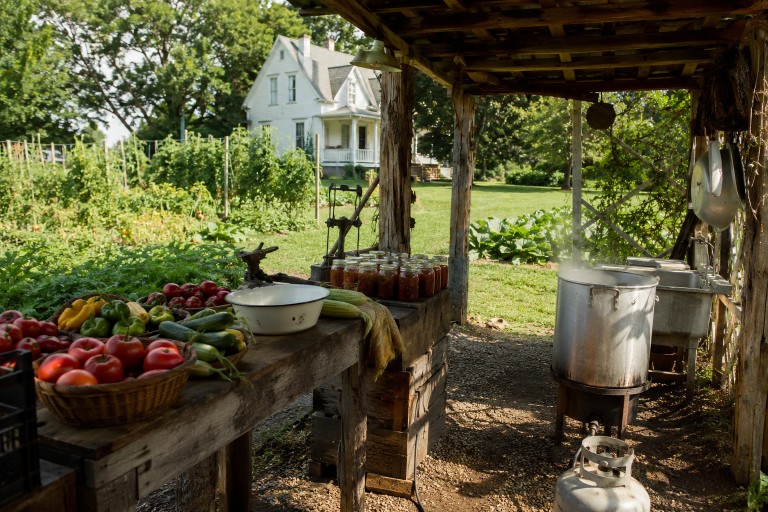
Traditional farm families understood this problem long before air conditioning. Many Amish households and older American homesteads used a summer kitchen, which was a separate or semi-detached cooking space used during the hottest months. Meals were prepared there, water was heated, and canning was done without filling the main house with heat, steam, smoke, and food smells.

I think the summer kitchen deserves another look.

Why The Cooking Moved Outside

An indoor stove adds heat quickly.

Boiling a large canning pot may continue for hours. Bread baking warms the room even more. Several burners running at once can make the entire house uncomfortable, especially when windows must be opened during humid weather.

A summer kitchen kept that heat away from the family’s living space.

It also helped move messy work outside. Corn could be shucked, tomatoes processed, chickens prepared, jars washed, and fruit sorted without crowding the main kitchen. Flies, spills, peels, and food scraps were easier to manage in a work space designed for heavy use.

The solution was simple. Put the hot work where the heat could escape.

A Summer Kitchen Does Not Need To Be A Building

A traditional summer kitchen might be a small detached structure with a stove, worktable, shelves, and storage. That is a useful setup, but most families do not need to build a second house.

A shaded outdoor cooking station can handle much of the same work.

A covered patio, open-sided shed, carport edge, sturdy gazebo, or sheltered section of the yard may provide enough space. The area needs a stable floor, good airflow, protection from rain, and safe distance from dry grass, wood siding, fuel containers, and anything else that could burn.

I would rather begin with a simple station that gets used than spend years planning a perfect building.

Choose The Heat Source Carefully

The heat source determines what the station can do.

A propane burner is useful for boiling water, cooking large pots, and pressure canning if it provides steady, controllable heat and the canner manufacturer allows that type of burner. A gas grill can handle meat, vegetables, skillets, and some baking. A rocket stove or wood-fired cookstove may work well where fires are legal and fuel is available.

Each option has limits.

Large outdoor burners can produce more heat than some canners are designed to handle. Uneven heat can damage equipment or interfere with safe processing. Always follow the instructions for the canner and stove.

Charcoal, propane, gasoline, and wood-burning equipment should never be used inside the house, basement, garage, or enclosed shed. Carbon monoxide can build up without warning.

The cooking station needs open airflow.

Build A Strong Work Surface

Outdoor cooking becomes frustrating when there is nowhere to put a hot lid, clean jar, knife, or bowl of produce.

A solid table is one of the most important parts of the station.

Use a surface that can handle water, heat, and regular cleaning. Stainless steel is excellent, but a sturdy outdoor table covered with a washable work surface can also do the job. Keep hot pots away from plastic, thin wood, and unstable folding tables.

I like having separate areas for dirty produce, clean food, and finished jars. That simple separation prevents confusion during a long canning day.

Add hooks or shelves for utensils, towels, gloves, jar lifters, thermometers, and cleaning supplies.

Plan Water Before You Start

Canning and outdoor cooking use a surprising amount of water.

You need water for washing produce, cleaning hands, filling pots, rinsing tools, and wiping surfaces. Carrying small pitchers back and forth through the house gets old fast.

A food-safe hose connected to safe household water can help. A large covered water container with a spigot is another option. Keep separate containers for drinking water and washing water.

Dirty water also needs somewhere to go. Do not dump greasy water beside the house, near a well, or where it will attract pests. Strain food scraps and dispose of the water in a suitable location.

Good water management keeps the station sanitary.

Use It For More Than Canning

A summer kitchen becomes more valuable when it serves the family every week.

Breakfast can be cooked outside before the day becomes hot. Meat can be grilled for several meals at once. Corn can be boiled. Soup, beans, and stew can simmer without heating the house. Bread can be baked in a suitable outdoor oven. Produce can be washed and sorted before it enters the main kitchen.

I also like the idea of using the station for messy seasonal work. Peeling fruit, cleaning fish, trimming vegetables, and preparing large batches all become easier when there is room to spread out.

The more often the station is used, the more worthwhile it becomes.

Keep Food Safety In The Plan

Hot weather makes food spoil faster.

Raw meat, dairy, cooked food, and cut produce should not sit outside for long. Keep coolers and ice nearby when necessary. Bring ingredients outside only when you are ready to use them.

Wash hands often. Keep raw meat separate from vegetables and cooked food. Protect food from insects. Clean cutting boards and knives between tasks.

Home canning also requires tested recipes and correct processing methods. High-acid foods may be suitable for water-bath canning when a tested recipe calls for it. Meat, vegetables, soups, and other low-acid foods generally require pressure canning.

Outdoor cooking does not change the safety rules.

Store Fuel And Equipment Safely

A working station needs fuel, but the fuel should not sit beside the flame.

Keep propane cylinders upright and away from heat. Protect firewood from sparks while keeping it dry. Store gasoline far from the cooking area. Keep a fire extinguisher nearby and make sure everyone knows how to shut the stove off.

Children should have clear boundaries around burners, hot pots, knives, and boiling canners.

A summer kitchen should make family life easier. It should never become a careless fire hazard.

Start With One August Weekend

You do not need to build everything at once.

Set up a table in the shade. Add one safe outdoor burner. Bring out a pot, kettle, cutting board, wash basin, and a few utensils. Cook one meal or process one batch of tomatoes.

Notice what is missing.

You may need better lighting, another shelf, more shade, a windbreak, or a safer place for hot equipment. Improve the station after each use.

That is how useful homestead systems are usually built. One practical improvement at a time.

Keep The Heat Where It Belongs

The summer kitchen solved a plain household problem.

Families still needed to cook during the hottest part of the year, but they did not need to make the main house unbearable in the process. By moving the fire, steam, and heavy work outside, they kept the home cooler and made harvest season easier to manage.
We can do the same today.

A shaded work area, safe heat source, strong table, water supply, and a few well-organized tools can turn one corner of the yard into a useful summer kitchen.

When August brings baskets of produce and long canning days, the heat can stay outside.

The house, and everyone living in it, will be better for it.

Others Are Watching Now:

ShareTweet
Darren Kelburn

Darren Kelburn

Darren Kelburn is a hands-on experimenter and backyard problem-solver who writes about practical self-reliance. When he’s not testing small-scale food or power systems, he’s usually fixing something around the house or hiking local trails with his family.

Leave a Reply Cancel reply

Your email address will not be published. Required fields are marked *

  • Trending
  • Comments
  • Latest
How To Make Pemmican, The Ultimate Survival Food (Video)

How To Make Pemmican, The Ultimate Survival Food (Video)

January 12, 2026

How the Amish Would Respond to Grid Down

November 17, 2025
Top 10 Vehicles For Your EMP Survival

Top 10 Vehicles For Your EMP Survival

May 19, 2026
Chloroform

How To Make Chloroform For Survival

October 13, 2025
The Ugly Part of Water Purification: Top 5 Mistakes You Make
The Ugly Part of Water Purification: Top 5 Mistakes You Make

September 29, 2025
How to Preserve Eggs Like the Pioneers Did

How to Preserve Eggs Like the Pioneers Did

October 14, 2025
Top 6 Survival Rifles And Why You Need One

Top 6 Survival Rifles And Why You Need One

429
Top 5 Bug Out Locations In The US

Top 5 Bug Out Locations In The US

257
Top 10 Vehicles For Your EMP Survival

Top 10 Vehicles For Your EMP Survival

162
10 Items You Need To Hoard

10 Items You Need To Hoard

148
How To Store Flour, Sugar And Rice For Survival

How To Store Flour, Sugar And Rice For Survival

141
alaska landscape

A Prepper’s Story: Headed To Alaska To Survive Off-grid

118

The Summer Kitchen: Cooking All August Without Heating Your House

August 17, 2026

A Digital Fast For The Whole Family: Unplugging To Reconnect

August 7, 2026

How I Ran a Small Apartment as a Mini Homestead

August 7, 2026

When Insurance Starts Saying No: What Policy Changes Reveal About Real Risk

August 7, 2026

Unexpected Violence: How Native, Pioneer, And Amish Communities Responded To Sudden Attacks

August 7, 2026

How I Build A Culture Of Gratitude In A Prepared Family

August 7, 2026

No Result
View All Result


  • Privacy Policy
  • Terms&Conditions
  • Blogroll
  • Contact
  • Newsletter

© 2025 SURVIVOPEDIA

No Result
View All Result
  • HOME
  • GENERAL PREP
    • SHTF SCENARIOS
      • Survival Skills
      • Disaster Scenarios
      • Natural Disasters
      • WATER
      • FINANCIAL
      • WAR & CONFLICTS
      • emp
    • EQUIPMENT
      • Bug-Out-Vehicle
      • Firearms
      • COMMUNICATION
    • ENERGY
      • ENERGY
      • Energy Sources
      • Electric Equipments
      • Consumption Control
  • WEAPONS
    • Firearms
    • Cold Weapons
    • Defense
    • Privacy & Data Protection
    • Regulations
  • FOOD
    • Food Storage
    • Cooking
    • Farm Animals
    • Hunting
    • Plants & Gardening
  • Store
  • Newsletter

© 2025 SURVIVOPEDIA