











Survivopedia
  • HOME
  • GENERAL PREP
    • All
    • Disaster Scenarios
    • EMP
    • Natural Disasters
    • Survival News
    • Survival Skills

    How I Build A Culture Of Gratitude In A Prepared Family

    What To Do in the First Five Minutes of Any Emergency

    Local Crime Maps As A Prep Tool: What Your Police Blotter Is Really Telling You

    The Two Supplies That Keep A Family Standing When Everything Else Fails

    When Automated Infrastructure Fails: The First 48 Hours

    How To Train A Dog As A Useful Survival Companion, Not Just A Pet

    If The Roads Closed Overnight: How Each Culture Would Respond To Sudden Isolation

    Firecraft In Community Life – How Native, Pioneer, and Amish Families Used Fire Beyond Cooking

    Knot Work for Homesteads and Camps

    Knot Work for Homesteads and Camps

    • SHTF SCENARIOS
      • Survival Skills
      • Disaster Scenarios
      • Natural Disasters
      • WATER
      • FINANCIAL
      • WAR & CONFLICTS
      • emp
    • EQUIPMENT
      • Bug-Out-Vehicle
      • Firearms
      • COMMUNICATION
    • ENERGY
      • ENERGY
      • Energy Sources
      • Electric Equipments
      • Consumption Control
  • WEAPONS
    • All
    • Cold Weapons
    • Firearms
    • Regulations
    Field Reloading

    Field Reloading

    Fully Automatic Firearms? No Thanks!

    Are Alternative Weapons Practical in a Post-Disaster World?

    How To Travel With A Firearm

    The Ultimate Survival Knife: How to Pick the Right One

    A Sharp Edge: Choosing the Best Survival Knife for Prepping and Self-Defense

    Is There a Place for “Fast Draw” in Survival?

    Indispensable Gear for your EDC Core Layer

    Best 17 silent weapons for when SHTF

    Best 17 silent weapons for when SHTF

    • Firearms
    • Cold Weapons
    • Defense
    • Privacy & Data Protection
    • Regulations
  • FOOD
    • All
    • Cooking
    • Farm Animals
    • Farming
    • Food Storage
    • Hunting
    • Plants & Gardening

    Losing The Harvest: Native, Pioneer, And Amish Responses To Crop Failure In The First 72 Hours

    Generosity From The Stockpile: Giving Without Gutting Your Reserves

    How To Turn A Normal Kitchen Into A Grid Down Cooking Center

    Why Stored Canned Meat Belongs In Every Crisis Pantry

    Cooking On A Hearth Or Open Fire: Old World Kitchen Skills For Modern Preppers

    Clay Pot Refrigeration: Old Tech That Still Cools Food

    From Farm to Faith: What Homesteading Teaches Us About God and Grit

    How I Finally Became Food Independent

    How I Finally Became Food Independent

    Tracking Like a Native Scout: Sign, Age & Counter-tracking

    • Food Storage
    • Cooking
    • Farm Animals
    • Hunting
    • Plants & Gardening
  • Store
  • Newsletter
No Result
View All Result
  • HOME
  • GENERAL PREP
    • All
    • Disaster Scenarios
    • EMP
    • Natural Disasters
    • Survival News
    • Survival Skills

    How I Build A Culture Of Gratitude In A Prepared Family

    What To Do in the First Five Minutes of Any Emergency

    Local Crime Maps As A Prep Tool: What Your Police Blotter Is Really Telling You

    The Two Supplies That Keep A Family Standing When Everything Else Fails

    When Automated Infrastructure Fails: The First 48 Hours

    How To Train A Dog As A Useful Survival Companion, Not Just A Pet

    If The Roads Closed Overnight: How Each Culture Would Respond To Sudden Isolation

    Firecraft In Community Life – How Native, Pioneer, and Amish Families Used Fire Beyond Cooking

    Knot Work for Homesteads and Camps

    Knot Work for Homesteads and Camps

    • SHTF SCENARIOS
      • Survival Skills
      • Disaster Scenarios
      • Natural Disasters
      • WATER
      • FINANCIAL
      • WAR & CONFLICTS
      • emp
    • EQUIPMENT
      • Bug-Out-Vehicle
      • Firearms
      • COMMUNICATION
    • ENERGY
      • ENERGY
      • Energy Sources
      • Electric Equipments
      • Consumption Control
  • WEAPONS
    • All
    • Cold Weapons
    • Firearms
    • Regulations
    Field Reloading

    Field Reloading

    Fully Automatic Firearms? No Thanks!

    Are Alternative Weapons Practical in a Post-Disaster World?

    How To Travel With A Firearm

    The Ultimate Survival Knife: How to Pick the Right One

    A Sharp Edge: Choosing the Best Survival Knife for Prepping and Self-Defense

    Is There a Place for “Fast Draw” in Survival?

    Indispensable Gear for your EDC Core Layer

    Best 17 silent weapons for when SHTF

    Best 17 silent weapons for when SHTF

    • Firearms
    • Cold Weapons
    • Defense
    • Privacy & Data Protection
    • Regulations
  • FOOD
    • All
    • Cooking
    • Farm Animals
    • Farming
    • Food Storage
    • Hunting
    • Plants & Gardening

    Losing The Harvest: Native, Pioneer, And Amish Responses To Crop Failure In The First 72 Hours

    Generosity From The Stockpile: Giving Without Gutting Your Reserves

    How To Turn A Normal Kitchen Into A Grid Down Cooking Center

    Why Stored Canned Meat Belongs In Every Crisis Pantry

    Cooking On A Hearth Or Open Fire: Old World Kitchen Skills For Modern Preppers

    Clay Pot Refrigeration: Old Tech That Still Cools Food

    From Farm to Faith: What Homesteading Teaches Us About God and Grit

    How I Finally Became Food Independent

    How I Finally Became Food Independent

    Tracking Like a Native Scout: Sign, Age & Counter-tracking

    • Food Storage
    • Cooking
    • Farm Animals
    • Hunting
    • Plants & Gardening
  • Store
  • Newsletter
No Result
View All Result
Survivopedia
No Result
View All Result
Home HOME & SHELTER Community

Unexpected Violence: How Native, Pioneer, And Amish Communities Responded To Sudden Attacks

Violence rarely arrives at a convenient time.

It may begin with shouting on a nearby road, gunfire after dark, a break-in at the edge of town, or several strangers moving through the area with bad intentions. By the time everyone understands what is happening, the first decisions may already have been made.

Earlier Native, pioneer, and Amish communities lived under different conditions, and no single response describes every group. Still, they understood several truths that modern neighborhoods often forget. A community needs warning, clear leadership, protected families, safe places, and people who know when to stand, when to leave, and when to talk.
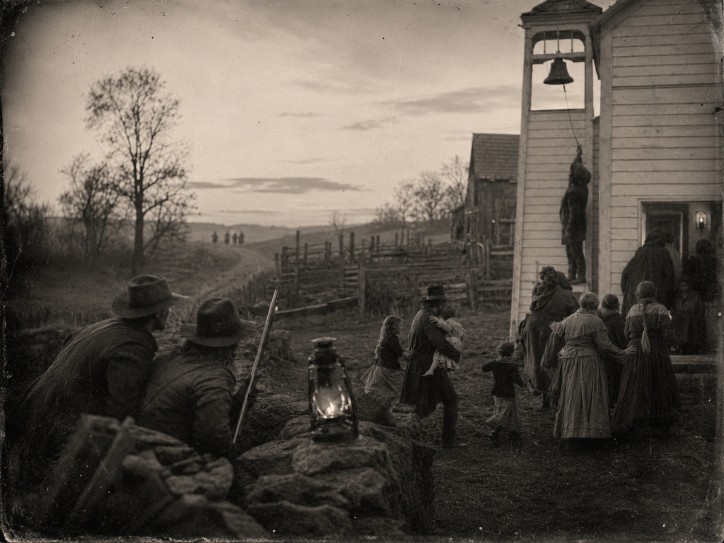
The goal is always the same: preserve life and prevent violence from spreading.

Native Communities Used Awareness And Distance

Many Native communities depended on close knowledge of the surrounding land.

People noticed unfamiliar tracks, disturbed trails, unusual animal behavior, missing livestock, distant smoke, and movement near known approaches. Scouts, hunters, travelers, and neighboring groups could bring warnings before danger reached the main camp.

That early notice created options.

Children, elders, food stores, and other vulnerable members could be moved. The community might avoid an exposed area, use terrain for protection, or send trusted people to learn what was happening. Fighting was one possible response, but movement, concealment, negotiation, and avoiding a stronger enemy were also parts of survival.

The modern lesson is simple. Awareness creates time, and time creates choices.

Know what normal activity looks like around your home. Pay attention when vehicles circle repeatedly, strangers test gates, dogs react to movement, or neighbors report the same suspicious behavior. Early information is more useful than bravery after the danger is already at the door.

Pioneer Families Built Around Warning And Refuge

Pioneer settlements were often separated by distance, poor roads, and slow communication. A sudden attack, raid, violent criminal, or local conflict could leave a family alone for hours.

Because of that, neighbors became part of the security system.

A rider, bell, horn, gunshot signal, or messenger could warn nearby homes. Families sometimes gathered at the strongest house, church, fort, or settlement when danger increased. Doors were secured, animals brought closer, children placed in protected areas, and able adults watched the approaches.

Their strength came from preparation before the attack.

A family already knew where to go. Neighbors knew who needed help. Supplies could be carried quickly. People understood which building offered the best protection.

Modern neighborhoods should build the same clarity. Decide which homes are safest during a violent incident. Know who has small children, limited mobility, or medical needs. Establish a simple way to warn one another without spreading rumors.

Amish Communities Rely On Cohesion

Amish communities are generally known for nonviolence, mutual aid, and strong social ties. When serious danger appears, their response may focus on removing people from danger, gathering families, contacting authorities, and using trusted community leaders to calm the situation.

That approach carries an important lesson.

A community that already communicates well can act without every person inventing a separate plan. Leaders can share verified information. Families can check on one another. Children and older adults can be moved quietly. Help can be organized without creating more confusion.

Cohesion is a defensive advantage even when a community does not use force.

Modern neighborhoods often have cameras, alarms, and weapons but little trust. People may live ten yards apart and have no way to contact each other. That weakness should be corrected before violence exposes it.

Flight Or Shelter Depends On The Threat

There is no single right answer to every violent event.

Leaving may be safest when the threat is still distant, roads remain open, and your family has a secure destination. Staying may be safer when violence is already outside, movement would expose children, or the roads lead directly through the problem.

The decision should be based on information, distance, time, and family needs.

Identify several exit routes from your neighborhood. Include routes that avoid major intersections and predictable crowd areas. Keep vehicles maintained and reasonably fueled. At the same time, identify the safest room or area inside your home if leaving becomes too dangerous.

Do not wait for the crisis to debate these choices for the first time.

Hiding Is A Valid Survival Decision

Some people imagine that preparedness requires confronting every threat.

It does not.

Protecting children in a locked interior room, turning off lights, remaining quiet, and avoiding an armed confrontation may save more lives than rushing outside to investigate. A family does not owe a violent stranger a visible target.

Choose a safer area in advance. It should have a strong door if possible, communication, first-aid supplies, flashlights, water, and another way out if conditions change.

Call emergency services when possible. Give clear information and follow lawful instructions. Do not move toward gunfire, crowds, or an uncertain disturbance just to satisfy curiosity.

Survival sometimes depends on staying unseen.

Negotiation Requires Calm Judgment

Some threats can be lowered through calm communication. Others cannot.

Negotiation may help during confusion, trespassing, a neighborhood dispute, or an encounter with someone who is frightened and looking for a way out. A calm voice, physical distance, simple instructions, and a clear exit path can keep tension from becoming violence.

Avoid insults, threats, sudden movement, and arguments over pride. Keep children and bystanders away. Do not make promises you cannot keep.

If the person is actively attacking, displaying a weapon, or refusing every attempt to create distance, conversation may no longer be safe. The priority becomes escape, cover, protected family members, and contacting authorities.

Neighborhood Defense Begins With Organization

A neighborhood does not become safer because several people own weapons.

It becomes safer when residents share accurate information, secure their homes, protect vulnerable people, maintain communication, and avoid confusing each other with the threat.

Create a contact list. Agree on how warnings will be verified. Improve lighting, locks, gates, and cameras. Establish meeting points outside the immediate danger zone. Identify residents with medical skills and first-aid supplies.

Any defensive action must remain lawful and focused on protecting life. Armed neighbors moving independently through dark streets can create mistaken identity, crossfire, and confusion for arriving police.

Good organization lowers those risks.

The Strongest Response Preserves Life

Native communities used awareness, terrain, movement, and negotiation. Pioneer families relied on warning systems, refuge, and neighbor cooperation. Amish communities show the strength of cohesion, calm leadership, and mutual care.

The shared lesson is adaptability.

A prepared neighborhood knows when to warn, when to gather, when to leave, when to shelter, and when calm words may prevent bloodshed. It protects children and vulnerable people first. It shares verified information. It avoids reckless confrontation.

Unexpected violence creates fear and confusion.

Preparation gives a community enough order to choose the response most likely to bring its people home alive.

Others Are Watching Now:

ShareTweet
Alec Deacon

Alec Deacon

Alec Deacon is the owner of Backyard Liberty.com. He’s very passionate about survival and he’s constantly looking for the best ways to protect his family - his wife Ana and the two boys, David and Andrew, that are the world to him. He used to work as a hygiene officer in a well-known US company, being in charge with food safety. In the time spent there he learned a lot about food: cooking, storing, freezing, transporting… basically everything that has to do with food safety. He is also a huge fan of outdoor living. Fishing carp is one of the things he loves most and it just happens that fishing is also one of the oldest and most basic survival skill.

Leave a Reply Cancel reply

Your email address will not be published. Required fields are marked *

  • Trending
  • Comments
  • Latest
How To Make Pemmican, The Ultimate Survival Food (Video)

How To Make Pemmican, The Ultimate Survival Food (Video)

January 12, 2026

How the Amish Would Respond to Grid Down

November 17, 2025
Top 10 Vehicles For Your EMP Survival

Top 10 Vehicles For Your EMP Survival

May 19, 2026
Chloroform

How To Make Chloroform For Survival

October 13, 2025
The Ugly Part of Water Purification: Top 5 Mistakes You Make

The Ugly Part of Water Purification: Top 5 Mistakes You Make

September 29, 2025
How to Preserve Eggs Like the Pioneers Did

How to Preserve Eggs Like the Pioneers Did

October 14, 2025
Top 6 Survival Rifles And Why You Need One

Top 6 Survival Rifles And Why You Need One

429
Top 5 Bug Out Locations In The US

Top 5 Bug Out Locations In The US

257
Top 10 Vehicles For Your EMP Survival

Top 10 Vehicles For Your EMP Survival

162
10 Items You Need To Hoard

10 Items You Need To Hoard

148
How To Store Flour, Sugar And Rice For Survival

How To Store Flour, Sugar And Rice For Survival

141
alaska landscape

A Prepper’s Story: Headed To Alaska To Survive Off-grid

118

Unexpected Violence: How Native, Pioneer, And Amish Communities Responded To Sudden Attacks

August 7, 2026

How I Build A Culture Of Gratitude In A Prepared Family

August 7, 2026

What To Do in the First Five Minutes of Any Emergency

August 7, 2026

Smoke, Steam, And Inhalation: Old Respiratory Remedies That Still Help

August 6, 2026

The New Battle For Your Data: Why Preppers Should Care About Digital ID And Centralized Records

August 4, 2026

Losing The Harvest: Native, Pioneer, And Amish Responses To Crop Failure In The First 72 Hours

August 3, 2026

No Result
View All Result


  • Privacy Policy
  • Terms&Conditions
  • Blogroll
  • Contact
  • Newsletter

© 2025 SURVIVOPEDIA

No Result
View All Result
  • HOME
  • GENERAL PREP
    • SHTF SCENARIOS
      • Survival Skills
      • Disaster Scenarios
      • Natural Disasters
      • WATER
      • FINANCIAL
      • WAR & CONFLICTS
      • emp
    • EQUIPMENT
      • Bug-Out-Vehicle
      • Firearms
      • COMMUNICATION
    • ENERGY
      • ENERGY
      • Energy Sources
      • Electric Equipments
      • Consumption Control
  • WEAPONS
    • Firearms
    • Cold Weapons
    • Defense
    • Privacy & Data Protection
    • Regulations
  • FOOD
    • Food Storage
    • Cooking
    • Farm Animals
    • Hunting
    • Plants & Gardening
  • Store
  • Newsletter

© 2025 SURVIVOPEDIA