
















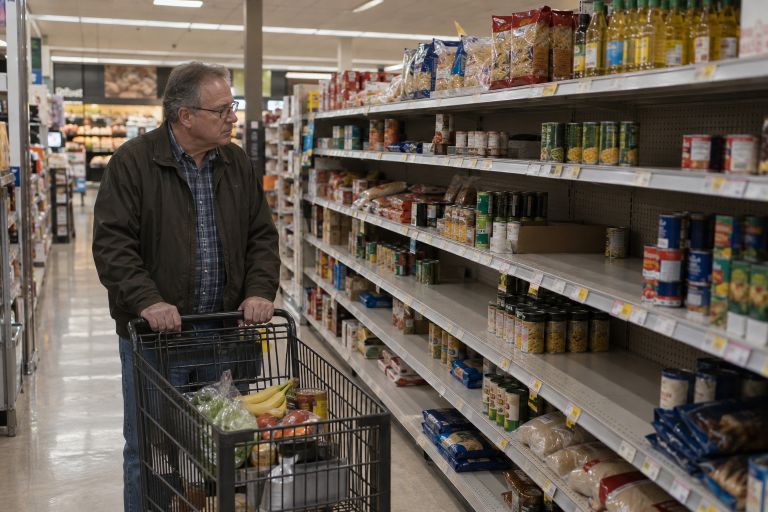
I pay attention to grocery stores differently than I used to. Years ago, I looked at the shelves mainly to see whether the thing I wanted was in stock. Now I also notice what is missing.
One empty spot means very little on its own. A truck may be late, a store may have underestimated demand, or somebody may have bought the last three cases that morning. What gets my attention is a pattern. The same shelf stays thin across several visits. One brand disappears entirely. The cheaper option vanishes first. The store starts filling the gap with unrelated products. A familiar item comes back in smaller quantities or at a much higher price.

Those little changes can tell you that pressure is building somewhere in the supply chain long before anybody calls it a shortage, and for a prepper, that head start is worth a great deal.
Watch Categories, Not Individual Products
I do not worry because one brand of canned corn is missing. I pay attention when the whole canned vegetable section starts looking thin, and that difference matters more than most people realize. A single missing product is usually a local stocking problem. Several missing brands in the same category can point to something larger involving transportation, packaging, production, ingredients, or regional demand.
So I watch the categories my family actually depends on: rice, flour, cooking oil, canned meat, canned vegetables, coffee, pet food, baby supplies, medicine, and cleaning products. If several options in one of those categories disappear at the same time, I make a mental note. If the same thing happens again the following week, I start taking it seriously.
The Cheapest Products Often Disappear First
One of the simplest signs I watch is the lower-cost shelf. When household budgets get squeezed, people move toward store brands and cheaper alternatives, and that can empty those products very quickly.
If I walk into a store and the premium products are still sitting untouched while the cheaper rice, pasta, canned goods, and cooking oil are gone, that tells me something real about consumer pressure. People may be buying the same amount of food with less money. I do not need an economist to explain that families are struggling if I can see it in the shopping carts and on the shelves.
When the foods I regularly buy start disappearing from the lower-price tier, I may increase my normal purchase slightly, before I get pushed into paying for the expensive replacement.
Look At How The Store Hides Empty Space
Stores do not like shelves that look empty, and they have several ways of dealing with it. Sometimes employees pull the remaining products forward. Sometimes they spread one brand across several shelf positions. Sometimes unrelated items quietly appear where another product used to sit. All of that can make a shortage look much smaller than it really is.
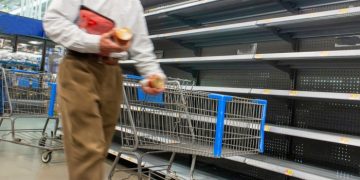
That is why I look behind the front row. If there are three cans sitting at the edge of a shelf that normally holds forty, I know the section is thin no matter how tidy it looks from the aisle. I also notice when a shelf holds an unusually large amount of a single product. A wall of one brand often means the other brands never arrived, and the shelf can look completely full while the number of actual choices has dropped sharply.
Restocking Tells Me More Than One Empty Shelf
I shop at the same stores most of the time, and that gives me an advantage, because I know what normal looks like there. If an item is gone on Monday and fully restocked by Thursday, I do not think much about it. If it is gone Monday, still gone Thursday, and only a handful of units show up the following week, I pay attention. Restocking speed is what tells you whether the supply chain is catching up or falling behind.
I have also learned that talking politely with store employees can be useful. I do not interrogate anybody. I may simply ask whether they know when a product is expected back. Sometimes the answer is, “Tomorrow.” Sometimes it is, “We haven’t been getting much of that lately.” That second answer goes straight into my mental notebook.
Watch For Brand Substitutions
Another warning sign shows up when familiar brands disappear and unusual ones suddenly take their place. A store may bring in a regional brand, a different package size, or a product from an unfamiliar supplier because the normal item has become difficult to get. There is usually nothing wrong with the replacement, and I am not criticizing it. The substitution itself is what interests me.
If a store that has carried the same three brands of an item for years suddenly stocks something completely different, there is often pressure behind the scenes. I treat that as a reason to check my own supply. Do I have enough of that category at home? Do I have alternatives? Could I cook without it entirely? Asking those questions early beats waiting until the whole section is empty.
Package Sizes Can Change During Supply Pressure
Shortages do not always create an empty shelf. Sometimes they create a different product instead. The package gets smaller, the count drops, an ingredient changes, the quality falls, or the familiar large size disappears and leaves only smaller ones behind. Those changes usually mean manufacturers are stretching limited materials or managing rising costs.
For my pantry, package size matters a great deal, because I plan around actual food rather than the number of containers on a shelf. Ten cans do not mean much if every can now holds less than it used to. When products start changing, I check ounces, pounds, and serving sizes rather than trusting the label I remember. A pantry that once covered three months can quietly become a two-and-a-half-month pantry if everything on the shelf shrinks at once.
Pay Attention To Odd Limits
Purchase limits are the most obvious warning sign of all. Two per customer. Limit four. While supplies last. Those signs tell me the retailer already expects supply to have trouble keeping up with demand.
I never treat that as a signal to empty the shelf. By the time limits go up, the best opportunity to prepare calmly has usually passed. The better approach is to notice the weeks that came before it: the repeated gaps, the slow restocking, the shrinking number of brands, the higher prices, the smaller packages. When those signs start showing up together, I may add one or two extra units to my normal shopping across several trips. That builds real depth without creating panic, and without stripping a shelf that somebody else may need that afternoon.
Track What Matters To Your Household
I do not try to monitor an entire grocery store. I care about the things my household would notice immediately if they disappeared, so I keep a short list of what we use constantly: rice, canned meat, cooking oil, coffee, flour, pet food, toilet paper, soap, and the prescription and over-the-counter medicines we take regularly.
If any one of those starts becoming unreliable, I respond sooner, because I already know it matters to us. Keeping the list short also stops me from buying random products simply because somebody online insists there is a shortage of them. My pantry exists to solve my family’s problems, not to chase headlines.
Build Alternatives Before You Need Them
A shortage becomes much less serious when I already know the substitute. If one type of cooking oil becomes hard to find, I know what else will do the job. If fresh meat gets expensive, I have canned meat, beans, and other protein on hand. If the bread shelves turn unreliable, I have flour and I know how to bake something basic. If one canned vegetable disappears, I have several others behind it.
I try to build that flexibility into the pantry ahead of time rather than improvising in the moment. Done right, a missing product changes what we eat for dinner instead of creating a crisis.
Buy Earlier, Buy Slowly
The biggest advantage a prepper has is the ability to act before everybody else feels urgency. If I see several warning signs stacking up around something my family uses, I do not wait for the news to announce a shortage. I also do not fill three carts.
I buy a little more than normal. Maybe two extra bags of rice, a few additional cans, another bottle of cooking oil, an extra package of pet food. Then I rotate it into our normal use so nothing sits and expires. Small purchases made early are easier on the budget, easier on storage space, and easier on everyone else shopping that day.
The Shelf Usually Whispers Before It Shouts
A real shortage eventually becomes obvious, and by then everybody can see it. The shelves are empty, prices jump, purchase limits appear, and people start driving from store to store hunting for the same item.
The useful information almost always comes earlier and quieter than that. A shelf that never quite fills. A brand that disappears without comment. A cheaper option that is always gone by the time you get there. A case that arrives half full. A package that gets a little smaller.
I pay attention to those small changes because they buy me time. Time to add a bit more storage. Time to find an alternative. Time to adjust our meals. Time to avoid buying anything under pressure. A prepper does not need to predict every shortage. He just needs to notice when normal stops looking normal.
Others Are Watching Now: