












One of the mistakes we make preparing for shortages is assuming the valuable things will always be the obvious things. Food, fuel, medicine, ammunition.
Those deserve attention. But history has a habit of changing the value of ordinary objects overnight.
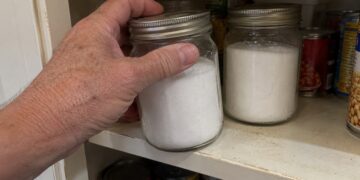
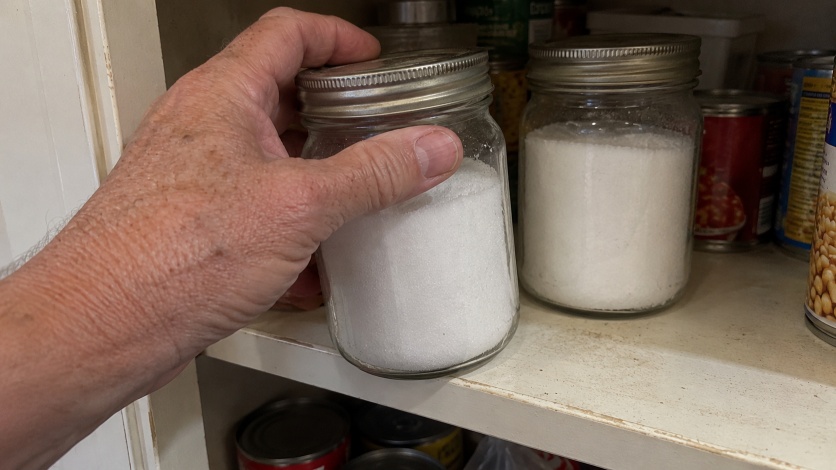
Salt is the easy example. It costs a few dollars now, but during the Civil War it mattered enough that production sites became military targets, and the Confederacy exempted some salt workers from military service on the grounds that preserving meat beat another rifle in the line.
In normal times the price tag tells us what something is worth. In a crisis, usefulness does, and the two numbers can sit very far apart.
The World’s Malaria Drug Came From One Island
This is the story that changed how I think about supply chains.
Quinine was the only effective malaria treatment for most of its history, and by the early twentieth century a Dutch cartel controlled roughly 95 percent of world production through cinchona plantations on Java. One island, one commercial bureau, and the entire global supply of the drug that made tropical campaigning survivable.
Then in 1942 Japan occupied the Dutch East Indies, and the Allies lost nearly all of it at once, in a war they were about to fight across some of the most malarial ground on earth.
What happened next sounds invented. The United States sent botanists into the Andes to find wild cinchona trees. The first team left for Colombia in October 1942, around thirty American botanists ended up working the program, and over roughly two years it imported about forty million pounds of dried bark.
Quinine was not synthesized in a laboratory until 1944.
A drug the whole world depended on came from one island, and nobody noticed the exposure until the island was gone. Now when I hear something is widely available, I ask where it is widely available from.
Cigarettes Became Money
I do not smoke and I am not suggesting anybody start. But cigarettes are the clearest example I know of how strange crisis economics gets.
In Germany after the war the official currency had lost much of its practical use. Goods were scarce, prices controlled, rationing continued, and most of what people wanted moved through barter instead. The German Bundesbank describes cigarettes as becoming highly prized as a means of payment and, for a period, effectively serving as a key currency in those first postwar years.
Why cigarettes? Recognizable, portable, divisible, in constant demand, sold in standardized units. A man who trusted no paper money at all still knew exactly what twenty were worth to somebody who wanted them.
The lesson is not to fill a closet with tobacco. It is that barter value comes from demand, not from what I personally find useful.
Tea Made Bad Water Drinkable
Hot drinks look far too ordinary to count as preparedness. Both governments treated them as war materiel.
America rationed coffee from November 1942 to July 1943 after U-boat attacks disrupted imports, and at one point the civilian ration fell to one pound every six weeks. Britain went further, buying up the black tea available in Europe from 1942 in a purchase that ranks by some accounts among the largest of the war by weight.
But here is the detail that belongs in a preparedness article rather than a history book.
Part of tea’s military value was that it made water stored in oil cans drinkable, and got men to drink enough of it.
A hot drink was not simply morale. It was what got questionable stored water into people who would otherwise have gone short.
Reading Glasses Give A Person His Work Back
I can survive without sharp eyesight. I cannot function well without it. Try reading a dosage on a medicine bottle when the print is a blur, or repairing a radio, threading a needle, checking a wound.
Civilian optical manufacturing was disrupted during the war as capacity went to military lenses and goggles, and the problem has not gone away. UNHCR notes that glasses are frequently lost, damaged or left behind in humanitarian emergencies. In one documented case among displaced people in Azerbaijan, a woman who had lost hers could not read or see faces clearly until humanitarian optometrists replaced them.
So I keep old prescriptions rather than binning them, and several cheap reading pairs spread between the house, the vehicle and a bag.
For the person who needs them, a pair weighing almost nothing restores an entire category of useful work.
The 1973 Shortage That Never Happened
This one belongs here for the opposite reason to everything above it.
In November 1973 American news picked up reports of a tissue shortage in Japan. A Wisconsin congressman, having found a document showing the government had failed to secure toilet paper bids, warned in December that a shortage was possible. The words may and potentially fell out of the retelling somewhere. Then Johnny Carson made a joke about it to roughly twenty million people.
Shelves across the country were stripped bare. Carson went back on air to apologize and explain there was no shortage. The panic ran into February 1974.
There had never been a supply problem at all. The shortage was manufactured entirely by the response to a rumor about one.
I find that more instructive than any wartime example, because it describes the world we actually live in. A supply chain can be perfectly healthy and the shelves still empty by Thursday, because enough people heard the same thing on the same evening.
The household that already had a reasonable supply never participated. That is most of what preparedness buys. Not surviving the apocalypse. Just not having to join the queue.
Rationing Got Worse After Victory
Here is the fact I would most want people to sit with.
Bread was never rationed in Britain during the Second World War. Churchill’s government deliberately avoided it, protecting morale by milling flour at higher extraction and producing a single National Loaf instead.
Bread rationing began on 21 July 1946, more than a year after the war in Europe ended, and ran until July 1948.
Victory did not restore the shelves. Things got tighter after the emergency was formally over, because the wider system was still broken and a shattered continent still had to be fed.
So I do not measure a disruption from the start of the event to the end of it. I measure to the point where normal supply actually resumes, and those two dates can sit years apart.

Cheap Things Become Expensive When Replacement Stops
None of these objects looks impressive sitting on a prepper shelf. That may be exactly why they deserve a second look.
American shoes were rationed in 1943, three pairs a year and later two, and repair stopped being an economy and became the only option. That is the pattern in miniature. When the expensive thing gets hard to replace, every cheap part that keeps it working goes up in value. A torn jacket is still a jacket if you have a needle. Without one, a three-inch rip gets longer every week until the jacket is finished.
I still store the obvious things. But every so often I walk around the house asking a different question.
What cheap object would become very hard to live without if I could not buy another for a year?
That produces a strange shopping list. Needles and thread. Shoelaces. Reading glasses. Coffee. Salt. Spare buttons. A manual can opener. Soap.
Maybe history’s strangest stockpiles were not strange at all. People simply understood something we forget while the stores are full.
Value changes very quickly when replacement stops being guaranteed.
Others Are Watching Now: