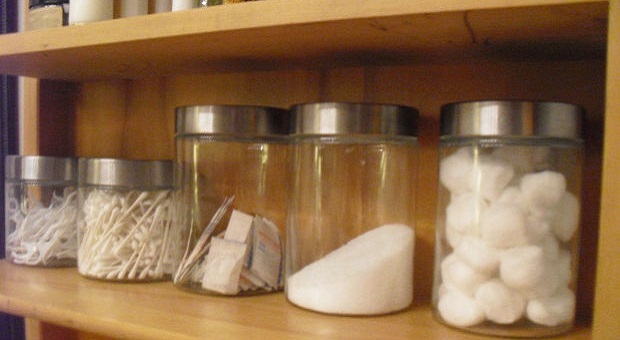


























There is a particular kind of household chaos that starts the moment somebody wakes up with a fever.
Nobody can find the thermometer. The children’s medicine expired six months ago, and nobody remembers the right dose anyway. The humidifier has been sitting in a closet since last winter and smells questionable. The sick person is coughing on the couch while everybody else walks through the same room. And then somebody has to make a pharmacy run, which is the last thing you want when the whole point is keeping people home.
I finally decided this was an easy problem to solve.
So before flu season really gets moving, I put together what I call the sick room kit. It is not a hospital. It is simply enough equipment, supplies, and advance thinking to care for one sick family member without turning the entire house upside down.
Start With A Good Thermometer
The thermometer is the first thing that goes in. I want a digital one that everybody in the house knows how to use, plus spare batteries if it takes them.
Temperature by itself does not tell me how sick somebody actually is. What it does is give me a number I can track, which tells me whether things are heading in the right direction or the wrong one.
I keep a notebook beside it, and I use it. Temperature, symptoms, when they started, what medicine was given, how much of it, and when the next dose is allowed.
That last item is the one that matters most. When two adults are taking turns caring for somebody at two in the morning, writing it down is what stops a dose from being given twice.
Set Up Medicines Before Anyone Has A Fever
This is where I spend a little real time before the season starts, because this is where the mistakes happen.
I go through the acetaminophen and ibuprofen, check every expiration date, confirm the measuring syringes are still there, and read the instructions for each person in the house rather than trusting my memory of them.
For children, I write down their current weight along with the dose indicated by the product label or confirmed with their pediatrician or pharmacist. The American Academy of Pediatrics recommends dosing children’s fever medicine by weight where possible, and using the measuring device that came with the medicine rather than a kitchen spoon.
I never guess at this. Children grow, which means last winter’s dose may simply be the wrong number now.
A few things I keep firmly in mind. Ibuprofen generally should not be given to babies younger than six months unless a doctor specifically says otherwise, and acetaminophen for a child under two deserves medical guidance rather than a label reading. Aspirin stays away from children and teenagers with viral illnesses entirely, because of the risk of Reye syndrome.
For adults, I follow the label and then check for duplicate ingredients, which is the trap most people walk into. A great many combination cold and flu products already contain acetaminophen, so adding a separate fever reducer on top makes it genuinely easy to take too much without ever feeling like you did anything careless.
A written medication plan is far safer than trying to hold all of that in your head while exhausted and worried.
Electrolytes Go Beside The Medicine
Fever is only part of the problem. A sick person may be sweating, eating almost nothing, vomiting, dealing with diarrhea, or simply refusing to drink.
That is why oral rehydration or electrolyte products live with the rest of the sick room supplies. I want something my family will actually drink, whether that is a commercial oral rehydration solution, packets that mix with water, or another suitable product.
I also keep straws and a cup or bottle that is easy to drink from while lying down, which sounds trivial until you watch somebody try.
Honestly, some days the most useful thing I can do for a sick person is keep handing him a few sips every time I walk past.
Clean The Humidifier Before You Need It
A cool-mist humidifier can make a dry room considerably more comfortable for somebody dealing with congestion, coughing, or a raw throat.
But I do not pull a dirty humidifier out of storage and switch it on. Any old water gets dumped, and the tank and removable parts get cleaned according to the manufacturer’s instructions. Then I keep up with that cleaning for as long as it is running.
The machine is there to improve the room, not to spray whatever has been growing in a forgotten water tank into the air of a room where somebody is already struggling to breathe comfortably.
I also do not turn the bedroom into a swamp. Comfortable is the goal, not maximum.
The Sick Person Gets His Own Linens
If somebody is going to be sick for several days, I want a separate set of bedding and towels already set aside: pillowcase, sheets, blanket, bath towel, and washcloth. The sick person also gets his own cup or water bottle.
An older CDC sick-room guide specifically recommended separate drinking glasses, towels, and washcloths as part of caring for somebody with influenza at home.
That makes the everyday work simpler and cuts out a lot of unnecessary sharing without anybody having to think about it.
I keep a spare set close by too, so I can change sweaty or soiled bedding at three in the morning without hunting through a linen closet in the dark.
Keep Everything On One Tray
This is one of the simplest improvements I have ever made to how my household handles illness.
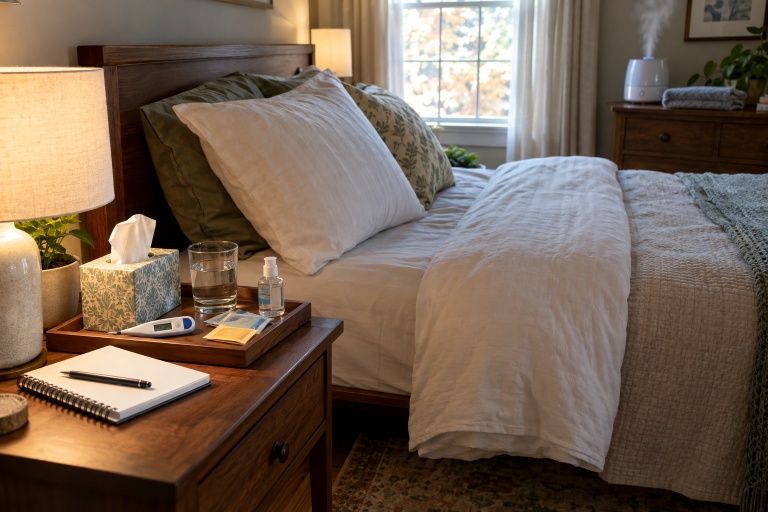
I use a tray or a small bedside table to hold the things the sick person needs repeatedly. Thermometer, tissues, water, electrolytes, a small lined trash can, hand sanitizer, the notebook and pen, and a phone charger.
That one change stops me from carrying fifteen separate items through the house all day long, and it means the sick person can reach most of what he needs without calling for somebody.
One caution goes with it. If young children live in the house, medication does not sit on that tray. It stays secured and out of reach, and it comes to the room only when a dose is actually being given. A bedside tray is exactly the right height for the wrong pair of hands.
Decide Where The Sick Person Goes In Advance
A lot of families do not have a spare bedroom. That does not make isolation impossible, it just means the decision should be made before anybody is ill.
Ideally the sick person gets a bedroom with a door and decent ventilation. If that is not available, I create as much practical distance as the house allows.
CDC currently recommends that people with respiratory-virus symptoms stay home and away from other household members while they are sick. Where complete separation is difficult, cleaner air, good hygiene, distancing, and well-fitting masks can all add protection.
In a small house I would much rather have one predictable sick area than a sick person drifting from the couch to the kitchen to three different bedrooms over the course of a day. The point is containing the problem, not achieving perfection.
Pick One Main Caregiver
Where it is possible, I designate one person to handle most of the close-contact care. That keeps the number of people repeatedly exposed as low as the situation allows.
The caregiver brings the drinks, checks the temperature, keeps the notes, changes the bedding, and makes sure medication is being taken correctly and on schedule. Everybody else gives the sick person room.
There is one case where I am much stricter about this. If somebody in the household is elderly, pregnant, immunocompromised, or otherwise at higher risk of severe illness, I work hard to keep that person away from whoever is sick, and CDC likewise recommends additional precautions around people at higher risk. That is the situation where casual exposure stops being a minor risk.
Air And Hygiene Matter More Than Constant Disinfecting
I keep soap available and wash my hands after handling tissues, dishes, or anything obviously contaminated. Frequently touched surfaces get cleaned, the sick person covers coughs and sneezes, and when the weather allows I improve ventilation by opening a window or otherwise bringing in cleaner air.
CDC continues to recommend hand hygiene, respiratory etiquette, cleaner air, distancing, and masking as the tools for reducing respiratory-virus transmission.
What I do not do is spend the entire day frantically spraying every wall in the house. I concentrate on the things people actually put their hands on and the air everybody in the room is sharing, because that is where the transmission is happening.
Write Down When Home Care Ends
This is the most important piece of paper in the whole kit, and it is the one most people never make.
Most cases of influenza can be managed at home. But some people need medical care sooner rather than later, particularly young children, adults 65 and older, pregnant women, and people with certain underlying medical conditions. Flu antivirals also work best when they are started early, ideally within the first two days of symptoms, which means a phone call on day one is worth far more than a phone call on day four.
So I keep a short written list of reasons to stop managing it at home and get help:
- Difficulty breathing
- Chest pain
- Blue or gray lips
- Confusion
- Severe weakness
- Signs of significant dehydration
- Symptoms that improve and then turn considerably worse
- Anything that simply tells me this has stopped being an ordinary illness
That list stays where another adult can find it, along with the doctor’s number, the pharmacy number, insurance information, a current medication list, and any relevant medical conditions. The person who needs that information may not be me, and they may be looking for it in a hurry.

Set It Up While Everybody Is Healthy
That is really the entire point of the sick room kit.
None of this is exotic. A thermometer, medicine, electrolytes, a clean humidifier, spare bedding and towels, a tray, a notebook, and a few infection-control supplies. You probably own most of it already, scattered across four rooms.
What makes it valuable is having it gathered in one place before somebody is lying in bed shivering and nobody can remember where anything is.
I can set the whole thing up in an afternoon while everyone in the house feels fine. Then when flu season finally reaches us, I am not starting with a trip to the store at nine at night. I am starting with a plan.
Others Are Watching Now: