
























I have never believed that home security starts with expensive cameras, subscription plans, or a wall full of monitors. Those things can help, but most trouble looks for something easier first. A dark house. A predictable routine. An empty driveway, a side gate nobody checks, a porch light that has been burned out for six months. A home that looks asleep in every possible way.
That is where cheap security starts to matter. A few lights, a little noise, and some changes to your nighttime habits can make a house look alert, occupied, and inconvenient to approach. For most families, that is a very good place to start.
Light The Places That Actually Matter
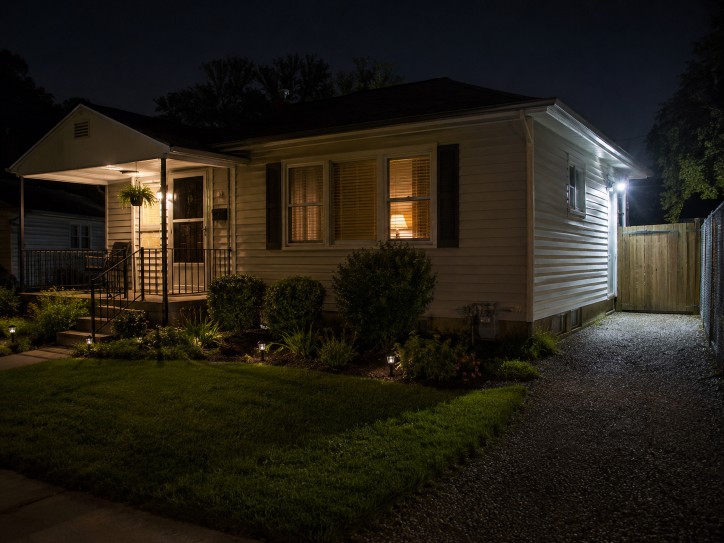
I do not want every inch of my property lit like a parking lot. I want enough light to remove the easy hiding places, and that means being honest about where those places are. The front door and the back door matter. So does the side gate, the path between the driveway and the house, and any dark corner sitting close to a window.
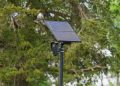
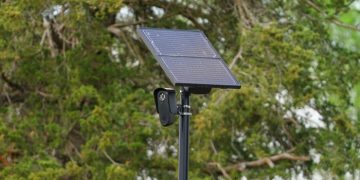
Motion lights are useful because they change the environment suddenly. Someone approaching the house goes from darkness to being fully visible in about a second, and that surprise alone can make a person reconsider what he is doing. Cheap solar motion lights work well in areas where running wire would be difficult, while hardwired fixtures are usually more dependable for the entrances that matter most.
The goal is simple. If someone walks toward the house at night, I want him to know that the property noticed.
Do Not Advertise That Everyone Is Asleep
Homes develop patterns whether we plan them or not. At 10:30 every light goes off. At 6:15 the kitchen comes on. At 7:00 the driveway empties. People who live nearby notice these patterns without even trying, which means someone paying attention for the wrong reasons will notice them too.
That is why I like inexpensive plug-in timers or smart bulbs on a few indoor lights. A living-room lamp can shut off at one time while another light stays on longer, so the house does not drop into complete darkness at the same minute every night. I do not need twenty automated lights to do this. Two or three well-placed lamps are enough to make a house look lived in, and that becomes far more useful during travel or a prolonged emergency, when family routines change and the house may sit empty longer than usual.
Sound Can Make A House Feel Occupied
Sound is another simple tool, and it costs almost nothing. A television, a radio, or the murmur of conversation coming from inside tells someone outside that there may be people awake in there. If I leave the house for an evening, I might leave a radio playing quietly in a room where it can be heard near the front of the house, and a timer can do the same job without running all night.
I am not trying to fool somebody who stands against the window studying the room for an hour. I am trying to discourage the person who walks past several houses and picks the easiest-looking one. That distinction matters, because cheap deterrence works by making another property look simpler than yours.
Gravel Is Cheap Security
One of the oldest noise makers is still one of the best, and it comes by the bag. A gravel path beneath windows, beside a gate, or along a narrow side passage makes quiet movement almost impossible. You hear the footsteps, the person walking hears his own footsteps, and even a dog inside the house may pick them up.
I especially like gravel in the tight areas around a house where someone would have to pass in order to reach a backyard or a side window. It needs no batteries, no subscription, and no Wi-Fi. It simply makes approaching quietly harder than it was before.
Doors Should Make Noise When They Open
I want to know when an outside door opens at night, and that does not require an expensive alarm system. Cheap battery-operated door and window alarms make a tremendous amount of noise the moment a contact separates, and they are simple enough to stick on a back door, a garage entry, a basement window, or any other access point you would rather not think about at 2:00 in the morning. Even a basic bell hung on a gate serves the same purpose.
The sound does two jobs at once. It warns the household, and it tells the person opening the door that the household may now be awake. That second part matters more than people realize. A burglar who expected silence and instead set off something loud has just lost one of his biggest advantages.
Build A Nighttime Locking Routine
Technology becomes a lot less important once a family has good habits. Every night, I want the same basic things checked: doors locked, windows secured, garage closed, vehicles locked, keys put away, outdoor tools brought in, gate closed, exterior lights working, and anything valuable moved out of obvious view.
The whole walk-through takes only a few minutes. I would rather spend those minutes every evening than discover at two in the morning that somebody left the back door unlocked after taking out the trash. Consistency is what closes the easy gaps, and it closes them for free.
Stop Leaving Useful Things Outside
A ladder lying beside the shed can become somebody else’s way to reach a second-story window. A hammer left on the porch can become a tool for breaking something. An extension cord, fuel can, bicycle, generator, or power tool left outside may simply disappear overnight. At the end of the day, I bring useful equipment inside or lock it down.
This becomes especially important during blackouts and disasters. When neighborhoods go dark and normal routines fall apart, tools and supplies become far more valuable than they were the week before. I have no interest in supplying equipment to the person trying to get into my property.
Make It Obvious That Someone Pays Attention
One of the best deterrents in existence is a house that plainly looks cared for. Mail does not pile up. Packages do not sit on the porch for days. Trash cans move, curtains change position, lights change, the yard stays maintained, vehicles come and go, and neighbors talk to one another. All of those little signs tell an observer that somebody is watching this property.
The opposite is just as loud. An overflowing mailbox, a dead porch light, an overgrown entrance, and untouched packages by the door all say the same thing about a house, and none of it is good. Security very often begins with maintenance.
Know Your Neighbors
A neighbor who knows what belongs on your property is worth more than another gadget. He knows which vehicles normally park there, he knows when you are out of town, and he knows that the person carrying something through your backyard at midnight probably does not belong there.
I try to know the people around me well enough that we can call each other when something looks wrong, and that relationship has to work both ways. If I see a garage door standing open late while the neighbor is away, I can tell him. If he sees somebody walking around my backyard while I am gone, he can tell me. A street where people communicate is much harder to move through unnoticed.
Change Predictable Habits Occasionally
I do not like making my routine completely obvious. If I always take the dog out at exactly 10:15, turn off every light at 10:30, and back out of the driveway at exactly 6:45, my household becomes very easy to read from across the street.
Small variations help more than you would expect. Leave a light on later sometimes. Use different rooms in the evening. Step outside and look around at different times. Move vehicles occasionally when it is practical. The point is not to live nervously or to turn every evening into an exercise. It is simply to avoid broadcasting a perfectly predictable schedule to anyone who takes the time to watch.
Have A Family Plan For Strange Noises
The worst possible time to decide what everyone should do is right after a crash wakes the house at 2:00 in the morning. My family should already know the basics before that happens. Children stay where they are supposed to stay unless they are told otherwise. Nobody wanders outside to investigate. One adult calls emergency services if the situation calls for it. Exterior lights get turned on from a safe location if that is possible. Doors stay locked, and everyone knows where the phones and flashlights are kept.
Most strange noises turn out to be nothing serious, which is exactly why people skip this step. The plan still matters, because confusion in the dark is dangerous all by itself.
Make Your House Look Like Work
That is really what budget security comes down to. I want the person looking for an easy target to see light, hear activity, notice secure doors, crunch across a noisy approach, and understand that the people inside pay attention. None of that requires an expensive security system.
A few motion lights. A timer. Some gravel. Cheap door alarms. Good locks. A nightly routine. Neighbors who talk to each other. Those small layers add up to something a casual opportunist would rather avoid.
You may eventually add cameras, alarms, reinforced doors, and other equipment, and I have nothing at all against good technology. But I would start with the basics, because trouble usually prefers darkness, silence, predictability, and neglect. Make your home offer as little of those as possible.
Others Are Watching Now: