











Survivopedia
  • HOME
  • GENERAL PREP
    • All
    • Disaster Scenarios
    • EMP
    • Natural Disasters
    • Survival News
    • Survival Skills

    If The Roads Closed Overnight: How Each Culture Would Respond To Sudden Isolation

    Firecraft In Community Life – How Native, Pioneer, and Amish Families Used Fire Beyond Cooking

    Knot Work for Homesteads and Camps

    Knot Work for Homesteads and Camps

    Water Wisdom: Springs, Wells, And Rivers Through Native, Pioneer, And Amish Eyes

    Teaching Children Courage Without Teaching Them Panic

    Historic Methods For Keeping Insects Off People, Food, And Bedding

    From Hobby to Lifeline – Turning Crafts into Crisis Skills

    How to Make Fire Without Matches: The Bow Drill

    How to Read a Storm With No Forecast App

    • SHTF SCENARIOS
      • Survival Skills
      • Disaster Scenarios
      • Natural Disasters
      • WATER
      • FINANCIAL
      • WAR & CONFLICTS
      • emp
    • EQUIPMENT
      • Bug-Out-Vehicle
      • Firearms
      • COMMUNICATION
    • ENERGY
      • ENERGY
      • Energy Sources
      • Electric Equipments
      • Consumption Control
  • WEAPONS
    • All
    • Cold Weapons
    • Firearms
    • Regulations
    Field Reloading

    Field Reloading

    Fully Automatic Firearms? No Thanks!

    Are Alternative Weapons Practical in a Post-Disaster World?

    How To Travel With A Firearm

    The Ultimate Survival Knife: How to Pick the Right One

    A Sharp Edge: Choosing the Best Survival Knife for Prepping and Self-Defense

    Is There a Place for “Fast Draw” in Survival?

    Indispensable Gear for your EDC Core Layer

    Best 17 silent weapons for when SHTF

    Best 17 silent weapons for when SHTF

    • Firearms
    • Cold Weapons
    • Defense
    • Privacy & Data Protection
    • Regulations
  • FOOD
    • All
    • Cooking
    • Farm Animals
    • Farming
    • Food Storage
    • Hunting
    • Plants & Gardening

    Why Stored Canned Meat Belongs In Every Crisis Pantry

    Cooking On A Hearth Or Open Fire: Old World Kitchen Skills For Modern Preppers

    Clay Pot Refrigeration: Old Tech That Still Cools Food

    From Farm to Faith: What Homesteading Teaches Us About God and Grit

    How I Finally Became Food Independent

    How I Finally Became Food Independent

    Tracking Like a Native Scout: Sign, Age & Counter-tracking

    Fermented Foods for Gut Health During Long-Term Collapse

    Amish Root Beer and Old-World Fermentation

    Amish Root Beer and Old-World Fermentation

    Food Prices Are Still Climbing: Are You Two Harvests Behind?

    Food Prices Are Still Climbing: Are You Two Harvests Behind?

    • Food Storage
    • Cooking
    • Farm Animals
    • Hunting
    • Plants & Gardening
  • Store
  • Newsletter
No Result
View All Result
  • HOME
  • GENERAL PREP
    • All
    • Disaster Scenarios
    • EMP
    • Natural Disasters
    • Survival News
    • Survival Skills

    If The Roads Closed Overnight: How Each Culture Would Respond To Sudden Isolation

    Firecraft In Community Life – How Native, Pioneer, and Amish Families Used Fire Beyond Cooking

    Knot Work for Homesteads and Camps

    Knot Work for Homesteads and Camps

    Water Wisdom: Springs, Wells, And Rivers Through Native, Pioneer, And Amish Eyes

    Teaching Children Courage Without Teaching Them Panic

    Historic Methods For Keeping Insects Off People, Food, And Bedding

    From Hobby to Lifeline – Turning Crafts into Crisis Skills

    How to Make Fire Without Matches: The Bow Drill

    How to Read a Storm With No Forecast App

    • SHTF SCENARIOS
      • Survival Skills
      • Disaster Scenarios
      • Natural Disasters
      • WATER
      • FINANCIAL
      • WAR & CONFLICTS
      • emp
    • EQUIPMENT
      • Bug-Out-Vehicle
      • Firearms
      • COMMUNICATION
    • ENERGY
      • ENERGY
      • Energy Sources
      • Electric Equipments
      • Consumption Control
  • WEAPONS
    • All
    • Cold Weapons
    • Firearms
    • Regulations
    Field Reloading

    Field Reloading

    Fully Automatic Firearms? No Thanks!

    Are Alternative Weapons Practical in a Post-Disaster World?

    How To Travel With A Firearm

    The Ultimate Survival Knife: How to Pick the Right One

    A Sharp Edge: Choosing the Best Survival Knife for Prepping and Self-Defense

    Is There a Place for “Fast Draw” in Survival?

    Indispensable Gear for your EDC Core Layer

    Best 17 silent weapons for when SHTF

    Best 17 silent weapons for when SHTF

    • Firearms
    • Cold Weapons
    • Defense
    • Privacy & Data Protection
    • Regulations
  • FOOD
    • All
    • Cooking
    • Farm Animals
    • Farming
    • Food Storage
    • Hunting
    • Plants & Gardening

    Why Stored Canned Meat Belongs In Every Crisis Pantry

    Cooking On A Hearth Or Open Fire: Old World Kitchen Skills For Modern Preppers

    Clay Pot Refrigeration: Old Tech That Still Cools Food

    From Farm to Faith: What Homesteading Teaches Us About God and Grit

    How I Finally Became Food Independent

    How I Finally Became Food Independent

    Tracking Like a Native Scout: Sign, Age & Counter-tracking

    Fermented Foods for Gut Health During Long-Term Collapse

    Amish Root Beer and Old-World Fermentation

    Amish Root Beer and Old-World Fermentation

    Food Prices Are Still Climbing: Are You Two Harvests Behind?

    Food Prices Are Still Climbing: Are You Two Harvests Behind?

    • Food Storage
    • Cooking
    • Farm Animals
    • Hunting
    • Plants & Gardening
  • Store
  • Newsletter
No Result
View All Result
Survivopedia
No Result
View All Result
Home FOOD

Why Stored Canned Meat Belongs In Every Crisis Pantry

A pantry without protein is a weak pantry.

Rice, beans, flour, oats, pasta, and cornmeal all have their place. They are cheap, filling, and worth storing deep. But when a real crisis hits, a family needs more than calories. They need strength. They need meals that satisfy. They need food that can be opened fast, served hot or cold, and used without electricity, refrigeration, or complicated preparation.

That is where canned meat earns its place.

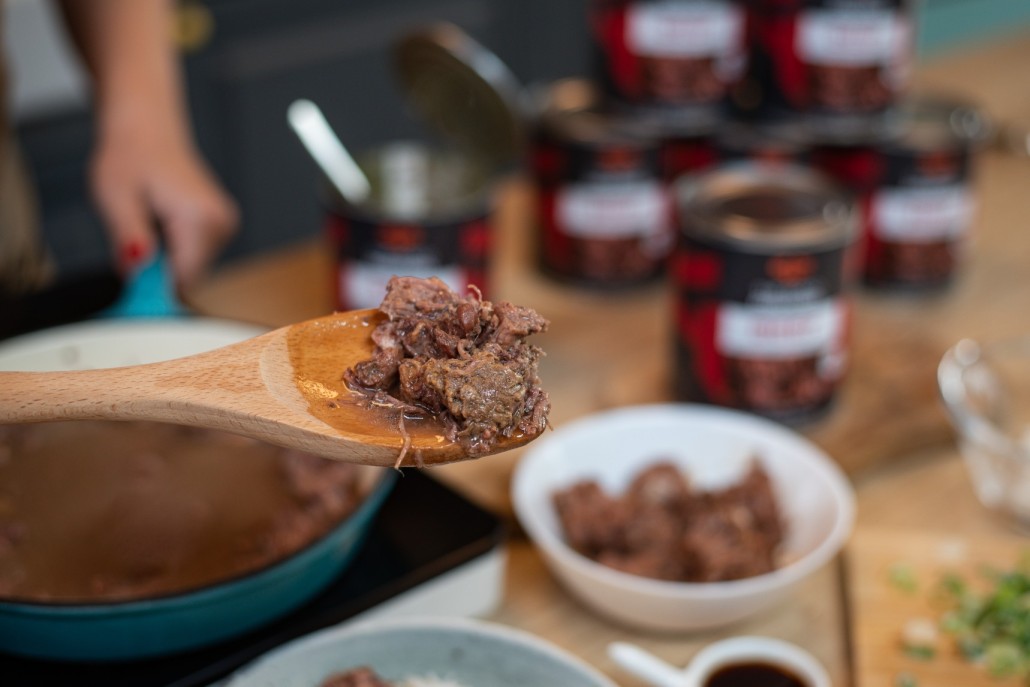
Chicken, beef, tuna, salmon, sardines, ham, turkey, and other shelf-stable meats give a household something that is hard to replace when the roads close, the freezer fails, or fresh food disappears from the stores. Canned meat is practical, compact, ready to eat, and easy to turn into a real meal.

For a prepper, that makes it one of the most useful foods on the shelf.
1. Canned Meat Solves A Serious Crisis Problem

Fresh meat depends on a working system.

It depends on refrigeration, fuel, transportation, butchers, grocery stores, and steady supply chains. When any of those pieces fail, fresh meat disappears quickly or spoils in place.

Canned meat is different.

It already passed through the heat and preservation process. It sits quietly on the shelf, waiting. It does not ask for freezer space. It does not care if the power is out. It does not need to be cooked before it can be eaten. In a blackout, storm, evacuation, fuel shortage, job loss, or supply disruption, that kind of reliability is valuable.

A can of chicken can become soup. A can of beef can strengthen a stew. Tuna can feed a man in five minutes. Sardines can give fat, protein, and minerals with no cooking at all.

That is not a luxury. That is real preparedness.

2. Protein Keeps People Working

During a crisis, people burn energy differently.

They may be cutting fallen limbs, hauling water, repairing damage, walking farther, standing watch, carrying supplies, or sleeping poorly. Stress alone can drain a body. A diet built only around plain starches may keep people alive, but it often leaves them unsatisfied and weaker over time.

Canned meat helps close that gap.

It gives the body protein for muscle repair, strength, and recovery. Many canned meats also bring fat, which helps meals feel more filling. In cold weather or heavy work, that matters. A bowl of rice with chicken is stronger than plain rice. Beans with ham satisfy better than beans alone. Potatoes with canned beef carry a man longer than potatoes by themselves.

A smart pantry uses canned meat to turn stored staples into working meals.

3. It Saves Fuel When Fuel Matters Most

Cooking fuel becomes precious during an emergency.

Propane, firewood, charcoal, alcohol fuel, and camp stove canisters all run down with use. A food that requires hours of cooking may be fine in normal times, but it becomes more expensive when every flame matters.

Canned meat gives a family options.

It can be eaten cold if necessary. It can be warmed quickly. It can be added at the end of cooking instead of simmering for hours. That saves fuel and time.

This is especially useful when combined with dry staples. Cook rice, beans, pasta, or potatoes, then add canned meat near the end. The meal gains protein and flavor without wasting extra fuel.

In a long outage, that kind of efficiency counts.

4. Canned Meat Improves Morale

Food is never only about nutrition.

A family under pressure needs meals that feel like meals. Children need familiar flavors. Older adults need food they can chew and digest. Men and women doing hard work need something that satisfies them enough to keep going.

Canned meat helps make crisis food feel normal.

Chicken and dumplings. Tuna salad. Salmon patties. Beef stew. Ham and beans. Sardines on crackers. Turkey with gravy over rice. These are simple meals, but they feel like real food. They break the monotony that can come from living on plain staples.

Morale is part of survival. A household that eats better usually thinks better, works better, and argues less.

5. The Cost Can Be Managed

Canned meat costs more than rice or beans. That is true.

The answer is to use it wisely.

A prepper does not need every meal to be built around a full can per person. Canned meat works best as a force multiplier. One or two cans can improve a large pot of soup, stew, rice, beans, pasta, or casserole. Used that way, it stretches far.

This is how older families thought about meat. It was often used to flavor and strengthen a meal, not dominate it. A little ham in beans, beef in barley soup, chicken in rice, or salmon with cornmeal can feed more people than expected.

Buy gradually. Watch sales. Store what your family actually eats. Add a few cans at a time until your pantry has depth.

6. Salt Is Useful When Handled Correctly

Many canned meats contain salt. That is often treated as a problem, but in a crisis it can also be useful.

People working hard, sweating, eating plain staples, or living in hot conditions need electrolytes. Salt helps food taste better and can make simple meals more satisfying. In older food systems, salt was one of the most important preservation tools a family could own.

The key is balance.

Use salty canned meat with unsalted rice, beans, potatoes, oats, or vegetables. Spread it through a larger dish. Store some lower-sodium options if your household needs them. Pay attention to family members with blood pressure, kidney, heart, or fluid issues.

Salt is manageable when the cook is paying attention.

7. Storage Is Simple If You Rotate

Canned meat stores well, but it should still be treated as part of a working pantry.

Keep it in a cool, dry, dark place. Avoid heat as much as possible. Do not leave it in a garage that bakes all summer if you have a better option. Mark purchase dates. Put newer cans behind older cans. Eat the older stock first.

That is the whole system.

A pantry should move. It should feed the family in normal times and protect the family in hard times. If you already use canned chicken in soup, tuna for lunch, salmon for patties, or beef in stew, rotation becomes easy.

Stored food that nobody eats becomes clutter. Stored food that fits your normal meals becomes resilience.

8. Safety Rules Are Straightforward

Canned meat is reliable when the can is sound.

Inspect cans as part of your routine. A good can should be intact, clean, and normal in shape. Avoid cans that are bulging, leaking, badly rusted, cracked at the seam, spurting liquid, or giving off a strange odor when opened.

Low-acid foods like meat deserve respect. If a can looks wrong, discard it safely. Do not taste questionable meat to test it.

These rules are simple, and they make canned meat a dependable storage food. Keep the cans protected, rotate them, inspect them, and use common sense.

9. It Belongs In A Layered Food Plan

Canned meat should not stand alone. It should sit inside a broader food plan.

The strongest pantry has layers.

Dry staples provide calories. Canned meat adds protein and flavor. Canned vegetables and fruit add variety. Fats support energy. Spices keep meals interesting. Home-canned food, garden produce, eggs, livestock, fishing, hunting, and barter add more options where possible.

Canned meat fits beautifully into that system because it works with almost everything.

It turns beans into a meal. It turns rice into supper. It turns soup into something hearty. It gives a tired family fast food without depending on a restaurant, a freezer, or a grocery store.
10. Store It With Confidence

A serious prepper should have canned meat on the shelf.

It is practical. It is ready. It saves fuel. It adds protein. It improves morale. It stretches simple staples into meals that feel complete. It gives a family options when fresh meat is gone and the freezer cannot be trusted.

The long-term issues are manageable with basic discipline. Store it cool. Rotate it. Inspect the cans. Balance the salt. Use it with cheaper staples. Build recipes your family already likes.

That is not complicated.

In hard times, a can of meat can turn a thin meal into a sustaining one. It can feed a worker, comfort a child, help an older person eat, and give the cook one less thing to worry about.

That makes it worth storing.

A prepared pantry should have plenty of beans, rice, flour, and oats. But it should also have meat that waits patiently on the shelf, ready to serve when fresh food is no longer easy to find.

Others Are Watching Now:

ShareTweet
Alec Deacon

Alec Deacon

Alec Deacon is the owner of Backyard Liberty.com. He’s very passionate about survival and he’s constantly looking for the best ways to protect his family - his wife Ana and the two boys, David and Andrew, that are the world to him. He used to work as a hygiene officer in a well-known US company, being in charge with food safety. In the time spent there he learned a lot about food: cooking, storing, freezing, transporting… basically everything that has to do with food safety. He is also a huge fan of outdoor living. Fishing carp is one of the things he loves most and it just happens that fishing is also one of the oldest and most basic survival skill.

Leave a Reply Cancel reply

Your email address will not be published. Required fields are marked *

  • Trending
  • Comments
  • Latest
How To Make Pemmican, The Ultimate Survival Food (Video)

How To Make Pemmican, The Ultimate Survival Food (Video)

January 12, 2026

How the Amish Would Respond to Grid Down

November 17, 2025
Chloroform

How To Make Chloroform For Survival

October 13, 2025
Top 10 Vehicles For Your EMP Survival

Top 10 Vehicles For Your EMP Survival

May 19, 2026
The Ugly Part of Water Purification: Top 5 Mistakes You Make

The Ugly Part of Water Purification: Top 5 Mistakes You Make

September 29, 2025
How to Preserve Eggs Like the Pioneers Did

How to Preserve Eggs Like the Pioneers Did

October 14, 2025
Top 6 Survival Rifles And Why You Need One

Top 6 Survival Rifles And Why You Need One

429
Top 5 Bug Out Locations In The US

Top 5 Bug Out Locations In The US

257
Top 10 Vehicles For Your EMP Survival

Top 10 Vehicles For Your EMP Survival

162
10 Items You Need To Hoard

10 Items You Need To Hoard

148
How To Store Flour, Sugar And Rice For Survival

How To Store Flour, Sugar And Rice For Survival

141
alaska landscape

A Prepper’s Story: Headed To Alaska To Survive Off-grid

118

Why Stored Canned Meat Belongs In Every Crisis Pantry

July 8, 2026

Traditional Floor And Surface Cleaning Without Chemicals

July 6, 2026

If The Roads Closed Overnight: How Each Culture Would Respond To Sudden Isolation

June 29, 2026

What Stories Are You Leaving Behind For Your Grandchildren

June 19, 2026

Building a Low-Tech Sick Room at Home

June 17, 2026

Firecraft In Community Life – How Native, Pioneer, and Amish Families Used Fire Beyond Cooking

June 15, 2026

No Result
View All Result


  • Privacy Policy
  • Terms&Conditions
  • Blogroll
  • Contact
  • Newsletter

© 2025 SURVIVOPEDIA

No Result
View All Result
  • HOME
  • GENERAL PREP
    • SHTF SCENARIOS
      • Survival Skills
      • Disaster Scenarios
      • Natural Disasters
      • WATER
      • FINANCIAL
      • WAR & CONFLICTS
      • emp
    • EQUIPMENT
      • Bug-Out-Vehicle
      • Firearms
      • COMMUNICATION
    • ENERGY
      • ENERGY
      • Energy Sources
      • Electric Equipments
      • Consumption Control
  • WEAPONS
    • Firearms
    • Cold Weapons
    • Defense
    • Privacy & Data Protection
    • Regulations
  • FOOD
    • Food Storage
    • Cooking
    • Farm Animals
    • Hunting
    • Plants & Gardening
  • Store
  • Newsletter

© 2025 SURVIVOPEDIA