











Survivopedia
  • HOME
  • GENERAL PREP
    • All
    • Disaster Scenarios
    • EMP
    • Natural Disasters
    • Survival News
    • Survival Skills

    Shackleton: Six Hundred Days And Not One Man Lost

    7 Habits Veterans Have That Most Preppers Don’t

    The Strangest Things People Stockpiled, And Why They Were Right

    Why I Keep My Whole Backup Kit In One Faraday Dry Bag

    How The Amish Would Handle A Sudden EMP Better Than Most Of Us

    Flock Cameras Aren’t Speed Cameras: What They Record, Keep, And Share

    The First Frost Kit: What Goes In The Truck By Mid-October

    What The Old Women Did Between Harvest And Frost

    Twenty-Five Years Later: Teaching A Generation That Wasn’t There

    • SHTF SCENARIOS
      • Survival Skills
      • Disaster Scenarios
      • Natural Disasters
      • WATER
      • FINANCIAL
      • WAR & CONFLICTS
      • emp
    • EQUIPMENT
      • Bug-Out-Vehicle
      • Firearms
      • COMMUNICATION
    • ENERGY
      • ENERGY
      • Energy Sources
      • Electric Equipments
      • Consumption Control
  • WEAPONS
    • All
    • Cold Weapons
    • Firearms
    • Regulations

    When Chickens, Wood Stoves, And Burn Barrels Become Violations

    Field Reloading

    Field Reloading

    Fully Automatic Firearms? No Thanks!

    Are Alternative Weapons Practical in a Post-Disaster World?

    How To Travel With A Firearm

    The Ultimate Survival Knife: How to Pick the Right One

    A Sharp Edge: Choosing the Best Survival Knife for Prepping and Self-Defense

    Is There a Place for “Fast Draw” in Survival?

    Indispensable Gear for your EDC Core Layer

    • Firearms
    • Cold Weapons
    • Defense
    • Privacy & Data Protection
    • Regulations
  • FOOD
    • All
    • Cooking
    • Farm Animals
    • Farming
    • Food Storage
    • Hunting
    • Plants & Gardening

    The Thanksgiving Price Tag Is A Warning Label

    8 Uses For The Leaves Everyone Else Bags Up

    The Last Garden Day Of The Year

    Why Your Steak Keeps Getting More Expensive, And Why Prices Won’t Drop Anytime Soon

    Why Our Grandparents Never Threw Away Cooking Fat

    10 Wild Mushrooms Worth Knowing: Food, Health, And Traditional Uses

    Farm Bankruptcies Are An Early Warning

    Export Bans Are The Loudest Signal In Food

    Why So Much Of Your Supply Chain Runs Through A Single Building

    • Food Storage
    • Cooking
    • Farm Animals
    • Hunting
    • Plants & Gardening
  • Store
  • Newsletter
No Result
View All Result
Survivopedia
No Result
View All Result
Home GEAR REVIEWS Equipment

I Didn’t Know What Was Missing From My Survival Kit Until I Found This Straw

I thought my emergency kits were in good shape. Food, first aid, flashlights, batteries, fire starters, a radio, power banks and a stack of bottled water. I had spent enough years at this to explain why every item was there.

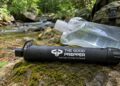
Then I came across a small black water filter called the Pocket Well, and it showed me a hole in my planning I should have spotted years earlier. I had stored water, but I had never solved what happens when the stored water runs out, and those are two very different things.

A case of bottled water is a supply. A way to turn questionable freshwater into safer drinking water is a capability. Once I saw it that way, I bought more than one.
Stored Water Is A Supply, Not A Plan

I still store water and always will, because if the power drops for a day or the city issues a boil-water notice, I would far rather open a bottle I know is safe than go looking for a creek.

But water has one serious weakness as a preparedness item, which is that it weighs more than eight pounds a gallon. Try carrying three or four days of drinking water for a whole family and the problem explains itself inside a hundred yards. It also disappears faster than people plan for, because drinking is only part of the demand and the rest goes into cooking, medication, washing and pets.

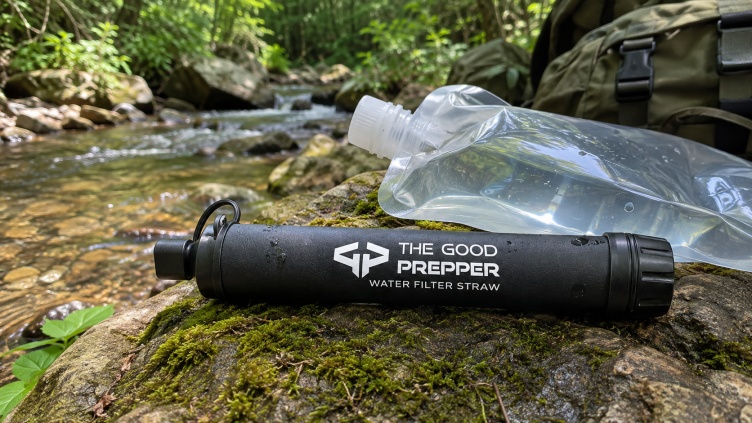
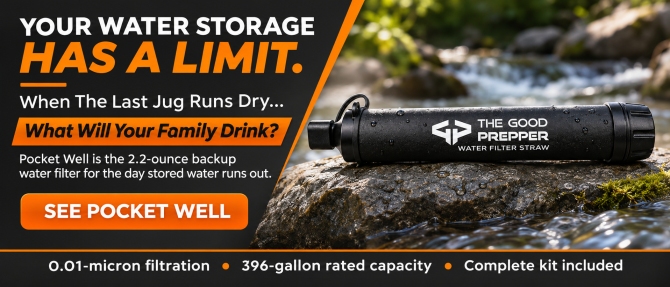
That is where this thing made sense to me. It runs about eight inches long and weighs barely over two ounces, yet the filter is rated for up to 396 gallons. That much bottled water would weigh roughly a ton and a half and need a truck to move it. This version fits in a jacket pocket.

What It Actually Is

The filter uses a 0.01 micron hollow fiber membrane backed by activated carbon, which handles taste and odor, and it is built for freshwater. There is no battery to charge, no electricity and no separate pump to carry.

I can drink straight from a suitable source, or use the collapsible pouch to scoop water, walk somewhere comfortable and filter from there. That pouch makes the system far more useful than the word straw suggests. Flow runs up to about fifteen ounces a minute, which will not fill a pool but is sensible for drinking water.

What Are Those Black Specks In My Water?

This is the one that makes people think they bought a faulty filter. The first water through a new carbon filter can look cloudy or carry fine black specks, and nothing is wrong. Activated carbon arrives with loose dust left from manufacturing and shipping, which is harmless and rinses straight out, so run clean water through before you drink and follow the instructions in the box. Half a glass was all mine needed before it came clear.

Cloudiness is usually trapped air instead. Let a glass stand, and if it clears from the bottom upward within a minute or two, that was air rather than anything shedding from the filter. Better to learn both at the kitchen sink than halfway through an emergency.

The Backwash Syringe Matters More Than It Looks

Buying a filter is the easy part, and maintenance decides whether it still works in five years. Sediment gradually restricts the tiny passages inside a hollow fiber membrane, and the flow drops off as that happens.

The syringe in the kit reverses it. You fill it with clean water, connect it to the inlet and push water back through the filter the wrong way until the flow returns. So it stays with the filter rather than in the junk drawer, because it is equipment and not an accessory. The rated capacity assumes sensible source water too, since anyone filtering silt-heavy runoff will be backwashing well before the number on the box.

Why One Lives In The Truck
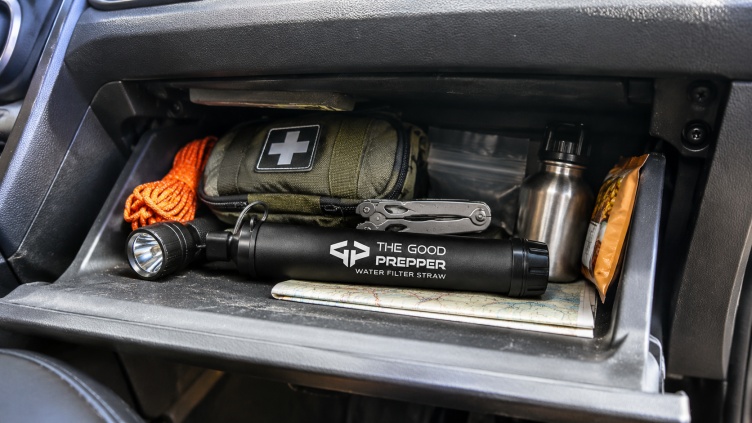
This may be where I value it most, because an emergency does not schedule itself for an evening when I am home. Vehicles break down, roads close, and an evacuation can turn a twenty minute drive into six hours. Something this small takes less room than a bottle of water, so there is no argument against keeping one in the vehicle kit alongside the water I already carry.

There is one cold weather rule I take seriously. The operating range starts at 32 degrees, and a hollow fiber filter that has already been wetted can be damaged inside if it freezes afterward. The part that matters is that there is no reliable way to tell afterward by looking, which is why a filter that spent January in a cold truck deserves suspicion in July. So I protect it from the cold, and anything I think has frozen after use gets replaced rather than trusted.

What I Would Not Ask It To Do

No water filter is magic, and a fine pore size does not make every puddle drinkable. I would not collect water fouled with fuel, pesticides, industrial chemicals or saltwater and expect a pocket filter to sort it out, since activated carbon helps with some contaminants and improves taste without being a universal chemical remover. I also would not assume any portable filter handles every virus unless the maker provides tested performance for that specific claim.

So source selection stays my first decision, because given the choice between a clear running stream and an oily ditch beside an industrial yard, owning a good filter is no reason to pick the ditch. None of that is a knock on the equipment. It is the difference between a layer of protection and a license to stop thinking.

Why I Own Several Now

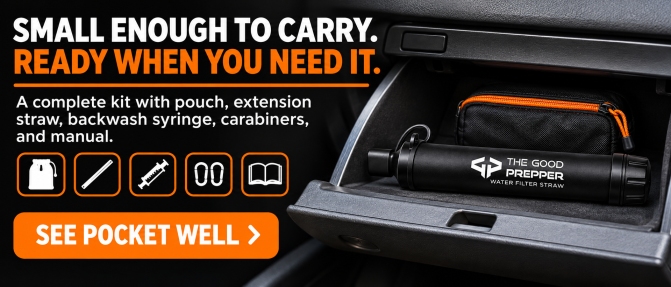
One lives with the main preparedness supplies, one sits in the vehicle kit, one belongs with the gear I would grab on the way out of the door, and I like having a spare for somebody else in the family. My younger self would have called that excessive.

A survival tool sitting twelve miles away is not solving anything, and something this small makes redundancy nearly free. I think about fire the same way, since I do not own one lighter and shuttle it between the house, the truck and the bag.
Water I Have, And Water I Can Make

My old water plan was arithmetic, running on gallons and people and days. Those sums still matter, but I now keep two columns. There is water I already have, and water I can make usable once the first column empties.

The first buys time and the second provides endurance. If an emergency lasts a day I may never unwrap the filter, which suits me, because I do not buy this equipment hoping for a chance to use it. If it runs a week and the clean bottles are thinning out, that small tube becomes one of the most valuable things in the house.

The best survival gear solves a large problem in very little space, and this has no blade, no electronics and nothing dramatic about it. What it has is access to a great deal of water my family cannot do without, folded into something I can forget I am carrying.

Others Are Watching Now:

ShareTweet
Darren Kelburn

Darren Kelburn

Darren Kelburn is a hands-on experimenter and backyard problem-solver who writes about practical self-reliance. When he’s not testing small-scale food or power systems, he’s usually fixing something around the house or hiking local trails with his family.

Leave a Reply Cancel reply

Your email address will not be published. Required fields are marked *

  • Trending
  • Comments
  • Latest
How To Make Pemmican, The Ultimate Survival Food (Video)

How To Make Pemmican, The Ultimate Survival Food (Video)

January 12, 2026

How the Amish Would Respond to Grid Down

November 17, 2025
Top 10 Vehicles For Your EMP Survival

Top 10 Vehicles For Your EMP Survival

May 19, 2026

7 Habits Veterans Have That Most Preppers Don’t

November 11, 2026
Chloroform

How To Make Chloroform For Survival

October 13, 2025
The Ugly Part of Water Purification: Top 5 Mistakes You Make
The Ugly Part of Water Purification: Top 5 Mistakes You Make

September 29, 2025
Top 6 Survival Rifles And Why You Need One

Top 6 Survival Rifles And Why You Need One

429
Top 5 Bug Out Locations In The US

Top 5 Bug Out Locations In The US

257
Top 10 Vehicles For Your EMP Survival

Top 10 Vehicles For Your EMP Survival

162
10 Items You Need To Hoard

10 Items You Need To Hoard

148
How To Store Flour, Sugar And Rice For Survival

How To Store Flour, Sugar And Rice For Survival

141
alaska landscape

A Prepper’s Story: Headed To Alaska To Survive Off-grid

118

I Didn’t Know What Was Missing From My Survival Kit Until I Found This Straw

November 19, 2026

The Thanksgiving Price Tag Is A Warning Label

November 17, 2026

8 Uses For The Leaves Everyone Else Bags Up

November 16, 2026

The Last Garden Day Of The Year

November 13, 2026

Shackleton: Six Hundred Days And Not One Man Lost

November 13, 2026

Pain Control When There Is No Morphine

November 12, 2026

No Result
View All Result


  • Privacy Policy
  • Terms&Conditions
  • Contact
  • Newsletter

© 2026 SURVIVOPEDIA

No Result
View All Result
  • HOME
  • GENERAL PREP
    • SHTF SCENARIOS
      • Survival Skills
      • Disaster Scenarios
      • Natural Disasters
      • WATER
      • FINANCIAL
      • WAR & CONFLICTS
      • emp
    • EQUIPMENT
      • Bug-Out-Vehicle
      • Firearms
      • COMMUNICATION
    • ENERGY
      • ENERGY
      • Energy Sources
      • Electric Equipments
      • Consumption Control
  • WEAPONS
    • Firearms
    • Cold Weapons
    • Defense
    • Privacy & Data Protection
    • Regulations
  • FOOD
    • Food Storage
    • Cooking
    • Farm Animals
    • Hunting
    • Plants & Gardening
  • Store
  • Newsletter

© 2026 SURVIVOPEDIA