



















Preparedness groups rarely break apart because someone forgot to buy enough food or failed to update a bug-out plan. More often, the trouble begins when personal beliefs enter a conversation that was supposed to be about practical planning. One person mentions prophecy or the end times, someone else makes an offhand comment about religion, and before long several members stop responding to messages or showing up to meetings.
Families can run into exactly the same problem. A deeply religious grandmother, her agnostic son-in-law, and grandchildren growing up somewhere between those two positions may live only a few miles apart. They may disagree strongly about faith, yet when a major storm leaves the area without electricity for nine days, every one of them wants the same basic outcome. They want their family safe, supplied, warm, and able to manage without outside help.
That shared principles are bigger than it first seems.
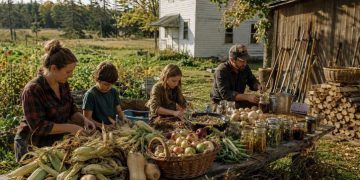
A Baptist household filling pantry shelves, a Mormon family maintaining a year’s worth of stored food, a Jewish family making sure the generator is ready, and a secular household preparing for disruptions may reach those decisions for very different reasons. What motivates them may not be the same, but the result often looks surprisingly similar. They are trying to protect the people who matter to them.
The challenge is not getting everyone to believe the same thing. That is neither realistic nor necessary. The challenge is learning how people with different beliefs can prepare together without asking anyone to hide, abandon, or defend those beliefs every time the group meets.
The common ground is wider than it looks
Ask a religiously mixed group what they actually want during an emergency and the answers usually become practical very quickly.
They want safe drinking water and they want enough food. They also want medicine, warmth, communication, and some way to protect children and older relatives. Not to mention that everyone wants dependable neighbors who will answer the phone and show up when something goes wrong. Few people want their household completely dependent on a relief point operated by strangers several counties away.
The values behind preparedness often overlap as well.
Self-reliance, hospitality, responsibility toward vulnerable people, fair dealing, and the desire to leave the next generation in a better position are not exclusive to one religion or philosophy. Versions of those principles appear across religious traditions and secular ethical systems alike.
The Amish tradition of mutual aid, the Jewish practice of tzedakah, Christian teachings about caring for widows and orphans, the Islamic obligation of zakat, and a humanist belief in helping one’s neighbors all lead toward similar behavior when a community loses water or power.
The major disagreements usually begin much farther upstream. People differ over why the world exists, how it should be understood, and what happens after death. Those questions may be central to someone’s identity, but they do not change the number of gallons of water a five-person household needs to store.
Recognizing that distinction is one of the most useful things a preparedness group can do.
Begin with the threat list
A mixed group works better when its planning begins with specific hazards rather than with competing explanations of the future.
Write down the problems that could realistically affect the area. Depending on the location, that might include ice storms, tornadoes, wildfire, flooding, prolonged power outages, unemployment, supply interruptions, or civil unrest. These are events that can be discussed in practical terms.
People who disagree about almost everything else can still read the same county emergency management information and evaluate the same local risks.
Once the threats are identified, rank them by likelihood and potential severity. Then build the preparedness plan around that ranking.
A group can spend six months debating a dramatic collapse scenario and still fail to buy a single water filter. Another group may simply agree that the most likely serious problem is losing electricity for a week during February. That group can move immediately toward heaters, fuel storage, backup communication, and a phone tree.
Starting with real threats also reveals who is interested in doing the work.
Someone who cannot focus on a practical risk assessment or a supply spreadsheet because every discussion has to return to prophecy or ideology may not be especially useful when the group needs people to fill sandbags, repair equipment, or move supplies.
Ground rules worth setting early
Religiously mixed groups need a few basic rules, preferably established before anyone has a reason to become angry.
The first rule should be simple. Working meetings are for preparedness. Members are free to discuss religion with one another afterward, whether over coffee, dinner, or another gathering. Those conversations can be serious and respectful. During the planning session, however, the subject is logistics.
The second rule is that nobody uses the group as a place to convert or challenge other members. That applies in both directions. A believer repeatedly distributing religious material can create the same problem as an atheist who constantly mocks faith or makes jokes about superstition. In either case, other members begin to feel that they are being treated as targets rather than partners.
The third rule is equal treatment. Belief should not determine who has a voice in group decisions, who can use shared resources, or who is expected to contribute. Members should receive the same consideration and carry the same responsibilities regardless of religion.
The fourth rule is that legitimate religious practices affecting logistics should be accommodated rather than turned into debates. Dietary restrictions, Sabbath observance, and modesty requirements are practical planning issues once they affect food, scheduling, sleeping arrangements, or shared facilities.
Writing these expectations down and reviewing them once a year requires very little time. It can prevent many of the conflicts that would otherwise damage the group later.
Divide the labor by skill
Jobs should be assigned according to competence rather than belief.
If there is a nurse in the group, that person is an obvious choice for medical planning. An electrician can take the lead on power. A licensed ham radio operator can organize communications. Someone who has spent thirty years canning food every summer may be the best person to teach preservation. A retired sergeant may have useful experience for security planning.
None of those assignments require anyone to ask what another member does on Sunday morning.
Working together also changes the way people see one another.
It is easy to reduce someone to a religious label when all you know about that person is an opinion expressed during an argument. It becomes harder after spending a Saturday beside that same person building a rocket stove or testing a water filtration system.
A person whose theology seems strange from across a table may look very different after spending six hours helping you dig a trench in the rain.
Practical work turns abstract disagreement into a relationship between actual people.
Teaching responsibilities should also be shared. If the same few members always instruct everyone else, the group can gradually develop a hierarchy in which some people become permanent authorities and others become permanent followers.
Rotating instruction allows more members to contribute their knowledge. It also builds the kind of respect that becomes especially important when conditions are stressful.
Where belief rarely enters the picture
Most preparedness tasks have nothing to do with religion.
Water storage, purification, food rotation, first aid, generator maintenance, fuel stabilization, tool inventories, radio procedures, mapping, evacuation routes, document backups, and cash reserves can all be planned by people with completely different worldviews.
There is no theological requirement for changing generator oil or labeling stored water. Skills training is similarly neutral.
Splinting a fracture does not belong to one denomination. Neither does sighting in a rifle, repairing a damaged roof, using a ceramic water filter, tying knots, fixing a small engine, gardening, butchering, or navigating with a paper map and compass.
A group that concentrated entirely on mastering those practical abilities would already be better prepared than the vast majority of American households.
This is one reason mixed groups can function so well when they stay focused on the work. Most of the work does not require ideological agreement in the first place.
Where faith genuinely touches the plan
Ignoring religion completely is not the solution either. There are situations where belief affects logistics, and those situations should be acknowledged before they become emergencies.
Food is one of the clearest examples.
Kosher and halal requirements can affect what belongs in a communal food supply. Households following vegetarian practices associated with some Hindu or Buddhist traditions may need appropriate protein sources included in advance rather than trying to find substitutes after supplies become limited.
Scheduling can also be affected by Sabbath observance.
An Orthodox Jewish household, a Seventh Day Adventist family, and a conservative Christian family may protect different days of the week. That does not automatically create a serious problem. It simply needs to be known before duty schedules are created.
Some religious traditions also have particular practices concerning the treatment of the dead. It is an uncomfortable subject during ordinary times, but discovering those requirements only after someone dies would make an already difficult situation considerably worse.
Medical decisions are another area that deserves advance planning.
Certain religious groups may refuse blood transfusions or particular medical treatments. Those preferences should be documented just as clearly as allergies, medications, and other medical information.
End-of-life wishes, care of the deceased, and decisions about who has authority to speak for someone who becomes unable to communicate should be discussed around a kitchen table while everyone is calm. A hospital corridor during an emergency is a poor place to discover that family members have completely different expectations.
Have the hard conversations early
A group should consider dedicating one meeting each year to issues that nobody particularly enjoys discussing.
Ask every household what practices need to be accommodated. Ask what each household considers a boundary it will not cross. Then discuss what happens if two of those boundaries conflict during a real emergency.
Do not rely on memory. Write the answers down. Once these matters are documented, many potential conflicts become ordinary planning problems.
If the group already knows that the Rosenberg family keeps kosher, the Nguyen family does not eat meat, and the Millers do not work on Saturdays, those are three known logistical conditions. Food supplies, schedules, and responsibilities can be organized accordingly.
If the group discovers all three facts while floodwater is already rising, those same logistical issues can become three simultaneous arguments.
Preparation means dealing with foreseeable problems before the pressure arrives. Religious accommodation should be treated the same way.
Families under one roof with two belief systems
These disagreements can become more complicated inside a family because the relationships often carry years of personal history.
A father may have left the church. His daughter may later have returned to it. Her spouse may never have belonged to a religion at all. Despite those differences, all three may depend on the same basement full of emergency supplies.
The useful approach is to separate preparation from interpretation.
Family members can agree that the household needs three months of stored food. They can agree on a backup heating method for a grid outage and establish a rally point for situations when phone service fails.
They do not need to agree on what those preparations mean.
One person may see difficult times as part of a larger spiritual pattern. Another may view them entirely through economics, weather, infrastructure, or probability. Those interpretations can remain personal without interfering with the shared plan.
Younger relatives are often better brought into preparedness through useful skills rather than ideological arguments.
A teenager who learns how to change a tire, start a fire, purify water, and cook using stored food has gained practical abilities regardless of what that teenager believes at forty.
Time spent together in the garage, kitchen, or garden also gives grandparents, parents, and children something productive to share without requiring anyone to defend a worldview.
Keeping the peace during a real emergency
Emergencies intensify tensions that already exist.
Frightened people may pray aloud. Exhausted people may become impatient or say things they normally would not. A minor irritation that hardly matters during an ordinary summer weekend can become unbearable after four days without electricity.
That possibility should be expected rather than treated as a surprise. Allow people room for religious observance without requiring anyone else to participate.
If someone wants to say a prayer before a communal meal, there should be room for that. Someone who chooses to remain silent should be able to do so without being challenged or questioned.
Rest days should be respected where circumstances allow. Traditions that built regular periods of rest into the week recognized something important about human endurance.
Privacy matters too.
Even in crowded conditions, giving people a few minutes each day to step away can help prevent conflict. One person may use that time to pray. Another may think quietly. Someone else may simply need a few minutes alone.
The purpose is not to create religious uniformity. It is to keep a stressed group functional.

Conclusion
Communities have survived disasters because people who disagreed about major questions were still willing to work beside one another.
Volunteer fire departments, rural rescue teams, church basements converted into emergency shelters, and neighborhood cleanup crews after hurricanes have always included people with different degrees of faith, doubt, and indifference.
When a levee fails, nobody asks the person carrying the other end of the sandbag what they believe about eternity.
Preparedness groups and families can apply the same principle before disaster arrives.
Build cooperation around the practical necessities everyone shares. Water, food, warmth, medicine, communication, and mutual protection provide more than enough common ground for serious preparation.
Let each person handle deeper questions according to their own convictions.
Establish the rules before conflict develops. Make reasonable accommodations for practices that genuinely affect the plan. Give responsibilities to the people who have the skills to perform them.
Done properly, the result is more valuable than a basement full of supplies.
You build a network of people who have already demonstrated that they can rely on one another despite meaningful differences.
Supplies can be purchased and stored. Trust has to be built. When the lights finally go out, that trust may be the most valuable resource the group has.
Others Are Watching Now: