






















Most urban homeowners never think about water until the moment it stops flowing. You turn on a faucet, nothing comes out, and suddenly everything from cooking dinner to flushing the toilet becomes a logistical puzzle.
The city grid feels reliable right up until it doesn’t, and by then your options are limited to buying overpriced gallons at the corner store or hoping the outage resolves before your situation becomes genuinely uncomfortable. Living in a city gives you a false sense of security about water, and that comfort is largely unearned.
Urban water systems are more fragile than most people realize. Aging infrastructure, municipal budget shortfalls, drought-related pressure on reservoirs, contamination events, and extreme weather can all knock out service with very little warning.
A pipe bursts three blocks away and you lose pressure for half a day. A treatment facility goes offline and suddenly a boil-water advisory stretches across your entire zip code. These are not apocalyptic scenarios, they are routine disruptions that happen in cities all around the world every single year.
What separates a household that weathers these disruptions with minimal inconvenience from one that scrambles is preparation, specifically the kind of layered, redundant water planning that most guides overlook.
Whether you are in a high-rise apartment or a two-story towhouse, there are real, practical steps you can take to diversify how your home gets water, treats it, stores it, and moves it around.
And don’t get me wrong, the goal is not to turn your apartment into a survivalist compound, but to design a household where a single broken system doesn’t matter because you have backups ready to fill the gap.
Understanding Why Redundancy Matters in Urban Water Systems
Redundancy is a term borrowed from engineering and it means exactly what it sounds like: having a backup path so that if one component fails, another one picks up the load. Aircraft have redundant hydraulics and hospitals have redundant power systems. The principle works just as well in a residential water setup, even in an urban context where space is tight and the municipal supply feels ever-present.
In a city home, water redundancy means thinking across four distinct functions: acquisition, treatment, storage, and distribution. Weakness in any one of those areas can cascade into a full household disruption.
If your only acquisition method is the city tap and that tap goes dry or unsafe, your stored water becomes your lifeline, but if your storage is inadequate and you have no way to treat an alternative source, you are in trouble. Designing your home water system means considering all four layers together rather than treating them as separate concerns.
Urban homes face specific constraints that rural properties do not. You cannot dig a well and your roof may be shared with neighbors, making rainwater collection a legal or logistical gray area depending on your municipality. And besides those acquisition problems, the square footage for storage tanks is limited to non-existent in most case.
These are real constraints, but even they have a workaround and the key is building a system that fits the reality of your space rather than trying to copy rural homestead strategies that were never designed for a 900-square-foot apartment or a narrow rowhouse.
Diversifying Your Water Acquisition Sources
The municipal tap is your primary source and, under normal conditions, your best one. The work begins when you ask: what happens when that source is compromised? In a city environment, you have more options than you might think.
Rainwater harvesting is legal in most US states and many other countries, though local ordinances vary widely. Even in an apartment, a simple collection barrel positioned under a balcony downspout can yield meaningful volumes during a rain event. For homeowners with access to their own roof, a proper gutter diversion into a food-grade tank can collect hundreds of gallons from a single storm. However, I advise you to check local regulations before installing anything permanent.
Bottled and packaged water serves a specific role as an emergency buffer rather than a long-term solution. Keeping a rolling two-week supply for your household size is a reasonable baseline and you also need to rotate stock every six to twelve months to keep it fresh. This approach works well for drinking and cooking during short disruptions, and it requires no infrastructure investment beyond shelf space.
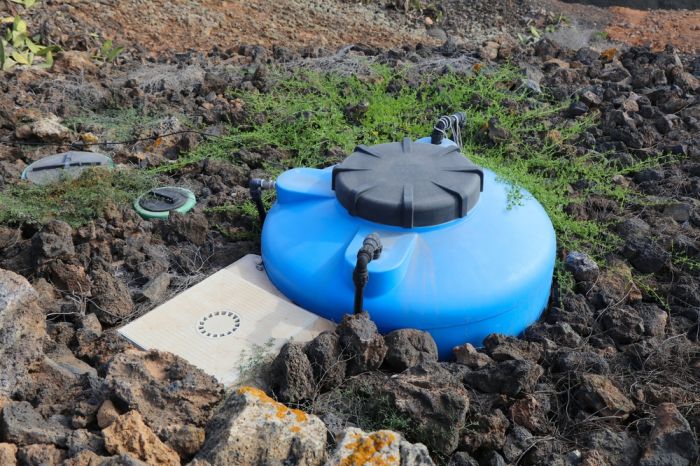
Some urban homeowners who have access to a private outdoor space can install a shallow point-of-use well or connect to a shared neighborhood cistern where those exist. These options are more common in older neighborhoods with legacy infrastructure and are worth researching if you own the land beneath your home.
Building a Layered Water Treatment Setup
Acquiring water is only half the challenge. Knowing how to make that water safe to consume is equally important, and a layered treatment approach gives you flexibility regardless of the source you are drawing from.
For everyday treated tap water, an under-sink reverse osmosis system or a quality countertop filter like a Berkey provides a reliable baseline. These systems remove a broad range of contaminants including chlorine, heavy metals, nitrates, and many pharmaceuticals that municipal treatment misses. They are affordable, easy to maintain, and require no special skills to operate.
For treating water from alternative sources like collected rainwater or water of unknown quality, you need a more robust approach. A combination of mechanical filtration to remove sediment and particulates, followed by chemical treatment with unscented liquid chlorine bleach at roughly 8 drops per gallon, followed by UV purification, covers nearly every biological threat you are likely to encounter in a city environment. Portable UV pens like those made by SteriPen are inexpensive and effective for treating small batches quickly.
Boiling remains the most reliable treatment method available when you have access to heat and fuel. A rolling boil sustained for one full minute kills every pathogen that poses a risk at normal elevations. Keep a propane camp stove or a butane burner as part of your household gear, and this option stays available even during a power outage.
Smart Storage Strategies for Small Urban Spaces
Storage is where urban water preparedness plans tend to fall apart, because the instinct is to think in terms of large tanks that simply will not fit in a standard city home. The solution is to think modular and distributed rather than centralized.
Stackable five-gallon food-grade water containers are one of the most practical options available. They are easy to fill, easy to rotate, and can be stored under beds, in closets, in kitchen corners, or stacked along a garage wall. A household of two adults should aim for a minimum of 28 gallons for a two-week supply at the baseline of one gallon per person per day. That translates to six containers, which can be tucked into corners most people would never use otherwise.
Water bricks, which are interlocking flat-sided containers, offer even better space efficiency because they can be stacked in a corner like building blocks without wasting the irregular spaces that round barrels create. They come in 3.5-gallon sizes that are light enough to move even when full.
For homeowners with outdoor access or a dedicated utility space, a 55-gallon food-grade drum is a substantial upgrade in storage capacity without a massive footprint. A single drum holds enough water to cover drinking and cooking needs for two adults for nearly four weeks. Pair it with a hand pump or gravity-fed siphon and you have a functional system that needs no electricity to operate.
Do not overlook your water heater tank as an emergency reserve. A standard 40-to-50-gallon water heater holds a substantial amount of water that is generally safe to use during a disruption. Turn off the heater first, allow it to cool, and drain from the lower spigot. This water will likely need filtering or boiling before drinking, but it is a resource most people forget they already have.
Moving Water Around When the Pressure Is Gone
City water pressure does most of the work of moving water through your home invisibly and automatically. When the pressure drops or the electricity that runs your building’s pump system fails, you need alternative ways to distribute what you have stored.
Gravity is your most reliable tool. Any storage container elevated above the point of use will deliver water without electricity. Even placing a filled 5-gallon container on a countertop and attaching a spigot gives you hands-free access without turning on a pump. For more volume, a raised platform in a garage or utility closet with a larger tank and a gravity spigot creates a simple but functional distribution point.
Manual hand pumps designed for use with standard barrels and tanks are inexpensive and widely available. They require no power source and can move several gallons per minute with moderate effort. A siphon hose serves a similar function for containers positioned at the same level or above where you need the water to go.
Battery-powered or DC-powered transfer pumps are worth having for higher-volume movement, particularly if you need to pump water up from a lower-level storage tank. A 12-volt pump connected to a charged car battery or a small solar power bank can run for several hours and move significant amounts of water without touching your home’s electrical grid.
Putting It All Together: A Tiered Response Plan
Having all of these components in place is only useful if your household knows how to use them and when. A tiered response plan helps you match your response to the severity of the situation without wasting resources or creating unnecessary panic.
Tier 1 (short disruption under 48 hours):
- Use pre-stored bottled water for drinking and cooking.
- Fill bathtub with tap water before pressure drops if there is advance warning.
- Use existing filter systems for any tap water that is still flowing.
Tier 2 (disruption lasting two to seven days):
- Transition to modular stored water containers.
- Use camp stove and boiling for cooking water.
- Begin rationing and prioritize drinking and sanitation over other uses.
Tier 3 (extended disruption beyond one week):
- Drain and treat water from the heater tank.
- Deploy rainwater collection if available.
- Use full multi-stage treatment protocol for any water from non-standard sources.
My Two Cents
When it comes to water storage, what holds most people back is not cost or space, it is the psychological hurdle of thinking about things going wrong. There is something uncomfortable about planning for disruption when life feels stable.
The households that come through infrastructure failures without much stress are not the ones who panicked and bought everything the night before a storm. They are the ones who spent a quiet Saturday afternoon filling containers, testing their filter, and making sure everyone in the family knew where everything was kept.
Others Are Watching Now: