


Survivopedia
  • HOME
  • GENERAL PREP
    • All
    • Disaster Scenarios
    • EMP
    • Natural Disasters
    • Survival News
    • Survival Skills

    What The Old Women Did Between Harvest And Frost

    Twenty-Five Years Later: Teaching A Generation That Wasn’t There

    The Day Preparedness Changed: What 9/11 Still Teaches Us 25 Years Later

    Mental Walkthroughs: Running Realistic Drills In Your Head Before The Crisis Hits

    Infrastructure On The Edge: Bridges, Dams, And Grids That Are Past Their Expiration Date

    Seasonal Rhythms: How Native, Pioneer, And Amish Families Planned Their Year

    The 5 Injuries You’ll Actually See After A Disaster

    Emergency Declarations That Never End: How To Live Under Permanent Temporary Rules

    Emergency Declarations That Never End: How To Live Under Permanent Temporary Rules

    A Digital Fast For The Whole Family: Unplugging To Reconnect

    • SHTF SCENARIOS
      • Survival Skills
      • Disaster Scenarios
      • Natural Disasters
      • WATER
      • FINANCIAL
      • WAR & CONFLICTS
      • emp
    • EQUIPMENT
      • Bug-Out-Vehicle
      • Firearms
      • COMMUNICATION
    • ENERGY
      • ENERGY
      • Energy Sources
      • Electric Equipments
      • Consumption Control
  • WEAPONS
    • All
    • Cold Weapons
    • Firearms
    • Regulations

    When Chickens, Wood Stoves, And Burn Barrels Become Violations

    Field Reloading

    Field Reloading

    Fully Automatic Firearms? No Thanks!

    Are Alternative Weapons Practical in a Post-Disaster World?

    How To Travel With A Firearm

    The Ultimate Survival Knife: How to Pick the Right One

    A Sharp Edge: Choosing the Best Survival Knife for Prepping and Self-Defense

    Is There a Place for “Fast Draw” in Survival?

    Indispensable Gear for your EDC Core Layer

    • Firearms
    • Cold Weapons
    • Defense
    • Privacy & Data Protection
    • Regulations
  • FOOD
    • All
    • Cooking
    • Farm Animals
    • Farming
    • Food Storage
    • Hunting
    • Plants & Gardening

    Why So Much Of Your Supply Chain Runs Through A Single Building

    Waist High, No Weeding: Aquaponics For Elderly And Disabled Preppers

    The Hidden Cost Of Inflation: How Shrinking Products Warn You About Scarcity

    7 Survival Foods I Always Keep, And How Much Is Too Much

    Seasonal Rhythms: How Native, Pioneer, And Amish Families Planned Their Year

    The Summer Kitchen: Cooking All August Without Heating Your House

    Losing The Harvest: Native, Pioneer, And Amish Responses To Crop Failure In The First 72 Hours

    Generosity From The Stockpile: Giving Without Gutting Your Reserves

    How To Turn A Normal Kitchen Into A Grid Down Cooking Center

    • Food Storage
    • Cooking
    • Farm Animals
    • Hunting
    • Plants & Gardening
  • Store
  • Newsletter
No Result
View All Result
  • HOME
  • GENERAL PREP
    • All
    • Disaster Scenarios
    • EMP
    • Natural Disasters
    • Survival News
    • Survival Skills

    What The Old Women Did Between Harvest And Frost

    Twenty-Five Years Later: Teaching A Generation That Wasn’t There

    The Day Preparedness Changed: What 9/11 Still Teaches Us 25 Years Later

    Mental Walkthroughs: Running Realistic Drills In Your Head Before The Crisis Hits

    Infrastructure On The Edge: Bridges, Dams, And Grids That Are Past Their Expiration Date

    Seasonal Rhythms: How Native, Pioneer, And Amish Families Planned Their Year

    The 5 Injuries You’ll Actually See After A Disaster

    Emergency Declarations That Never End: How To Live Under Permanent Temporary Rules

    Emergency Declarations That Never End: How To Live Under Permanent Temporary Rules

    A Digital Fast For The Whole Family: Unplugging To Reconnect

    • SHTF SCENARIOS
      • Survival Skills
      • Disaster Scenarios
      • Natural Disasters
      • WATER
      • FINANCIAL
      • WAR & CONFLICTS
      • emp
    • EQUIPMENT
      • Bug-Out-Vehicle
      • Firearms
      • COMMUNICATION
    • ENERGY
      • ENERGY
      • Energy Sources
      • Electric Equipments
      • Consumption Control
  • WEAPONS
    • All
    • Cold Weapons
    • Firearms
    • Regulations

    When Chickens, Wood Stoves, And Burn Barrels Become Violations

    Field Reloading

    Field Reloading

    Fully Automatic Firearms? No Thanks!

    Are Alternative Weapons Practical in a Post-Disaster World?

    How To Travel With A Firearm

    The Ultimate Survival Knife: How to Pick the Right One

    A Sharp Edge: Choosing the Best Survival Knife for Prepping and Self-Defense

    Is There a Place for “Fast Draw” in Survival?

    Indispensable Gear for your EDC Core Layer

    • Firearms
    • Cold Weapons
    • Defense
    • Privacy & Data Protection
    • Regulations
  • FOOD
    • All
    • Cooking
    • Farm Animals
    • Farming
    • Food Storage
    • Hunting
    • Plants & Gardening

    Why So Much Of Your Supply Chain Runs Through A Single Building

    Waist High, No Weeding: Aquaponics For Elderly And Disabled Preppers

    The Hidden Cost Of Inflation: How Shrinking Products Warn You About Scarcity

    7 Survival Foods I Always Keep, And How Much Is Too Much

    Seasonal Rhythms: How Native, Pioneer, And Amish Families Planned Their Year

    The Summer Kitchen: Cooking All August Without Heating Your House

    Losing The Harvest: Native, Pioneer, And Amish Responses To Crop Failure In The First 72 Hours

    Generosity From The Stockpile: Giving Without Gutting Your Reserves

    How To Turn A Normal Kitchen Into A Grid Down Cooking Center

    • Food Storage
    • Cooking
    • Farm Animals
    • Hunting
    • Plants & Gardening
  • Store
  • Newsletter
No Result
View All Result
Survivopedia
No Result
View All Result
Home SECURITY Food Security

Why So Much Of Your Supply Chain Runs Through A Single Building

Most people picture a shortage beginning at the store. The shelf is empty, the price jumps, and a sign appears limiting purchases to two per customer.

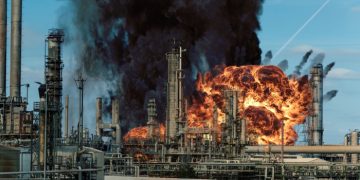
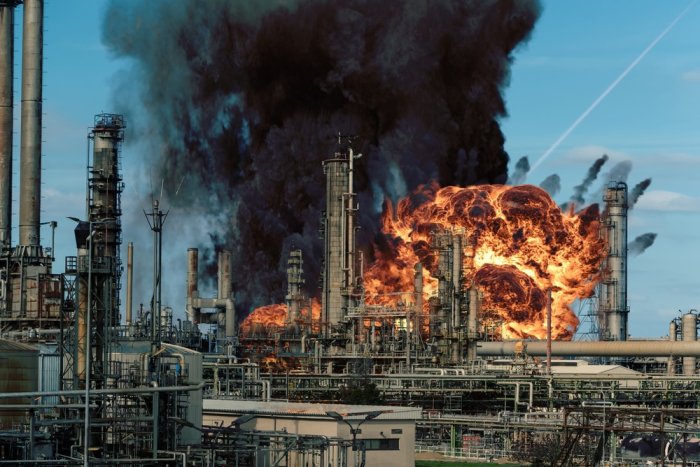
By then, the real problem may have started weeks earlier inside a building you have never heard of. One factory floods. One chemical plant shuts down. One warehouse loses power. One manufacturer finds contamination and halts production. Suddenly dozens of companies cannot get the same ingredient, component, bottle, cap, filter membrane, circuit board, or piece of packaging.

That is one of the real weaknesses of the modern supply chain. A product category may look like it comes from ten different companies while several of those brands quietly depend on the same small group of manufacturers upstream.
For a prepper, that changes what is actually worth storing.

Ten Brands Do Not Always Mean Ten Sources

Walk through a pharmacy or a grocery store and the amount of choice looks enormous. Five brands of the same medicine. Eight kinds of pet food. An entire wall of household cleaners. Several companies selling water filters that appear to have nothing in common.

All of that gives the impression that plenty of backup exists. Sometimes it does. Sometimes those same companies depend on one ingredient manufacturer, one packaging supplier, one processing plant, or one contract factory. When a shared supplier goes offline, the labels on the shelf stop mattering.

So I pay closer attention to categories where production is difficult to replace quickly. Specialized chemicals, medical products, filter cartridges, electronics, certain food ingredients, and replacement parts built for one specific machine are all much harder to substitute than something simple like a bag of rice.

The Factory Does Not Have To Burn Down

A supply disruption does not require a spectacular disaster. Floodwater can shut a facility for weeks. A fire can damage a single production line. A chemical spill can stop operations, a storm can cut the power, and the bridge or rail connection serving the plant can close. Employees may simply be unable to reach the building.

Even when the structure survives intact, production may stay stopped while equipment is inspected, cleaned, repaired, or recertified. None of that happens quickly.

Then there is the backlog. A factory that loses two weeks of production does not necessarily catch up in the two weeks that follow, because customers kept placing orders the whole time it was down. The shortage can continue long after the original problem has disappeared from the news.

Look For Things You Cannot Easily Replace

This is where I start looking around my own house. What do we depend on that has a very specific replacement?

The filter cartridge in my water system. The particular batteries used by important equipment. A replacement part for the generator. Medication the household takes regularly. Pet food for an animal with dietary restrictions. Specialty medical supplies, a furnace component, or one specific oil filter, belt, fuse, or spark plug.

Those concern me far more than products with easy alternatives. If my preferred pasta disappears, I can cook rice. If a proprietary filter disappears, the entire filtration system may become useless the moment the current cartridge is spent. That is a real chokepoint sitting inside my own house.

Consumables Are Where Dependence Hides

A great deal of preparedness equipment creates recurring dependence, and buying the machine is only the beginning of it.

Generators need oil, filters, spark plugs, and sometimes proprietary parts. Water filters need cartridges. Battery systems need compatible chargers. Lanterns require fuel, mantles, batteries, or replacement bulbs. Chainsaws need chains, bar oil, and files. Medical devices may require specific consumables that nothing else will substitute for.

So I ask one question whenever I buy equipment. What will eventually make this stop working? Then I store some of that. A $1,000 piece of equipment should never become useless because nobody bought a $12 replacement part.

Medicines Deserve Special Attention

Medication is one category where substitution gets complicated in a hurry. Even common drugs may depend on a limited number of manufacturers for active ingredients or finished products. When production is interrupted, hospitals, pharmacies, and wholesalers may all end up competing for the same remaining inventory.

I do not hoard prescription medicine or try to assemble an unsafe personal pharmacy. What I do is simpler. I keep prescriptions refilled on time, maintain reasonable supplies of the household medicines we actually use, and avoid waiting until a bottle is empty before replacing something important.

For medications that cannot simply be swapped for something else, I want to know that in advance. That conversation belongs with a doctor or pharmacist while everything is still normal.

Watch Replacement Filters And Cartridges

Filters are the clearest example of hidden dependence I can think of. You may own an excellent water filtration system capable of serving your family for years. Then the replacement cartridge is discontinued or becomes impossible to find, and now you own an expensive housing with nothing useful inside it.

I prefer systems built around replacement elements that are widely available, and I keep extras on the shelf. The same thinking applies to respirator cartridges, vacuum filters, air purifier filters, refrigerator filters, and anything similar. Whenever equipment depends on something disposable, I treat that disposable piece as part of the equipment itself.

Packaging Can Cause A Shortage Too

Sometimes there is plenty of product available and the manufacturer simply cannot package it. No bottles. No cans. No lids, cartons, or labels. No approved plastic container for that particular product.

That sounds ridiculous until you consider that the finished product cannot legally or practically leave the factory without the correct packaging around it.

This is why shortages sometimes show up in strange shapes. One package size disappears while another stays on the shelf. Bulk containers remain while the small ones vanish. One brand switches bottles, and another quietly starts selling a different quantity for the same price. Those changes can reveal pressure much farther upstream than the store.

Do Not Stock Everything Equally

I do not have the money or the room to store ten years of everything, so I rank supplies by how replaceable they are.

If something is cheap, important, compact, and hard to substitute, I keep more of it. If something is bulky and easily replaced by several alternatives, I keep less. A spare water-filter cartridge takes up almost no room. A spare generator spark plug takes up less. A year’s worth of some specialized consumable may fit inside a shoebox on a closet shelf.

That is exactly the kind of storage I like. Small investment, small footprint, and a serious problem avoided entirely.

Keep More Than One Way To Solve Important Problems

The strongest protection against any chokepoint is having a second option that does not share the same weakness.

I keep stored water in addition to filtration. I have more than one way to cook. I keep several lighting options, and I make sure every backup power device does not run on the same single battery type. Food storage includes ingredients that can stand in for each other when one runs out.

Redundancy does not mean owning three identical systems. Three of the same filter housing all fail the same way when the cartridge disappears. Sometimes the smartest backup is a completely different method.

Find Your Own Single Factory

You will probably never know which building produces the critical component inside something you use every day. You do not need to know.

Walk through your house instead and ask a few plain questions. What do we use constantly? What cannot be replaced easily? What requires a proprietary refill or part? What would create a serious problem if the stores stopped carrying it for three months?

Those are the items I would pre-stock first. Most supply-chain failures will never touch my household at all, and I have no interest in predicting which factory floods, burns, closes, or loses power next. I only need to understand where my own household has no backup at all.

Because sometimes a nationwide shortage begins with something as ordinary as water rising through the loading dock of one building nobody knew mattered.

Others Are Watching Now:

ShareTweet
Alec Deacon

Alec Deacon

Alec Deacon is the owner of Backyard Liberty.com. He’s very passionate about survival and he’s constantly looking for the best ways to protect his family - his wife Ana and the two boys, David and Andrew, that are the world to him. He used to work as a hygiene officer in a well-known US company, being in charge with food safety. In the time spent there he learned a lot about food: cooking, storing, freezing, transporting… basically everything that has to do with food safety. He is also a huge fan of outdoor living. Fishing carp is one of the things he loves most and it just happens that fishing is also one of the oldest and most basic survival skill.
Leave a Reply Cancel reply

Your email address will not be published. Required fields are marked *

  • Trending
  • Comments
  • Latest
How To Make Pemmican, The Ultimate Survival Food (Video)

How To Make Pemmican, The Ultimate Survival Food (Video)

January 12, 2026

How the Amish Would Respond to Grid Down

November 17, 2025
Top 10 Vehicles For Your EMP Survival

Top 10 Vehicles For Your EMP Survival

May 19, 2026
Chloroform

How To Make Chloroform For Survival

October 13, 2025
The Ugly Part of Water Purification: Top 5 Mistakes You Make

The Ugly Part of Water Purification: Top 5 Mistakes You Make

September 29, 2025
How to Preserve Eggs Like the Pioneers Did

How to Preserve Eggs Like the Pioneers Did

October 14, 2025
Top 6 Survival Rifles And Why You Need One

Top 6 Survival Rifles And Why You Need One

429
Top 5 Bug Out Locations In The US

Top 5 Bug Out Locations In The US

257
Top 10 Vehicles For Your EMP Survival

Top 10 Vehicles For Your EMP Survival

162
10 Items You Need To Hoard

10 Items You Need To Hoard

148
How To Store Flour, Sugar And Rice For Survival

How To Store Flour, Sugar And Rice For Survival

141
alaska landscape

A Prepper’s Story: Headed To Alaska To Survive Off-grid

118

Why So Much Of Your Supply Chain Runs Through A Single Building

September 22, 2026

What The Old Women Did Between Harvest And Frost

September 18, 2026

When Chickens, Wood Stoves, And Burn Barrels Become Violations

September 15, 2026

Twenty-Five Years Later: Teaching A Generation That Wasn’t There

September 11, 2026

The Day Preparedness Changed: What 9/11 Still Teaches Us 25 Years Later

September 11, 2026

Silent Shortages: How To Read Empty Sections In Stores As Early Warning Signs

September 8, 2026

No Result
View All Result


  • Privacy Policy
  • Terms&Conditions
  • Blogroll
  • Contact
  • Newsletter

© 2025 SURVIVOPEDIA

No Result
View All Result
  • HOME
  • GENERAL PREP
    • SHTF SCENARIOS
      • Survival Skills
      • Disaster Scenarios
      • Natural Disasters
      • WATER
      • FINANCIAL
      • WAR & CONFLICTS
      • emp
    • EQUIPMENT
      • Bug-Out-Vehicle
      • Firearms
      • COMMUNICATION
    • ENERGY
      • ENERGY
      • Energy Sources
      • Electric Equipments
      • Consumption Control
  • WEAPONS
    • Firearms
    • Cold Weapons
    • Defense
    • Privacy & Data Protection
    • Regulations
  • FOOD
    • Food Storage
    • Cooking
    • Farm Animals
    • Hunting
    • Plants & Gardening
  • Store
  • Newsletter

© 2025 SURVIVOPEDIA