













Survivopedia
  • HOME
  • GENERAL PREP
    • All
    • Disaster Scenarios
    • EMP
    • Natural Disasters
    • Survival News
    • Survival Skills

    Shackleton: Six Hundred Days And Not One Man Lost

    7 Habits Veterans Have That Most Preppers Don’t

    The Strangest Things People Stockpiled, And Why They Were Right

    Why I Keep My Whole Backup Kit In One Faraday Dry Bag

    How The Amish Would Handle A Sudden EMP Better Than Most Of Us

    Flock Cameras Aren’t Speed Cameras: What They Record, Keep, And Share

    The First Frost Kit: What Goes In The Truck By Mid-October

    What The Old Women Did Between Harvest And Frost

    Twenty-Five Years Later: Teaching A Generation That Wasn’t There

    • SHTF SCENARIOS
      • Survival Skills
      • Disaster Scenarios
      • Natural Disasters
      • WATER
      • FINANCIAL
      • WAR & CONFLICTS
      • emp
    • EQUIPMENT
      • Bug-Out-Vehicle
      • Firearms
      • COMMUNICATION
    • ENERGY
      • ENERGY
      • Energy Sources
      • Electric Equipments
      • Consumption Control
  • WEAPONS
    • All
    • Cold Weapons
    • Firearms
    • Regulations

    When Chickens, Wood Stoves, And Burn Barrels Become Violations

    Field Reloading

    Field Reloading

    Fully Automatic Firearms? No Thanks!

    Are Alternative Weapons Practical in a Post-Disaster World?

    How To Travel With A Firearm

    The Ultimate Survival Knife: How to Pick the Right One

    A Sharp Edge: Choosing the Best Survival Knife for Prepping and Self-Defense

    Is There a Place for “Fast Draw” in Survival?

    Indispensable Gear for your EDC Core Layer

    • Firearms
    • Cold Weapons
    • Defense
    • Privacy & Data Protection
    • Regulations
  • FOOD
    • All
    • Cooking
    • Farm Animals
    • Farming
    • Food Storage
    • Hunting
    • Plants & Gardening

    The Thanksgiving Price Tag Is A Warning Label

    8 Uses For The Leaves Everyone Else Bags Up

    The Last Garden Day Of The Year

    Why Your Steak Keeps Getting More Expensive, And Why Prices Won’t Drop Anytime Soon

    Why Our Grandparents Never Threw Away Cooking Fat

    10 Wild Mushrooms Worth Knowing: Food, Health, And Traditional Uses

    Farm Bankruptcies Are An Early Warning

    Export Bans Are The Loudest Signal In Food

    Why So Much Of Your Supply Chain Runs Through A Single Building

    • Food Storage
    • Cooking
    • Farm Animals
    • Hunting
    • Plants & Gardening
  • Store
  • Newsletter
No Result
View All Result
Survivopedia
No Result
View All Result
Home FINANCIAL

Fertilizer Moves Through Hormuz Too, And That’s Next Year’s Food Bill

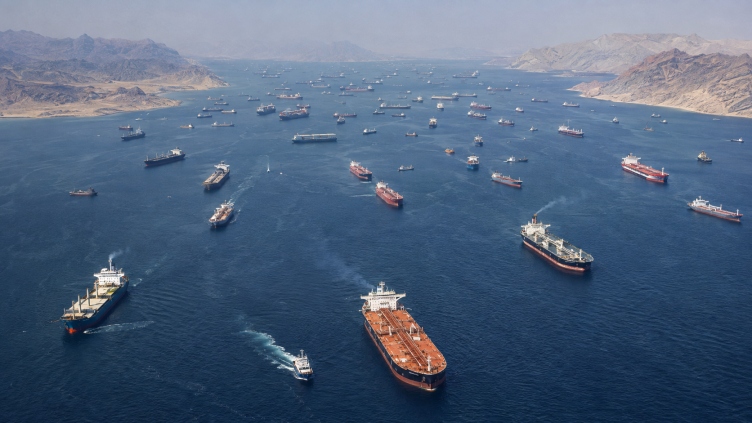
When people hear the words Strait of Hormuz they think about oil, which makes sense, since roughly a quarter of the world’s seaborne oil trade normally passes through it along with enormous volumes of liquefied natural gas.

But oil is only half the food story. Something else moves through Hormuz that gets far less attention, and it is fertilizer. Unlike a gasoline spike, expensive fertilizer may not reach the register for a year, because a farmer pays for it months before anybody buys the crop it grew. That delay is why I pay attention to it.

The Part Of Hormuz Nobody Headlines

The Strait has been effectively shut for much of this year. Traffic has picked up again lately, though attacks on vessels have continued, and Gulf fertilizer shipments spent most of the year close to halted.

What moves through there is not obscure industrial chemistry. Urea is one of the world’s major nitrogen fertilizers, ammonia is the foundation of most nitrogen production, and sulfur is what phosphate manufacturing runs on. American exposure is real but uneven, since roughly seventeen percent of US urea consumption and twenty percent of phosphate consumption came from the Gulf before this started, while ammonia and potash barely touched it.

Interrupt one narrow corridor and you are not only moving the oil price. You are disturbing the raw materials for next year’s food.

Nitrogen Recovered, And The Rest Did Not

Here is where I would correct the story most people are telling. The headline version is that fertilizer spiked and then markets adapted, which is true of exactly one nutrient.

Urea ran up to nearly eighty percent above where it started the year by late April, then fell back to roughly January levels by the end of summer as China, the United States and others filled the gap. That is a genuine adaptation and worth saying plainly.

Phosphate did not follow it down, since it rose about a quarter after the closure and stayed there, and while urea fell through the third quarter phosphate kept climbing. Sulfur is worse, having more than doubled since January, and sulfur is the bottleneck that matters because phosphate production depends on it. One major American producer idled two Louisiana plants, and export restrictions out of Russia, India, Kazakhstan and China have tightened the same market further.

So nitrogen is a story about resilience, and phosphate and sulfur are still a live problem.

The Alternatives Are Thinner Than They Look

The reassuring version of this article would point out that Hormuz is not the only source, which is true, since Canada is a potash giant and North Africa produces enormous quantities of phosphate.

For American farmers that list is shorter than it appears. Countervailing duties have largely kept Moroccan and Russian phosphate out of the US market since 2021, so the obvious substitute for Gulf phosphate is the one American buyers can least easily reach. Potash is a different warning, since the Gulf hardly touches it and prices are still set to average meaningfully higher this year, and the United States imports almost all the potash it uses.

Markets do reorganize, and factories do not appear overnight. Ports have limits, gas contracts take time to rewrite, and planting windows will not wait for the fertilizer industry to sort itself out.

The Farmer Pays First

This is the part of the chain that makes the timing matter. Fertilizer accounted for an average of about forty percent of corn operating costs from 2006 through 2023, which makes it the input that decides whether a corn acre pencils out.

Most American corn goes in the ground in April and May, but the money decisions start long before, with fertilizer priced and often bought in the fall, credit arranged, and acreage chosen while the rest of us think about Thanksgiving. A grower facing a bigger input bill can pay it, apply less, move acres into something less nitrogen-hungry, or wait and hope, and none of those is free. Farmers can cut fertilizer when prices rise, though the response is limited, because using less reduces yields and revenue too, and some will simply switch to a less fertilizer-intensive crop.

Enough individual growers making that calculation changes national acreage and production. The consumer sees the result months later, and the farmer saw the problem while ordering fertilizer.

The Relief Forecast Comes With A Condition

The forward view is better, and it is worth reading the fine print. Fertilizer prices are expected to average about fourteen percent higher this year than last, then fall by roughly a tenth next year and further the year after, returning to something like 2025 levels.

That forecast rests on falling energy costs and improved access to inputs such as ammonia and sulfur. In other words, the relief is premised on the part of the system that is still broken getting fixed. I treat a conditional forecast as information rather than a promise, and sulfur is the condition I would watch.

What I Actually Do About It

I do not respond to any of this by buying three years of flour, because the chain running from a sulfur cargo to a cereal box is far too long to trade on. I respond by making the household less sensitive to any one category getting expensive.

So I keep staples in rotation and buy the things we actually eat when prices are good rather than when the pantry is bare. I keep the garden going and the compost running. I learn which foods substitute for the ones that get expensive, and I keep enough depth that a spike never forces me to buy everything during the worst week of it.

Then I keep watching upstream, because natural gas, urea, phosphate, sulfur and diesel tell me more about next summer than this week’s receipt does. Mineral fertilizer stands behind something close to half the food the world eats, which makes it a strategic commodity whether shoppers think about it or not.

Food inflation does not begin at the checkout. It begins in fields, in fertilizer plants, at gas terminals, on ships, and in a farmer’s operating loan, and sometimes it begins in a narrow stretch of water thousands of miles from an American grocery store. What gets bought and spread this winter and spring helps decide what comes out of the ground next summer. The farmer pays first and the rest of us find out later, which is not a reason to panic. It is the reason to pay attention before the price tag gives everybody else the same warning.

Others Are Watching Now:

Resources

World Bank. Commodity Markets Outlook, October 2026.
https://documents1 .worldbank.org/curated/en/099741210282619392/pdf/IDU-e91881a0-52ca-4623-a28d-63c23120bfcf.pdf

International Food Policy Research Institute (IFPRI). How Are Fertilizer Markets Coping with the Continued Closure of the Strait of Hormuz?
https://www.ifpri .org/blog/how-are-fertilizer-markets-coping-with-the-continued-closure-of-the-strait-of-hormuz/

farmdoc daily. Strait of Hormuz Closure and Fertilizer Supply Risks for U.S. Agriculture.
https://farmdocdaily .illinois.edu/2026/03/strait-of-hormuz-closure-and-fertilizer-supply-risks-for-us-agriculture.html

USDA Economic Research Service (ERS). Drivers of Fertilizer Markets: Supply, Demand, and Prices.
https://www.ers .usda.gov/media/9156/err-354.pdf

USDA Economic Research Service (ERS). Fertilizer Share of Expected Corn Production Expenses.
https://www.ers .usda.gov/data-products/charts-of-note/108828

ShareTweet
Alec Deacon

Alec Deacon

Alec Deacon is the owner of Backyard Liberty.com. He’s very passionate about survival and he’s constantly looking for the best ways to protect his family. He used to work as a hygiene officer in a well-known US company, being in charge with food safety. In the time spent there he learned a lot about food: cooking, storing, freezing, transporting… basically everything that has to do with food safety. He is also a huge fan of outdoor living. Fishing carp is one of the things he loves most and it just happens that fishing is also one of the oldest and most basic survival skill.

Leave a Reply Cancel reply

Your email address will not be published. Required fields are marked *

  • Trending
  • Comments
  • Latest
How To Make Pemmican, The Ultimate Survival Food (Video)

How To Make Pemmican, The Ultimate Survival Food (Video)

January 12, 2026

How the Amish Would Respond to Grid Down

November 17, 2025
Top 10 Vehicles For Your EMP Survival

Top 10 Vehicles For Your EMP Survival

May 19, 2026

7 Habits Veterans Have That Most Preppers Don’t

November 11, 2026
Chloroform

How To Make Chloroform For Survival

October 13, 2025
The Ugly Part of Water Purification: Top 5 Mistakes You Make

The Ugly Part of Water Purification: Top 5 Mistakes You Make

September 29, 2025
Top 6 Survival Rifles And Why You Need One

Top 6 Survival Rifles And Why You Need One

429
Top 5 Bug Out Locations In The US

Top 5 Bug Out Locations In The US

257
Top 10 Vehicles For Your EMP Survival

Top 10 Vehicles For Your EMP Survival

162
10 Items You Need To Hoard

10 Items You Need To Hoard

148

How To Store Flour, Sugar And Rice For Survival

How To Store Flour, Sugar And Rice For Survival

141
alaska landscape

A Prepper’s Story: Headed To Alaska To Survive Off-grid

118

Fertilizer Moves Through Hormuz Too, And That’s Next Year’s Food Bill

November 24, 2026

Money Without Banks: Wampum, Store Credit, And The Amish Cash Economy

November 23, 2026

The Holiday Travel Kit: What I Put In The Car Before A Four-Hour Thanksgiving Drive

November 20, 2026

I Didn’t Know What Was Missing From My Survival Kit Until I Found This Straw

November 19, 2026

The Thanksgiving Price Tag Is A Warning Label

November 17, 2026

8 Uses For The Leaves Everyone Else Bags Up

November 16, 2026

No Result
View All Result


  • Privacy Policy
  • Terms&Conditions
  • Contact
  • Newsletter

© 2026 SURVIVOPEDIA

No Result
View All Result
  • HOME
  • GENERAL PREP
    • SHTF SCENARIOS
      • Survival Skills
      • Disaster Scenarios
      • Natural Disasters
      • WATER
      • FINANCIAL
      • WAR & CONFLICTS
      • emp
    • EQUIPMENT
      • Bug-Out-Vehicle
      • Firearms
      • COMMUNICATION
    • ENERGY
      • ENERGY
      • Energy Sources
      • Electric Equipments
      • Consumption Control
  • WEAPONS
    • Firearms
    • Cold Weapons
    • Defense
    • Privacy & Data Protection
    • Regulations
  • FOOD
    • Food Storage
    • Cooking
    • Farm Animals
    • Hunting
    • Plants & Gardening
  • Store
  • Newsletter

© 2026 SURVIVOPEDIA