










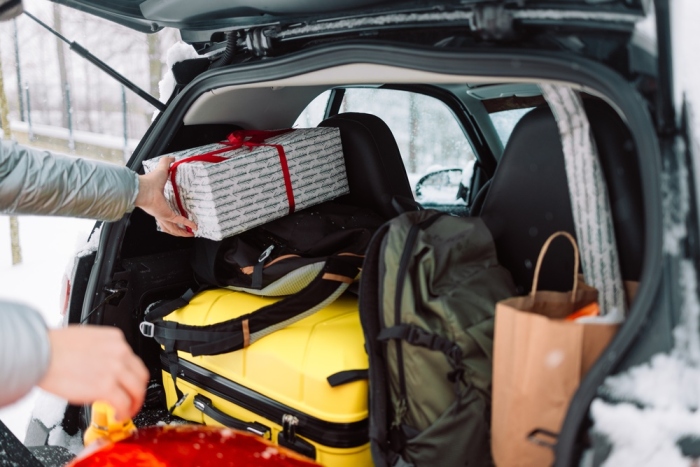
A four-hour drive does not sound like an emergency, which is probably why I take it more seriously in late November. You leave after breakfast expecting family by early afternoon. Then traffic stops, snow arrives earlier than forecast, and four hours becomes eight with everybody cold, hungry and asking how much farther.
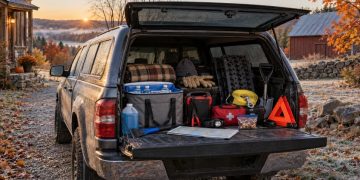
The normal roadside equipment already lives in my car, meaning a first-aid kit, flashlight, jumper pack, basic tools, warning triangles and the spare with what I need to fit it. When holiday travel starts, I add a second layer on top.
Warmth Is The Part People Skip
I do not count the heater as my cold-weather plan, because it works while the vehicle works and those are not the same thing. So I want a real blanket for each person rather than one thin emergency blanket under the spare tire, plus a couple of the reflective kind since they weigh almost nothing. Sitting in a dead car for three hours waiting on a tow truck is when that stops looking excessive.
The bigger gap is clothing, because families dress for the heated car. Nobody wants a winter coat for four hours in a warm vehicle, and the trouble only arrives when somebody has to stand outside in it.
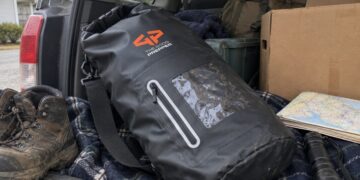
So a small bag goes behind the seat holding gloves, warm hats, spare layers and dry socks. Nobody has to wear any of it, and the children usually do not. It only has to be there.
What The People In The Car Need
Water comes along no matter how short the trip looks. In hard cold it can freeze in the trunk, so part of it rides in the passenger compartment or an insulated bag, and small bottles beat one large container because a single frozen one does not take out the lot. An animal in the car needs water counted too.
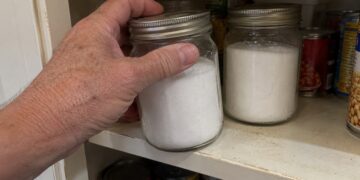
Food has to survive the car, which is where people pack badly. Anything with a lot of water in it freezes solid, chocolate turns into a brick, and soft bars get hard to eat when cold. I want calorie-dense things that shrug off a temperature swing, so nuts, trail mix, jerky, crackers and dried fruit go in. I am keeping four tired people from becoming four tired and hungry people, which matters more to morale than it sounds.
Medicine travels with the person rather than the luggage, not buried under suitcases and not forgotten at home because we are only going overnight. The roadside is a poor place to learn the nearest pharmacy shut hours ago.
Power, Cash And Paper
My phone is navigation, weather, traffic, roadside assistance and the way I reach the family expecting us, which makes a dead one far worse than it was twenty years ago. So I carry a cable that works from the vehicle and a charged power bank, since a disabled car may need to conserve its own battery and one nobody has charged since last winter is no backup.
Cash goes in too, which is not on every official checklist. Cards are convenient right up until a rural gas station has a network problem, so I keep enough for fuel, food or one small surprise, separate from my wallet. Losing the wallet should not remove every way I can pay for something.
I still keep a paper map behind the seat, and I use GPS like everybody else. That is the point, since phones fail, coverage disappears and an accident can push me onto county roads I do not know at all. Reviewing the route first is standard advice even with GPS, so I mark it and one alternative.
Getting A Wheel Moving
Good tires do most of the work, and sometimes a wheel still needs help. The usual recommendation is abrasive material, meaning sand or cat litter, while traction mats do the same job and stay cleaner in storage.
Where chains may be required, I carry something that actually fits my tires and practice fitting them at home, because I do not want the first attempt happening in blowing snow while trucks pass ten feet away. Requirements vary by state and road, so I check before the trip.
The shovel also comes out of storage by Thanksgiving. It takes almost no room and earns its place the first time a plough banks snow around the car, and I would rather dig for ten minutes than spin tires for an hour.
If You End Up Sitting There
This is what the kit is really for, and most travel checklists leave it out.
Stay with the vehicle, which is shelter and far easier to find than somebody walking a shoulder in blowing snow. Make it obvious too, with something bright tied to the antenna or hung from a window and the dome light on after dark.
Then the one that genuinely matters. Before running the engine, check that the exhaust pipe is clear of snow, because a blocked exhaust can push carbon monoxide into the cabin while you sit warming up. Clear it, check again if snow keeps falling, and run the engine in short spells rather than leaving it going for hours in a closed car.
Which is why I leave with more fuel than the drive needs, since fuel is reroute options and heat while waiting. Guidance runs from half a tank to close to full, and either way the point is margin. The same covers charge in an electric vehicle.
Somebody outside the car also knows our route and roughly when we expect to arrive. Most of the time nobody needs that, which is fine, since preparedness is full of things I hope nobody needs.

The Kit Is For The Extra Four Hours
That is how I think about holiday travel. I am not packing for a week in the wilderness, but for the chance a four-hour drive turns into an eight-hour problem.
Could everybody stay warm, drink, eat and take their medicine? Can I keep a phone alive, get a stuck wheel turning and navigate without a signal? Do I have fuel and a safe way to sit and wait? If those answers are yes, most winter travel trouble stays an inconvenience.
The traffic will still be maddening and somebody will still ask whether we are there yet, which is ordinary family travel. The kit exists so an ordinary inconvenience never turns into something worse, and I load it hoping it stays untouched until we are home.
Others Are Watching Now:



Resources
National Highway Traffic Safety Administration (NHTSA). Winter Driving Tips.
https://nhtsa.gov/winter-driving-tips
National Highway Traffic Safety Administration (NHTSA). Winter Weather Driving Tips (2023–2024).
https://www.nhtsa.gov/sites/nhtsa.gov/files/2023-11/Winter-Weather-Driving-Tips-2023-2024.pdf
American Automobile Association (AAA). Winter Driving Tips.