











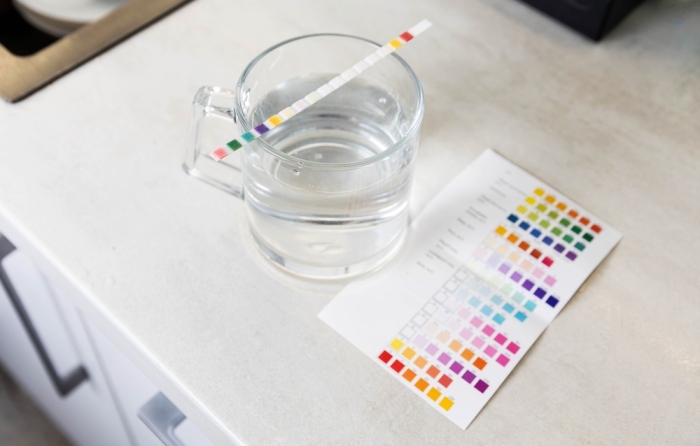
If you asked me to choose between another case of food and another reliable source of safe water, I would take the water first.
Food is the easy one, because people see an empty pantry and understand the problem immediately. Water is different because we are surrounded by it. It comes out of the faucet, sits in the water heater and falls out of the sky, and after a flood there is water everywhere you look.
Almost none of that guarantees I can safely put it into my family’s bodies, and safe water has jobs all over this house that go uncounted until the tap stops being trustworthy.
Drinking Is Only The First Job
How much water a person needs is not a fixed number. Heat, hard work, fever, vomiting, diarrhea, pregnancy, nursing and age all push the requirement up.
CDC’s guidance is to store at least one gallon per person per day for three days, and to try for a two-week supply if you can manage it. It also says to store more for pregnant women, people who are sick, pets, or households in a hot climate. Four people at a gallon each is twelve gallons for three days, and fifty-six gallons for the two weeks.
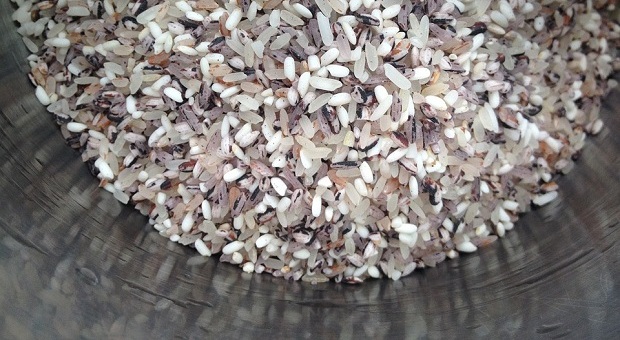
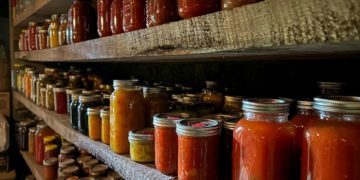
That gallon is also supposed to cover more than drinking. A shelf of rice, beans, oats and dehydrated meals is really a shelf of things that need water added before anybody eats, so some emergency foods quietly increase what a household needs. And I do not want to spend my last bottled water rehydrating dinner.
People also remember not to drink from the tap during a boil-water notice, then brush their teeth with it. CDC’s list of things not to do with unsafe water covers drinking, brushing teeth, washing dishes, washing or preparing food, washing hands, making ice and making baby formula. A household can improvise many things in an emergency, and the water used to feed a baby is not one of them.
Not every job needs drinking-quality water, and CDC notes that water unsafe to drink can sometimes be used for bathing. So I reserve the treated supply for anywhere there is a real route into the body: food, the mouth, open wounds and medical equipment.
Once I understood that, I stopped treating a water filter as camping gear.
Medicine And Wounds Both Run On Clean Water
Swallowing tablets takes water, and so does mixing powdered medication and helping somebody feverish drink enough to stay ahead of what he is losing. If a person has vomiting or diarrhea during a disaster, dehydration becomes a second emergency on top of the first one.
Disasters also produce cuts, since storms leave broken glass and cleanup brings nails, splinters and scrapes from debris.
Open wounds exposed to contaminated water can become infected, and CDC’s guidance is to avoid contact with flood water, salt water or brackish water if you have an open wound, including cuts and scrapes. Keep wounds clean with soap and clean water, cover them with a waterproof bandage, and get medical attention if redness, swelling or oozing appears.
A Flood Can Surround The House And Still Leave You Short
Flooding shows why treatment capability matters more than volume, because water can stand in the yard while safe water becomes the scarcest thing here.
Floodwater may carry sewage, animal waste, chemicals, fuel and microorganisms. A private well that was good yesterday may not be safe after being inundated, and appearance tells you almost nothing, because clear water can still be loaded with dangerous organisms.
The other half of the problem is electricity. Pumping, treatment and pressure all draw power, so after a hurricane the pumps may be down, the mains damaged and the roads closed to deliveries. Cold weather does the same with frozen pipes and pumps that stop when the power does, and on a private well I can have hundreds of gallons underneath this property and no way to reach it.
That is when a gravity filter, or any method that works without an outlet, earns its place. I cannot substitute coffee or canned soup indefinitely for safe water.
Know What To Look For On The Label
CDC is more specific about filters than most packaging, and its advice amounts to a shopping list.
For parasites such as Giardia and Cryptosporidium, it says to look for a filter certified to NSF standard 53 or 58 for cyst reduction, or an absolute pore size of one micron or smaller, or reverse osmosis. CDC stresses that word absolute, because a filter advertising a nominal or mean pore size of one micron can still let larger particles through. That distinction separates serious equipment from the cheap end of the shelf.
Bacteria call for an absolute pore size of 0.3 micron or smaller. Viruses are the one thing an ordinary filter will not catch, which is why CDC recommends adding a chemical disinfectant after filtering. The better answer is a grade up, because a product certified to NSF/ANSI P231 is tested as a microbiological purifier against the EPA guide standard of six-log bacteria, four-log virus and three-log cyst reduction.
Chemicals are not the blind spot people assume either, since NSF standard 53 covers lead, mercury, VOCs and asbestos.
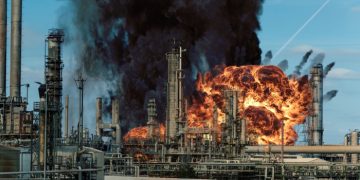
What no household method handles is water carrying fuel, toxic chemicals or radioactive material. You cannot make that safe by boiling or disinfecting it, and EPA says the same of heavy metals and salts. That is not a filter shortcoming but a limit on every method in the house, and the answer is a different source.
So I read the label, and I run layers: stored water for the first hours, a certified filter for the long middle, and disinfection if I am drawing from anything that may have met sewage.
Food Keeps Me Fed. Safe Water Keeps The House Working.
Water is not one category of preparedness alongside the others, because it runs underneath nearly all of them. Medical care, food storage, sanitation and infant care all need it. Illness and heat make us need more, floods contaminate it, outages stop it, and an injury turns the absence of clean water into an infection problem.
I still store food, keep medical supplies, and prepare for heat, cold, outages and storms. Underneath almost all of those plans is the same unmentioned requirement.
Give me a supply of water I can trust, and I can solve a surprising number of the problems that come after it.
Others Are Watching Now:





Resources
CDC. How to Create and Store an Emergency Water Supply.
https://www.cdc.gov/water-emergency/about/how-to-create-and-store-an-emergency-water-supply.html
CDC. How to Make Water Safe in an Emergency.
https://cdc.gov/water-emergency/about
CDC. Guidelines for Personal Hygiene During an Emergency.
https://www.cdc.gov/water-emergency/safety/guidelines-for-personal-hygiene-during-an-emergency.html
CDC. A Guide to Water Filters.
https://www.cdc.gov/parasites/crypto/gen_info/filters.html
EPA. Emergency Disinfection of Drinking Water.
https://www.epa.gov/ground-water-and-drinking-water/emergency-disinfection-drinking-water