


















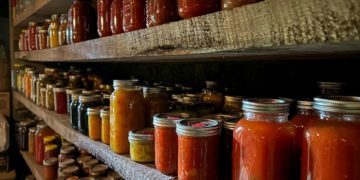

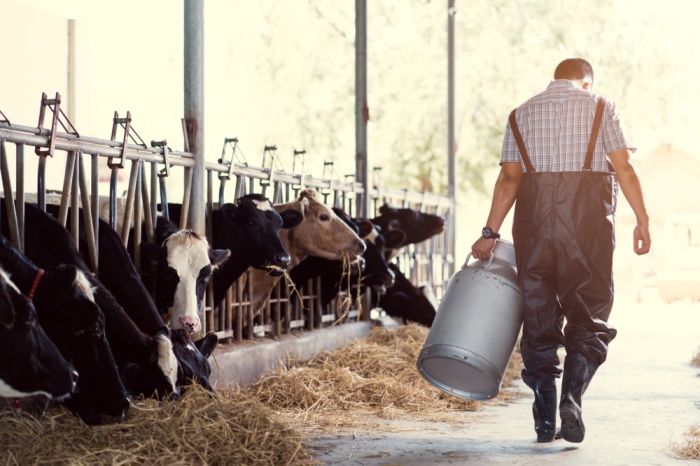
I can walk into a grocery store today and still find a cooler full of beef, with steaks and roasts stacked where they have always been. Nothing about that display looks like a shortage, which is exactly why cattle numbers are so easy to ignore.
The shelves show what is available today. They do not show how many breeding cows are standing on American farms, or how long it would take to produce substantially more.
Those numbers tell a different story. USDA counted 28.5 million beef cows on U.S. farms as of July 1, 2026, down 1 percent from a year earlier, and put the 2026 calf crop at 32.5 million head, down 2 percent.
That does not mean we are about to run out of hamburger. It means one of our largest food systems has very little ability to turn around quickly, and no amount of money can make a cow grow faster.
The Herd Has Been Shrinking For Years
This did not happen in one bad season.
The January count always runs lower than the midsummer one, and by January 1, 2026 the beef cow herd stood at 27.6 million head, down about 1 percent again and the smallest January inventory since 1961. That is not a dip but a sixty-five year low arrived at gradually.
Cattle numbers rise and fall for ordinary reasons. Drought forces ranchers to cut herds when pasture disappears, feed and borrowing get expensive, and cattle prices decide whether a rancher sells a heifer or keeps her for breeding. Eventually enough producers make the same decision in the same year and the national herd moves with them.
You Cannot Order Another Million Cows
Suppose beef prices stay high and ranchers decide tomorrow morning to expand.
The first step is keeping more female calves, called heifers, rather than sending them into the beef supply. That is the part people miss, because rebuilding tightens supply before it loosens it. Every heifer held back for breeding is an animal that does not become beef this year.
Then you wait, because USDA notes a retained heifer generally will not produce her first calf until around two years of age. After that the calf still has to be born, raised, weaned, fed and grown to slaughter weight, which USDA puts at roughly another 18 months.
So a rancher can make exactly the right decision today and still wait the better part of four years before it puts one additional pound of beef in a grocery store. That is biology, and neither Congress nor a subsidy nor a higher steak price can shorten it.
A broiler chicken goes from hatch to market in weeks, while USDA describes the whole cattle cycle as typically running about ten years. Some shortages are logistics problems, some are manufacturing problems, and some are biological. The last kind is the slowest to solve.
There were early signs of rebuilding at the start of 2026, when heifers held for replacement came in about 1 percent above the previous year, the first January increase since 2017. Look closer, though, and the retention rate sits at 17.1 percent of beef cow inventory, still roughly a point below the ten-year average, and some of those heifers will never enter the herd at all.
USDA has noted that meaningful expansion has historically taken two to three years of sustained growth in replacement heifers. One year up, from a level below the long-run average, is not a recovery but a possible first step.
The Price Is Already Feeling It
A small herd does not automatically empty the meat case. Imports help, heavier slaughter weights help, and consumers switch cuts while retailers adjust. None of it rebuilds the domestic breeding herd.
Tight cattle supplies still move prices. USDA’s October 2026 Food Price Outlook forecasts beef and veal prices averaging 8.7 percent higher in 2026 than in 2025, with a forecast interval running from 7.4 to 10.1 percent. That same figure stood at 9.4 percent in the September outlook before being revised down a month later.
For 2027 USDA publishes no category-level forecasts at all, so there is no official beef number for next year. Its forecast for food-at-home prices overall is a rise of about 1 percent, with an interval running from a 5.2 percent decline to a 7.5 percent increase. A federal grocery forecast spanning deflation to serious inflation is an honest admission that nobody knows.
So I would not build a food budget around any single forecast. There are fewer cows and fewer calves, and producing more of either takes years, which no spreadsheet can revise away.
What I Actually Do With This
I am not responding by filling three freezers with beef, because that just trades one dependency for another, this time on electricity.
I respond the way I do to stress anywhere else in the food system, by spreading the risk. I keep canned meat on the shelf, I buy beef when there is a genuinely good sale rather than when I happen to need it, and beans, lentils, eggs and canned fish stay in the rotation so no single protein carries the household.
Most of all, I pay attention before a shortage becomes obvious at the supermarket. By the time the meat case looks different, the decisions that caused it were made years earlier by people I will never meet.
Some Problems Cannot Be Fixed With Money
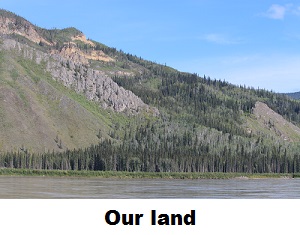
There is one more mistake I hear regularly, that if cattle prices are high ranchers will simply raise more cattle. Eventually some will, but a rancher needs grass, water, fencing, breeding stock, labor and financing, plus confidence that the economics will still work when today’s decisions reach the market. If drought returns and the pasture cannot carry more cattle, a high price does not make it rain.
The land gets a vote.
We have grown used to a world where enough money usually makes something appear. Factories add shifts and stores reorder. But nature keeps its own calendar, and you can pay the rancher more, change policy and expand processing capacity without convincing the animal to skip two years of growing.
That is why I watch a number like 28.5 million beef cows. Not because I expect the country to wake up with no beef, but because that number tells me how much slack is left in the system.
Right now there is a good deal less of it than a full meat case makes it look.
Others Are Watching Now: