





















Most people notice inflation when the number on the price tag goes up.
I notice something else too. The box gets smaller. The jar holds less.
The package looks almost identical, but there are fewer ounces inside. A product you have bought for years suddenly uses cheaper ingredients. The store brand disappears for a few weeks and comes back with a different formula. A familiar cut of meat gets thinner. A bag that used to feed the family twice barely makes it through one meal.
Those changes deserve attention.
They tell you that manufacturers, distributors, and retailers are under pressure somewhere in the system. Raw materials may cost more. Transportation may be more expensive. Packaging may be harder to source. Labor costs may be rising. Certain ingredients may simply be less available than they were before.
For a prepper, shrinkflation can be an early warning.

Watch The Package, Not Just The Price
A product can stay at $4.99 while quietly becoming more expensive.
If a 16-ounce package becomes 14 ounces, you are paying more per ounce even though the shelf price did not move.
That matters when you are building a pantry.
If you normally buy ten packages because that amount covers twenty family meals, smaller packages may leave you several meals short without you realizing it.
I periodically check the actual weight on foods we buy regularly.
- Rice.
- Pasta.
- Cereal.
- Coffee.
- Peanut butter.
- Frozen vegetables.
- Canned goods.
- Snacks.
- Pet food.
Anything that disappears quickly in our house deserves a second look. Knowing the real quantity keeps my storage calculations honest.
Ingredient Changes Can Be A Warning Too
Sometimes the package stays the same size while the product inside changes.
A company may substitute a cheaper oil, use less of an expensive ingredient, add more filler, or change the ratio of ingredients. That tells me something.
Manufacturers usually have strong reasons for changing products customers already recognize. Cost and availability are often part of that decision.
I pay particular attention when several brands in the same category start changing at once.
One recipe change may mean very little. Changes across several brands can suggest wider pressure on an ingredient or commodity. That is when I look at what my household depends on.
If we use that food every week, I may put a little more away while prices and availability are still manageable.
Quality Decline Matters As Much As Quantity
Inflation can show up in quality before it shows up in price. Produce may be smaller or spoil faster. Meat may contain more fat and less usable meat. Frozen meals may have fewer pieces of the expensive ingredient.
Tools, clothing, and household supplies may feel lighter or wear out sooner.
I consider this another form of shrinkflation.
You are still paying for the product, but you are receiving less useful value. This is especially important with preparedness supplies.
A cheaper trash bag that tears easily means I need more bags. Thin paper towels disappear faster. Poor batteries need replacement sooner. Cheap work gloves may fail halfway through cleanup. I would rather know that while stores are full than discover it during an emergency.
Pay Attention To What Stores Stop Carrying
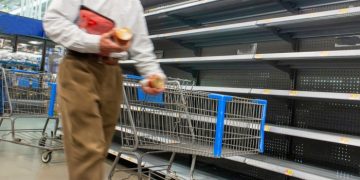
Empty shelves during a crisis are obvious. The quieter warning comes earlier. One size disappears. Then one brand. Then the cheaper version becomes difficult to find.
The shelf is still technically stocked, but your choices are shrinking.
I watch those changes because retailers respond to supply problems long before most customers understand what is happening.
If canned tomatoes suddenly have only two brands instead of six, I notice. If the large bags of rice disappear repeatedly, I notice. If a particular cooking oil keeps going out of stock, I notice.
I do not panic-buy. I simply move purchases forward when something important to my household is becoming harder to replace.
Recalculate What A “Month Of Food” Means
Shrinkflation can quietly wreck a pantry plan.
Suppose your family uses four cans of something each week. You stored 24 cans and assumed you had six weeks covered.
Then the cans became smaller.
Your six-week supply may now provide five weeks of the actual food your family expects.
This matters even more with calorie-dense foods such as meat, peanut butter, oils, rice, pasta, and canned meals.
I prefer planning by meals, calories, pounds, or ounces instead of package count.
“Twenty cans” tells me very little.
“Twenty family dinners” tells me something useful.
Buy Flexible Foods Before Convenience Foods
When inflation becomes serious, convenience gets expensive quickly.
Highly processed meals require ingredients, packaging, refrigeration, transportation, advertising, and more manufacturing steps.
Basic foods give me more room to adapt.
- Rice can go with beans, canned meat, vegetables, eggs, or soup.
- Flour can become bread, biscuits, pancakes, or thickener.
- Oats can become breakfast, granola, or baking ingredients.
- Canned meat can turn potatoes, pasta, beans, or rice into a complete meal.
- Canned tomatoes can become soup, chili, sauce, or stew.
The more jobs a food can do, the more valuable it becomes when prices are moving.
Build Around Foods Your Family Already Eats
Inflation creates enough stress without filling the house with food nobody wants.
I keep a running list of our most-used pantry items and watch those first.
If my family eats six jars of peanut butter in two months, that tells me more than any generic preparedness checklist.
I know how quickly we use it.
I know what price is normal.
I know when the jars start shrinking.
That makes it easy to recognize a good buying opportunity.
A deep pantry works best when normal groceries and emergency storage are the same system.
Protect Yourself With Rotation
Buying ahead only works when the food actually gets used.
I keep older food toward the front and newer food behind it. When something reaches the kitchen, another one eventually replaces it.
That lets me benefit from today’s price without creating a shelf full of forgotten food.
It also means I notice changes quickly. I can compare an older package with a new one.
Same brand. Same price. Two ounces missing. That is information I can use.
Adjust The Diet Before You Are Forced To
This is one of the most useful things a family can do.
If beef becomes expensive, learn more meals using chicken, beans, eggs, or canned meat while all of them are still available.
If breakfast cereal keeps shrinking, learn to use oats.
If packaged bread becomes expensive, practice baking.
If frozen meals keep increasing in price, learn five simple meals from pantry staples.
Changing habits voluntarily is easier than changing them during a shortage.
I would rather teach my family a cheaper meal now than discover later that the food we depended on has doubled in price.
Small Changes Can Give You Early Warning
A smaller box does not mean a national emergency is coming.
It does tell you that something changed.
When package sizes shrink, ingredients get substituted, quality falls, cheaper options disappear, and prices keep rising at the same time, I pay closer attention.
Those pressures eventually reach the household.
A prepper’s advantage is time.
- Time to buy another case before the price rises again.
- Time to replace an expensive ingredient with something more dependable.
- Time to learn another recipe.
- Time to increase storage slowly instead of fighting over the last cart of groceries.
Inflation rarely arrives as one dramatic moment.
Most of the time, it eats away at purchasing power a little at a time.
Sometimes the first clue is sitting in your hand. Same package. Less food.
Others Are Watching Now:


















































Prediction – some will see this now and disagree, but comments remain and years later we will know—that is IF our EXCEPTIONAL Nation continues to exist and there’s internet to even see it.
Seemingly the entirety of the population including most of us Preppers listen to the self-professed “experts” on the economy., but they don’t have our Preppor sense.
They’re telling us it’s great for many reasons including the stock market being up, so everyone is wealthy, right!
Wrong! You put the fruit of your labor into accounts to spend later and are forced to take risk to either keep up with inflation or lose to inflation.
We’re fourty trillion dollars in debt as I type this, but those of us reading this later will notice the date I wrote it because it’s quickly increasing.
I look at it as stocks today are roughly worth the same as a year ago. That it’s up doesn’t mean it’s worth more. Instead it means dollars are worth less. But, the “experts” tell us “diversification” protects us. They’re wrong! There is no diversification for the times about to come.
Proof: Everything they call diversification are financial instruments payable in dollars and going up — more dollars to buy them!
Riddle me this — Whats it matter how much these diverse financial instruments have gone up when dollars are worthless?
I prepare for what will be called “The Great Collapse” by the survivors. We know who we are now, so we’ve already named it.