












Survivopedia
  • HOME
  • GENERAL PREP
    • All
    • Disaster Scenarios
    • EMP
    • Natural Disasters
    • Survival News
    • Survival Skills

    How To Train A Dog As A Useful Survival Companion, Not Just A Pet

    If The Roads Closed Overnight: How Each Culture Would Respond To Sudden Isolation

    Firecraft In Community Life – How Native, Pioneer, and Amish Families Used Fire Beyond Cooking

    Knot Work for Homesteads and Camps

    Knot Work for Homesteads and Camps

    Water Wisdom: Springs, Wells, And Rivers Through Native, Pioneer, And Amish Eyes

    Teaching Children Courage Without Teaching Them Panic

    Historic Methods For Keeping Insects Off People, Food, And Bedding

    From Hobby to Lifeline – Turning Crafts into Crisis Skills

    How to Make Fire Without Matches: The Bow Drill

    • SHTF SCENARIOS
      • Survival Skills
      • Disaster Scenarios
      • Natural Disasters
      • WATER
      • FINANCIAL
      • WAR & CONFLICTS
      • emp
    • EQUIPMENT
      • Bug-Out-Vehicle
      • Firearms
      • COMMUNICATION
    • ENERGY
      • ENERGY
      • Energy Sources
      • Electric Equipments
      • Consumption Control
  • WEAPONS
    • All
    • Cold Weapons
    • Firearms
    • Regulations
    Field Reloading

    Field Reloading

    Fully Automatic Firearms? No Thanks!

    Are Alternative Weapons Practical in a Post-Disaster World?

    How To Travel With A Firearm

    The Ultimate Survival Knife: How to Pick the Right One

    A Sharp Edge: Choosing the Best Survival Knife for Prepping and Self-Defense

    Is There a Place for “Fast Draw” in Survival?

    Indispensable Gear for your EDC Core Layer

    Best 17 silent weapons for when SHTF

    Best 17 silent weapons for when SHTF

    • Firearms
    • Cold Weapons
    • Defense
    • Privacy & Data Protection
    • Regulations
  • FOOD
    • All
    • Cooking
    • Farm Animals
    • Farming
    • Food Storage
    • Hunting
    • Plants & Gardening

    Generosity From The Stockpile: Giving Without Gutting Your Reserves

    How To Turn A Normal Kitchen Into A Grid Down Cooking Center

    Why Stored Canned Meat Belongs In Every Crisis Pantry

    Cooking On A Hearth Or Open Fire: Old World Kitchen Skills For Modern Preppers

    Clay Pot Refrigeration: Old Tech That Still Cools Food

    From Farm to Faith: What Homesteading Teaches Us About God and Grit

    How I Finally Became Food Independent

    How I Finally Became Food Independent

    Tracking Like a Native Scout: Sign, Age & Counter-tracking

    Fermented Foods for Gut Health During Long-Term Collapse

    • Food Storage
    • Cooking
    • Farm Animals
    • Hunting
    • Plants & Gardening
  • Store
  • Newsletter
No Result
View All Result
  • HOME
  • GENERAL PREP
    • All
    • Disaster Scenarios
    • EMP
    • Natural Disasters
    • Survival News
    • Survival Skills

    How To Train A Dog As A Useful Survival Companion, Not Just A Pet

    If The Roads Closed Overnight: How Each Culture Would Respond To Sudden Isolation

    Firecraft In Community Life – How Native, Pioneer, and Amish Families Used Fire Beyond Cooking

    Knot Work for Homesteads and Camps

    Knot Work for Homesteads and Camps

    Water Wisdom: Springs, Wells, And Rivers Through Native, Pioneer, And Amish Eyes

    Teaching Children Courage Without Teaching Them Panic

    Historic Methods For Keeping Insects Off People, Food, And Bedding

    From Hobby to Lifeline – Turning Crafts into Crisis Skills

    How to Make Fire Without Matches: The Bow Drill

    • SHTF SCENARIOS
      • Survival Skills
      • Disaster Scenarios
      • Natural Disasters
      • WATER
      • FINANCIAL
      • WAR & CONFLICTS
      • emp
    • EQUIPMENT
      • Bug-Out-Vehicle
      • Firearms
      • COMMUNICATION
    • ENERGY
      • ENERGY
      • Energy Sources
      • Electric Equipments
      • Consumption Control
  • WEAPONS
    • All
    • Cold Weapons
    • Firearms
    • Regulations
    Field Reloading

    Field Reloading

    Fully Automatic Firearms? No Thanks!

    Are Alternative Weapons Practical in a Post-Disaster World?

    How To Travel With A Firearm

    The Ultimate Survival Knife: How to Pick the Right One

    A Sharp Edge: Choosing the Best Survival Knife for Prepping and Self-Defense

    Is There a Place for “Fast Draw” in Survival?

    Indispensable Gear for your EDC Core Layer

    Best 17 silent weapons for when SHTF

    Best 17 silent weapons for when SHTF

    • Firearms
    • Cold Weapons
    • Defense
    • Privacy & Data Protection
    • Regulations
  • FOOD
    • All
    • Cooking
    • Farm Animals
    • Farming
    • Food Storage
    • Hunting
    • Plants & Gardening

    Generosity From The Stockpile: Giving Without Gutting Your Reserves

    How To Turn A Normal Kitchen Into A Grid Down Cooking Center

    Why Stored Canned Meat Belongs In Every Crisis Pantry

    Cooking On A Hearth Or Open Fire: Old World Kitchen Skills For Modern Preppers

    Clay Pot Refrigeration: Old Tech That Still Cools Food

    From Farm to Faith: What Homesteading Teaches Us About God and Grit

    How I Finally Became Food Independent

    How I Finally Became Food Independent

    Tracking Like a Native Scout: Sign, Age & Counter-tracking

    Fermented Foods for Gut Health During Long-Term Collapse

    • Food Storage
    • Cooking
    • Farm Animals
    • Hunting
    • Plants & Gardening
  • Store
  • Newsletter
No Result
View All Result
Survivopedia
No Result
View All Result
Home HEALTH First Aid

The First 72 Hours Of An Illness Outbreak In A Small Community

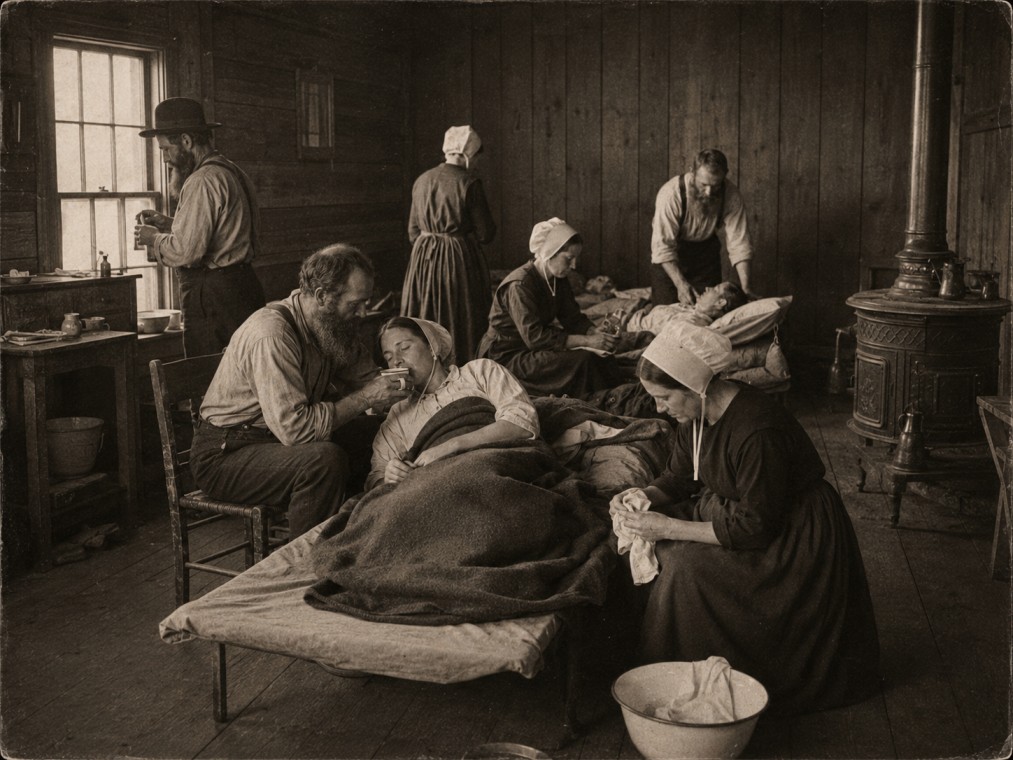
The first three days of an illness outbreak can decide how much trouble a small community faces.

That is true in a family, a church, a rural town, a homestead group, or a tight neighborhood. Once several people are coughing, feverish, vomiting, weak, or staying in bed, everyone wants answers. What is it? Who has it? Who was exposed? Who needs help? Who should stay away?

In those first 72 hours, confusion is dangerous.

The goal is simple. Slow the spread, care for the sick, protect the weak, keep people calm, and avoid making bad decisions because everyone is scared.

Do Not Pretend It Is Nothing

Small communities often lose time because people do not want to be rude.

Nobody wants to tell a sick church member to stay home. Nobody wants to cancel a meal, meeting, work day, or gathering. Nobody wants to admit that the cough going around may be more serious than a normal cold.

That hesitation can cost you.

If several people become sick around the same time, treat it as a real signal. Ask basic questions. What symptoms are showing up? When did they start? Who was together? Are children, elders, pregnant women, or people with weak immune systems involved?

You do not need panic. You need facts.

Separate The Sick Early

Historically, the oldest public health tool was separation.

Long before modern medicine, communities learned that distance mattered. Sick people were kept apart when possible. Visitors were limited. Supplies were left at the door. Families avoided unnecessary gatherings until the sickness burned down.

That still makes sense.

If someone is sick, keep that person home and away from others as much as possible. If space allows, use one room for the sick person. Use one bathroom if possible. If not, clean shared surfaces often. Keep cups, towels, bedding, and utensils separate.

In a small community, the same rule applies. Pause meetings, shared meals, school groups, work crews, and visits until you understand what is moving through the area.

Early separation is easier than late damage control.

Set Up A Care Rotation

One sick person can wear out a whole household.

Several sick families can wear out a community.

That is why care must be organized. Do not let everyone rush in and expose themselves. Pick the healthiest, lowest-risk adult to handle direct care when possible. Keep elders, pregnant women, very young children, and people with serious health problems away from sick rooms unless there is no other choice.

In a community setting, use porch drops and door drops. Bring soup, clean water, medicine, firewood, diapers, pet food, or groceries without sitting inside the house. Call or text instead of visiting.

If direct help is needed, keep it short and clean. Wash hands. Wear a mask if respiratory symptoms are present. Do the job. Leave. Clean up.

Hero behavior spreads illness. Organized help protects people.

Watch Fluids First

During the first 72 hours, dehydration is one of the biggest practical dangers.

Fever, sweating, vomiting, diarrhea, and poor appetite can drain a person fast. Children and older adults can weaken quickly.

Keep fluids moving. Water, broth, oral rehydration solution, weak tea, diluted juice, and soups can all help. A simple rehydration drink can be made with clean water, a little salt, and sugar, but it must be measured carefully. Too much salt can hurt someone.

Watch urine color and frequency. Watch dizziness, dry mouth, confusion, sunken eyes, and inability to keep fluids down.

If someone has trouble breathing, chest pain, blue lips, severe confusion, dehydration signs, or a fever that will not break, get medical help. Preparedness does not mean refusing a doctor when one is needed.

Use Herbs For Comfort And Support

Herbs can have a place in the sick room, but they are not magic.

Ginger tea may help settle the stomach. Peppermint tea can be soothing. Thyme tea, honey, lemon, garlic broth, and warm soups can make respiratory illness more bearable. Chamomile may help a restless sick person settle down.

Elderberry is popular, but it must be prepared properly. Raw or unripe elderberries and parts of the plant can make people sick. Use trusted preparations and do not treat it as a cure.

Honey should not be given to children under one year old. Herbs can also interact with medicines, blood thinners, pregnancy, and chronic health conditions.

The plain rule is this: herbs support comfort. They do not replace clean water, rest, hygiene, observation, and medical care when things get serious.

Build A Sick Room Kit

A small community should encourage every household to keep a basic sick room kit.

It should include a thermometer, soap, hand sanitizer, tissues, trash bags, gloves, masks, oral rehydration supplies, fever medicine appropriate for the household, clean towels, disinfecting supplies, a notebook, and a way to heat water.

The notebook matters. Write down symptoms, temperature, fluids, medicines given, and times. When people are tired, memory gets sloppy.

Good notes help families see whether someone is improving or getting worse.

Keep Food Simple

Sick people usually do better with simple food.

Broth, soup, oatmeal, rice, applesauce, toast, potatoes, bananas, crackers, eggs, and soft cooked vegetables are easier than heavy meals. The caregiver also needs to eat. A worn-out caregiver becomes the next patient.

Do not share cups, spoons, towels, or food from the same plate. Wash dishes well. Keep trash sealed. Clean bathroom surfaces and door handles. Wash hands often, especially after coughing, sneezing, bathroom use, cleaning, or caring for the sick.

Small hygiene habits make a big difference.

Keep The Community Calm

Fear spreads almost as fast as sickness.

This is where spiritual support matters. Historically, families prayed, sang hymns, read Scripture, checked on widows, and carried food to the sick. That kind of support still matters because illness isolates people.

Call the lonely. Pray with the frightened. Leave food for the weak. Send clear updates without gossip. Remind people to rest, eat, drink, and stay home if sick.

A calm community makes better decisions.

The First 72 Hours Set The Pattern

In the first three days, do the simple things well.

Separate the sick. Pause gatherings. Organize care. Protect the vulnerable. Push fluids. Use herbs wisely. Keep records. Clean hands and surfaces. Watch for danger signs. Support people spiritually.

That is the old pattern, and it still works.

A small community that acts early can slow an outbreak, protect its weakest members, and keep fear from taking charge.

When sickness comes, the prepared people do not run in every direction.

They steady the house, care for the sick, and hold the line.

Others Are Watching Now:

ShareTweet
Dr John Herzog

Dr John Herzog

Dr. John Herzog has been a third-generation osteopathic orthopedic surgeon for nearly 35 years, having evaluated over 200,000 people during office visits and performing over 15,000 surgeries. He focuses on educating his patients on the importance of a healthy lifestyle, being an advocate of a plant-based diet, and admitting “It is the best fuel for the human body and mind”. One of the pioneers in Platelet Rich Plasma, a concentration of thrombocytes and stem cells, and Stem Cell Regeneration, Dr. Herzog is set apart as the most experienced orthopedic surgeon in New England. He performed over 3,000 regenerative orthopedic procedures and he is also an expert on the use of the ultrasound. Dr. Herzog has been a Board-Certified Orthopedic Surgeon for 30 years and is a fellow in the American Osteopathic Academy of Orthopedics where only 1% of surgeons are listed with this honor. In the beginning of his career, Dr. Herzog went to medical school 4 years earlier than the average, at 20 instead of at 24, going through all the branches of medicine. He partnered with T. Colin Campbell, the author of ‘The China Study’ – to examine the link between the consumption of animal products, including dairy, and chronic illnesses. Dr. Herzog is also specialized in working with people suffering from arthritis. His main focus is to keep people out of the Emergency Room by being prepared like his dad was.

Comments 1

  1. Ronald H Levine says:

    11 hours ago

    During the start of COVID, neighbors were afraid to go to the grocery store for food, so I shopped for them. I haven’t had a cold or flu for thirty-eight years and I’ve certainly been very exposed. Often at the workplace, everyone would get the flu except me. Once at work everyone got very sick from food poisoning from a Thanksgiving Dinner and I ate the most of everything and didn’t even notice anything. With that history and trust in my immune system, I was happy to volunteer to be exposed to the then unknown. The precaution I advise is to live healthily in these good days when preparedness is still possible though I know many do including all on my bicycle racing team and they still get sick. I’m grateful to our Creator that I’m blessed with a killer immune system. It came at a high cost for my lineage because there was much early deaths from violence and harsh environments for two thousand years of family history. Achieve the best health that you can now before the harsh times to come. Without it, all the rest becomes a moot-point. Stock up on foods that will be healthful and that includes seeds for growing fresh foods.

    Reply

Leave a Reply Cancel reply

Your email address will not be published. Required fields are marked *

  • Trending
  • Comments
  • Latest
How To Make Pemmican, The Ultimate Survival Food (Video)

How To Make Pemmican, The Ultimate Survival Food (Video)

January 12, 2026

How the Amish Would Respond to Grid Down

November 17, 2025
Chloroform

How To Make Chloroform For Survival

October 13, 2025
Top 10 Vehicles For Your EMP Survival

Top 10 Vehicles For Your EMP Survival

May 19, 2026
The Ugly Part of Water Purification: Top 5 Mistakes You Make

The Ugly Part of Water Purification: Top 5 Mistakes You Make

September 29, 2025
How to Preserve Eggs Like the Pioneers Did

How to Preserve Eggs Like the Pioneers Did

October 14, 2025
Top 6 Survival Rifles And Why You Need One

Top 6 Survival Rifles And Why You Need One

429
Top 5 Bug Out Locations In The US

Top 5 Bug Out Locations In The US

257
Top 10 Vehicles For Your EMP Survival

Top 10 Vehicles For Your EMP Survival

162
10 Items You Need To Hoard

10 Items You Need To Hoard

148
How To Store Flour, Sugar And Rice For Survival

How To Store Flour, Sugar And Rice For Survival

141
alaska landscape

A Prepper’s Story: Headed To Alaska To Survive Off-grid

118

The First 72 Hours Of An Illness Outbreak In A Small Community

July 20, 2026

Generosity From The Stockpile: Giving Without Gutting Your Reserves

July 17, 2026

How To Turn A Normal Kitchen Into A Grid Down Cooking Center

July 17, 2026

Herbs And Foods That Support The Immune System During Long Stressful Times

July 16, 2026

The Quiet Militarization Of Everyday Spaces: Cameras, Drones, And Armed Security

July 14, 2026

Hand Washing Laundry With Washboards, Sticks, And Stones

July 13, 2026

No Result
View All Result


  • Privacy Policy
  • Terms&Conditions
  • Blogroll
  • Contact
  • Newsletter

© 2025 SURVIVOPEDIA

No Result
View All Result
  • HOME
  • GENERAL PREP
    • SHTF SCENARIOS
      • Survival Skills
      • Disaster Scenarios
      • Natural Disasters
      • WATER
      • FINANCIAL
      • WAR & CONFLICTS
      • emp
    • EQUIPMENT
      • Bug-Out-Vehicle
      • Firearms
      • COMMUNICATION
    • ENERGY
      • ENERGY
      • Energy Sources
      • Electric Equipments
      • Consumption Control
  • WEAPONS
    • Firearms
    • Cold Weapons
    • Defense
    • Privacy & Data Protection
    • Regulations
  • FOOD
    • Food Storage
    • Cooking
    • Farm Animals
    • Hunting
    • Plants & Gardening
  • Store
  • Newsletter

© 2025 SURVIVOPEDIA