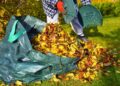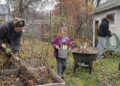












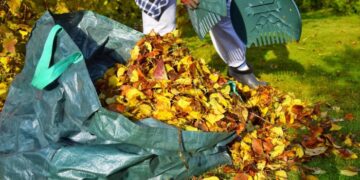



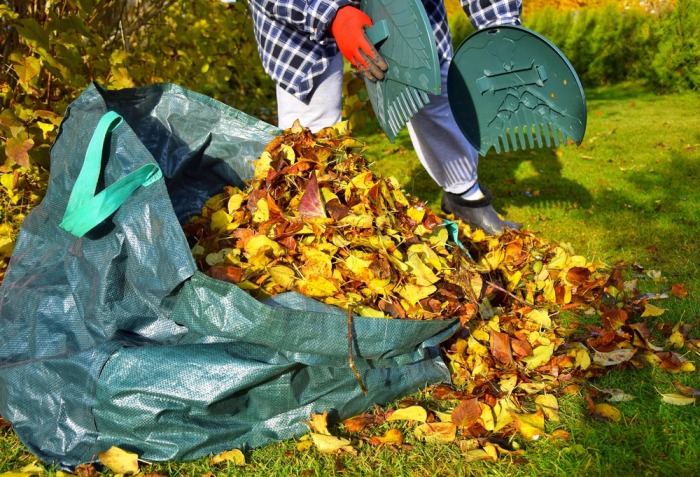
Every November I watch people rake up one of the best free materials their property produces, bag it, and pay to have it hauled away. Then spring arrives and they buy mulch, compost and frost protection, some of which could have come from those leaves.
I am not suggesting anybody let two feet of wet leaves rot on the lawn, since too many mat down and smother grass. I am saying I stopped treating fallen leaves as waste and started treating them as a crop. They arrive once a year, in enormous quantity, at no cost.
1. Mulch The Garden Beds
I run dry leaves through the mower when I can, since smaller pieces settle evenly, blow around less and break down faster than whole leaves, which form thick wet mats.
The depths are where people guess. Two inches of shredded leaves on a landscape bed becomes soft brown mulch by spring, two to four inches works around trees and shrubs, and on a lawn keep it under half an inch so the grass can still breathe.
2. Leave Root Crops In The Ground Longer
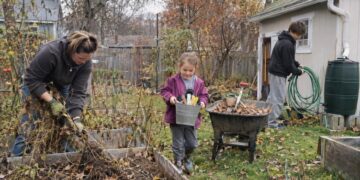
This one turns the garden into temporary food storage. Mulch the rows deeply instead of digging everything before winter, and carrots can usually be harvested until the ground freezes hard.
Parsnips go further than that, tolerating a whole winter in the ground and lifting in early spring, provided you get them before they send up a flower stalk, since the flavor goes once the plant bolts.
Mark the row first, which sounds obvious until six inches of leaves and the first snow hide where the carrots were.
3. Make Leaf Mold
Leaf mold may be the least appreciated garden material in America, and it is embarrassingly easy to make. Pile leaves in a wire enclosure, keep them damp, and leave them alone until fungi turn the pile into dark crumbly material.
Shredding roughly halves the wait, since shredded leaves are usually ready in about six months while whole leaves take nine to twelve. You pile it, wait, and use it, which is how the best preparedness systems tend to work.
4. Stockpile The Compost Browns
Leaves are the brown side of a compost pile, while kitchen scraps and green waste bring the nitrogen. The trouble comes in January, when I still have scraps but the yard has stopped producing anything brown.
So I keep bags of dry autumn leaves beside the pile and cover every load with a layer. I am storing half of next year’s compost before winter.
5. Bedding Around Animals, But Identify The Trees First
Dry leaves can work as bedding, but this is the one use where I will not rake whatever falls and throw it in.
Fresh red maple leaves are not toxic to horses. Wilted and dried leaves and the bark are extremely toxic, which means raked autumn leaves are in exactly the dangerous state. A poisonous dose is just over three pounds, and the toxins destroy red blood cells and stop the rest carrying oxygen.
So identify the trees first, keep the leaves clean and dry, and check species guidance for whatever animals you keep, because natural does not mean harmless.
6. Insulate The Cold Frame
A cold frame is a low box with a transparent lid that traps solar warmth and blocks wind. The old method of protecting one on a hard night is to throw a mat, a blanket, or burlap sacks stuffed with dry leaves over the sash, with straw bales around the outside for more. Pull it off in the morning so sunlight reaches the plants.
Those leaves can buy lettuce or kale a few more weeks, which is food storage before the harvest.
7. Protect Well Equipment, Never The Well Opening
This one needs a hard distinction. Do not pile leaves over a drinking-water wellhead, since standard guidance everywhere is to keep that area free of debris such as leaves, weeds and trash, with a sound cap and clear drainage.
What leaves can help with is a well house around exposed plumbing, where bagged dry leaves add temporary insulation around the outside, kept clear of the cap, the vent and anything needing airflow. The goal is keeping pipes from freezing without a damp nest around the water supply.
8. Temporary Insulation Around Outbuildings
Leaves trap a great deal of air, and air is insulation. Rather than piling wet leaves against a building, fill breathable sacks and set them against a drafty outbuilding.
The cautions matter more than the technique. Never pile loose leaves against siding, vents or anything hot, and take them away when the weather turns, because wet leaves hold moisture and shelter rodents. Use the trapped air, not a compost pile against the wall.
Keep The Cleanest Leaves, And Not All Of Them
Leaves from healthy trees get used, while anything contaminated with road salt, oil or herbicides stays away from the food garden.
I also do not need every leaf. Assassin bugs, lady beetles, minute pirate bugs and syrphid flies all overwinter under leaf litter and emerge in spring to do free pest control, and ground-nesting bees rely on it too. So some stays where it fell, with two exceptions: rake leaves away from anywhere people and pets might pick up ticks, and put diseased material in the trash rather than the compost.

Check What Your State Actually Allows
Here is the part most articles leave out, because the law has opinions about your leaves.
Burning is the one most likely to be illegal, and the rules vary even inside a single state. Michigan has prohibited open burning of leaves and yard waste in municipalities of 7,500 or more since 1995, while smaller communities may permit it. New York prohibits open burning of nearly all material statewide. Elsewhere you may need a permit, and a drought burn ban can be declared on a few hours’ notice. Local ordinances generally override state rules when they are stricter, so the only answer that means anything is the one from your own township or fire district.
Bagging them for the landfill may not be an option either. Around two dozen states ban yard waste from landfills outright, Pennsylvania’s ban names leaves specifically, and Nebraska’s runs from April through November. In roughly half the country, the disposal route people assume is normal is the one actually prohibited.
That is worth sitting with, because across much of the country you may neither burn them nor dump them, which leaves composting, mulching and the uses above. State environmental agencies tend to recommend exactly that.
A mature tree spends all summer building thousands of leaves, autumn delivers the lot to the ground, and our normal response is to put it at the curb. I would rather have mulch, compost, leaf mold, protection for roots in the soil and a few more weeks of greens.
Free, local, renewable, and piled six inches deep across the yard every fall.
Others Are Watching Now:





Resources
Penn State Extension. Leaves Are Treasure, Not Trash.
https://extension.psu.edu/leaves-are-treasure-not-trash
Illinois Extension. Don’t Bag Your Fall Leaves.
https://extension.illinois.edu/blogs/know-how-know-more/2025-10-27-dont-bag-your-fall-leaves-use-them
Iowa State University Extension. Growing Carrots and Parsnips.
https://yardandgarden.extension.iastate.edu/how-to/growing-carrots-and-parsnips
UConn Extension. Red Maple Toxicity and Your Horse.
https://extension.uconn.edu/publication/red-maple-toxicity-and-your-horse/
Nebraska Extension. Building a Coldframe.
https://lancaster.unl.edu/building-coldframe-or-hot-bed/
University of Maryland Extension. Leave the Leaves for Natural Pest Control.
https://extension.umd.edu/resource/leave-leaves-natural-pest-control
Missouri Department of Natural Resources (DNR). Maintain Your Private Water Well.
https://dnr.mo.gov/water/hows-water/water-we-drink/maintain-your-private-water-well
Michigan Department of Environment, Great Lakes, and Energy (EGLE). Open Burning.
https://www.michigan.gov/-/media/Project/Websites/egle/Documents/Programs/AQD/Open-Burning/Open-Burning-Brochure.pdf
Earth911. Landfill Bans by State.
https://earth911.com/business-policy/landfill-bans/