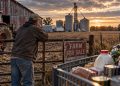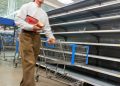











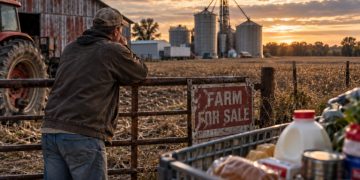
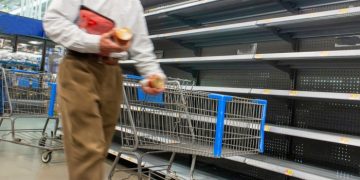

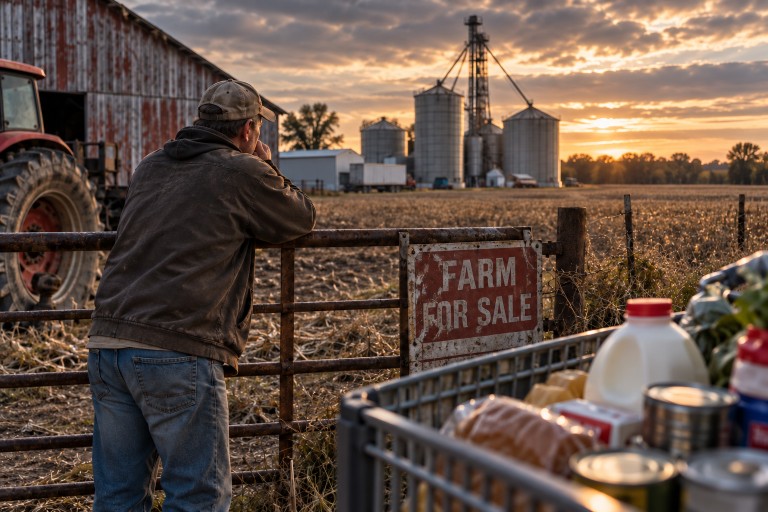
Most people never think about the financial condition of farmers while they walk through a grocery store. They look at the price of beef, the price of eggs, and the bag of rice that somehow costs another dollar this month.
By the time those changes reach the shelf, the pressure behind them may have been building on farms for a year or more.
That is why I pay attention to agricultural debt, operating costs, credit conditions, and farm bankruptcies. They tell me what is happening much farther upstream than anything I can read off a price tag.

Bankruptcy Is The End Of A Longer Story
A farmer does not usually wake up after one bad harvest and file for bankruptcy. Financial trouble builds slowly, over several seasons.
Seed costs more. Fertilizer costs more. Machinery repairs get expensive, interest payments climb, and labor, electricity, insurance, taxes, and chemicals all keep taking another bite out of the same operation. At the same time, the price the farmer receives for corn, wheat, soybeans, or milk may be falling. So the farm borrows more to plant another crop, and then another, until eventually the numbers stop working.
Chapter 12 filings are therefore a late sign of trouble rather than an early one. I still find them useful, because they confirm that the earlier warnings (rising debt, shrinking working capital) have turned into something serious.
Watch Debt Before Bankruptcy
Debt gets my attention much earlier in the story. Farming requires an enormous amount of money spent before anything is harvested.
Farmers borrow for seed, fertilizer, fuel, feed, equipment, land, and ordinary operating expenses, and that loan has to be carried for months before the crop or the animal produces a dollar of revenue. When operating loans get larger and repayment periods stretch out, it tells me farmers are using more borrowed money simply to keep producing at the same level.
That creates real vulnerability. One poor harvest, another interest-rate increase, a disease outbreak, or a drop in commodity prices can force changes very quickly. Farmers may plant fewer acres, cut back on fertilizer, delay replacing equipment, sell cattle, drop a crop that has stopped paying, or leave farming altogether. Every one of those decisions eventually shows up in supply.
Input Costs Tell Me What The Next Crop Really Costs
I also watch what it costs to produce food in the first place. Fertilizer is the obvious one, but fuel, seed, chemicals, labor, electricity, machinery repairs, and interest all belong in the same picture.
A farmer cannot sell indefinitely for less than it costs him to produce. He may absorb losses for a while, and crop insurance, savings, loans, or government support may keep the operation running through a bad stretch. But eventually something has to give. A crop that does not pay gets fewer acres next spring. Inputs get cut. Production shifts to something else. The farm closes.
That is why today’s input costs can tell me something useful about food availability long before the next harvest ever reaches a processor.
There Is A Delay Before You Feel It
Agricultural trouble does not travel from a farm to a supermarket overnight. A crop has to be planted, grown, harvested, stored, transported, processed, packaged, distributed, and finally sold. Livestock runs on its own biological timeline that no amount of money can shorten.
All of that creates a delay. USDA research has found that changes in farm commodity prices can take months to work through wholesale and retail prices, with the timing varying considerably by food. Processing, transportation, labor, packaging, and retail costs also make up most of what consumers ultimately pay at the register.
So I do not treat twelve or eighteen months as a countdown clock. I treat it as a planning horizon. Pressure visible in agriculture right now may shape what gets planted, produced, slaughtered, or invested in during the next production cycle.
Watch The Crop, Not Just The National Number
A national farm-income figure can hide a great deal. One sector may be having a good year while another is getting crushed, and the average tells you nothing about either.
That matters because I care about what my family actually eats. If cattle producers are reducing herds, I pay attention to beef. If rice growers are losing money, I watch rice. If dairy margins are under pressure, I watch milk, cheese, and butter. If vegetable growers are struggling with labor and input costs, I watch produce.
I want to know where the financial stress is concentrated. That is considerably more useful than hearing that farmers in general are struggling.
Farm Closures Reduce Flexibility
When a farm disappears, the production does not always disappear with it. Another operator may buy the land, or a larger company may lease it, and the acres keep producing.
Repeated closures still matter, because they can reduce the number of independent producers and concentrate more of the output into fewer and larger operations. That concentration is what bothers me from a preparedness standpoint. Fewer producers mean fewer independent points of failure, so when one large operation, processor, packing plant, or regional supplier runs into trouble, the effect reaches further than it would have twenty years ago.
I prefer systems with redundancy built into them. Food production is no different from anything else.
I Watch Four Signals Together
I never react to a single bankruptcy headline. I look for several things moving in the same direction at once: farm debt climbing, operating loans getting larger, input costs staying high, and bankruptcy filings increasing.
Then I add the surrounding context: crop prices, weather, fertilizer availability, export restrictions, livestock numbers, and planting intentions.
One signal on its own is usually noise. Several of them pointing the same way tell a story. That is the point where I start thinking about what the story may eventually mean for my pantry.
I Buy Before The Retail Price Forces Me To
The whole advantage of watching agriculture is time.
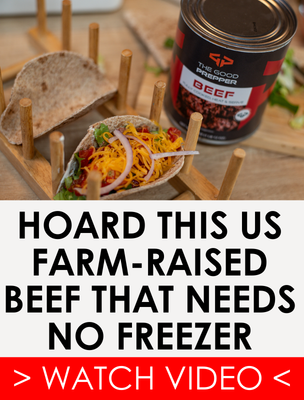
If rice growers are under severe pressure, I do not need to buy five years of rice tomorrow. I simply make sure the amount we normally keep is topped off. If beef production looks vulnerable, I may add canned meat and other shelf-stable proteins while the price is still reasonable. If grain costs look likely to rise, I check the flour, oats, pasta, and animal feed.
Everything gets rotated. I buy foods we already eat, and I make small additions during the stretch when there is no urgency behind them.
The Grocery Store Is Near The End Of The Chain
This is the part I think most people miss entirely. The supermarket is where consumers finally see the problem. It is almost never where the problem began.
The warning may have started with an operating loan, a fertilizer bill, another year of negative margins, a farm sale, a bankruptcy filing, or a quiet decision to plant fewer acres next spring. By the time the package gets smaller or the price jumps, all of that is already history.
I do not need to predict what groceries will cost eighteen months from now, and I would not trust anybody who claimed they could. I only need to recognize when the people producing my food are under enough pressure that future supply deserves some attention.
Farm distress happens a long way from the checkout line. Its consequences do not always stay there.
Others Are Watching Now: