





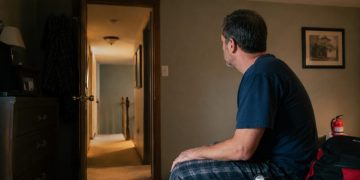




















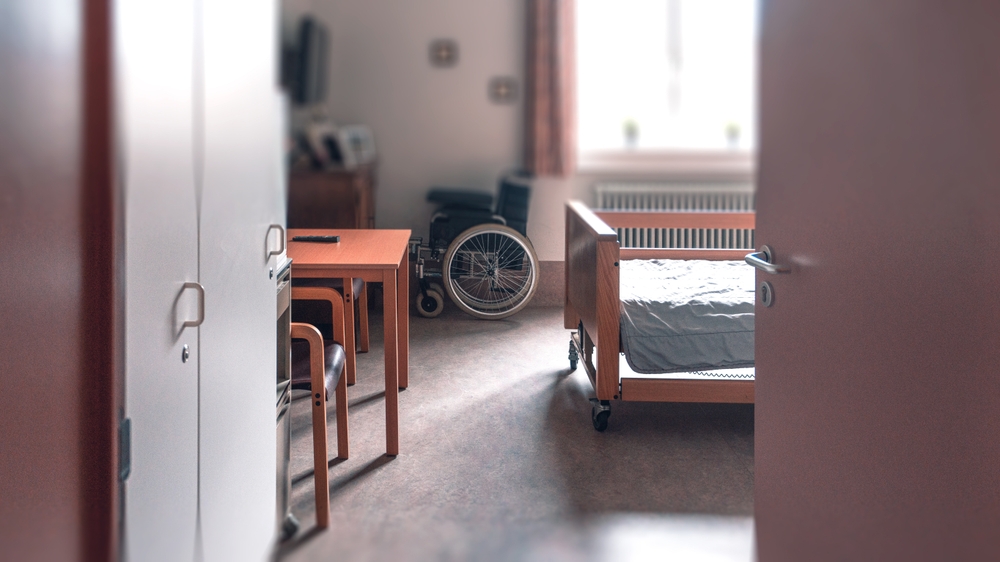
You can think of a sick room as a warm, quiet, organized room in your home stocked with basic supplies to care for ill family members.
Prior to the 20th century, multiple generations often lived in the same home and worked in the same trade. The grandparents helped care for the grandchildren and the children benefited from the wisdom they had accumulated. That’s how most cultures have cared for the old, the young, and the infirm, at least since the agricultural revolution, and probably long before that.
In my wife’s family, most of the sons became auto mechanics, like their father, who is a couple years shy of 100 years old. Family members still care for him in his home.

Here are a few reasons that you might consider planning or implementing a sick room:
- Perhaps you are about to become a care giver.
- Maybe you don’t have the $5,000-$15,000 or more (often much more) that it costs to put a loved one in managed care if health insurance won’t cover it or you don’t have insurance.
- You want to be prepared for a time when there may be a scarcity of medical assistance.
- You also may prefer to be cared for at home because, in a study of 91 adults, home patients saved money, spent less time sedentary or laying down, and were readmitted less frequently within 30 days. Less time in bed or sedentary shortens recovery time and is crucial for seniors who may quickly atrophy and lose mobility if they fail to stay active.(Levine, MD, MPH, MA, et al., 2019)
- It is more comfortable to be cared for at home than in a hospital.
- Being able to quarantine family members with contagious illnesses can help prevent the spread of disease.
- Having a sickroom at home helps ensure that the patient is cared for with love, by family. Having loved ones at your side at home helps reduce many of the anxieties associated with care by strangers in hospitals, hospice facilities, and geriatric care facilities, however well-intentioned the staff may be.
Until the 20th century, institutions that we now call nursing homes, were for the poor and destitute. Up until that point, anybody who could cared for their aging parents and chronically ill family members at home. Then, at some point, we started resigning the mentally ill to asylums, people with certain chronic illnesses to sanitariums, and eventually we started sending our elders to nursing homes. The quality of care in the latter varies according to how much you pay and the compassion of individual healthcare workers, but they are nonetheless cared for by people other than family.
Now, I, for one, am asking if perhaps the practice of caring for sick or elderly family members was a heuristic tradition. Where our ancestors benefiting in some way from doing things the way they had been done forever and convalescing at home? Could it have been a mistake to give up the old ways?
I think the answer is pretty obvious. I certainly don’t want my parents to rot in nursing homes waiting to die. I would also rather that the youngsters benefit from the family history and wisdom they could be sharing. I don’t think it’s good for our kids, our parents, or the chronically ill.
I also understand that everyone’s circumstances are different and that being a caregiver isn’t for everyone, but I don’t think that shipping off our family members should be automatic. It isn’t always the right or best thing to do, although I’m sure there are cases where it is necessary.
So, what if you decide to give caring for a loved one at home a try? Where are you going to put them?
Where to Locate a Sick Room
Access is important. Patients may not be ambulatory or may have limited mobility, and it may be necessary to bring heavy and bulky equipment into the room, such as a hospital bed. For these reasons, sick rooms are usually located on the ground floor.
- A sickroom should be in a bedroom with a door to physically separate it from the rest of the home. The doorway should be 32” or wider to enable a wheelchair, walker, or other mobility device to pass.
- The room should have 36”+ clearance on both sides of the bed.
- Where possible, having a bathroom adjacent is important to facilitate care, bathing and hand-washing. This is particularly important in treating gastrointestinal illnesses to prevent transmission via the fecal-oral route.
- Locating the sickroom in a room with a window that has a view of the outdoors is a comfort. This feature was an immeasurable comfort to my mother when we cared for her before she passed. At a minimum, the room should have adequate natural light to support the patient’s psychological wellbeing and circadian rhythm.
- The room should have good ventilation. Windows positioned for cross ventilation are best. Adequate ventilation can help reduce airborne pathogen transmission.(Home Medical Inc., 2026)
Furniture, Decorations and Comfort Items
Decorate the room with a few photos and objects that are comforting to the patient but keep clutter to a minimum and remove any unnecessary furniture to reduce surfaces that require cleaning and disinfection.
- Hard flooring will facilitate cleaning and disinfection.
- Any furniture that you do keep should have hard surfaces that are easy to disinfect. Upholstered furniture should be covered with washable covers.
- Curtains or blinds should also be washable.
- A hospital bed may be necessary, but certain illnesses, such as cholera, may require a special bed or cot. Experienced caregivers indicate that the bed is not the place to scrimp as the bed is the foundation of care.
- An over-bed table makes it easier for the patient to eat and drink.
- Fans, a humidifier and a HEPA air purifier can help establish proper airflow, improve comfort, and help prevent the transmission of airborne pathogens.
- Laughter is the best medicine. A television and comedies that the patient enjoys can help. When we laugh, the brain triggers the release of endorphins and dopamine that can bring pain relief even when pain killers no longer help. When my wife was caring for her sister, who we ultimately lost to cancer, we bought a television and installed it in her room to help distract and comfort her.
- Other comfort items include a computer for video communication with family members, books, magazines, journaling supplies, a notebook and pen, music, and headphones. Do not discount the ability of humor and these other comfort items to help keep the patient engaged and positive, ultimately improving their outcome.
Electrical
The sickroom should have adequate electrical outlets for medical devices and a charging station for electronics. A dedicated circuit may be necessary if running multiple high draw devices and a 3-phase uninterruptible power supply (UPS) may be necessary to run critical medical equipment if the power goes down.
If you are unable to get your hands on a UPS, you may be able to keep equipment running by wiring a battery bank to a pure sine wave inverter and charging the battery bank with a solar panels and a solar charge controller.
Laundry Facilities
To treat patients with contagious illnesses, you may need a system for keeping laundry separate and/or for disinfecting it to prevent the transmission of pathogens.
Equipment
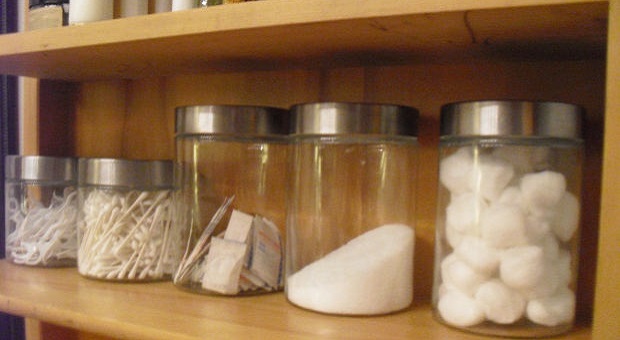
You will want a stockpile of basic supplies. If possible, the bulk should be stored outside the sick room and just the supplies you need on hand should be in the room to limit cleaning and disinfection. The sick room isn’t a first aid clinic, but you may have
- Folding Wheelchair – A folding wheelchair makes it easier and safer to move patients.
- Gloves, Masks, & Face Shields – These are personal protective equipment for the caregivers to prevent transmission of illnesses.
- Hand Sanitizer
- Hot Water Bottles with Accessory Kits
- English Ice Bags
- Thermometers
- Tissues
- Wet Wipes
- Bed Pans
- Wash Cloths
- Towels
- Bed Linens
- Blankets
- Waterproof Mattress Protectors
- Assortment of Wedge Pillows – Used to elevate extremities or the torso if you don’t have a hospital bed.
- Dressings – If you have ever cared for a serious wound, you have an idea of how many dressings are needed to treat just one wound. You will need:
- Standard sterile absorbent cotton 4”x4” dressings
- Sterile non-stick 3”x 4” dressings
- Sterile 4” crinkle roller gauze
- Sterile 8”x 10” combine dressings (or abdominal pads)
- 3” elastic bandages
- Cravats (triangle bandages).
With dressings listed, a pair of scissors, and 2” tape, it is possible to improvise most other dressings.
- Bandage Scissors
- 2” Paper Tape – For delicate skin of the face, groin, under arms, babies and the elderly patients.
- 2” Cloth Tape – When strong adhesion is necessary.
- White Petrolatum Jelly – Skin protectant.
- Moisturizing Skin Lotion – Frequent bathing and hand-washing causes dry skin.
- Trays – Trays are a simple system for serving meals and then taking away the dishes to be washed and sanitized.
- Cups with Lids and Straws – Adequate hydration is important and drinking in bed can be tricky without a straw.
- Home Intercom, Bell or Call Button – Patients often need some means to call for help. Depending on the condition, patients may be unable to call loud enough to be heard or blow a whistle.
- Medicine Cabinet

Infants, Children and Dependent Patients
Infants and small children need special medications, cribs, diapers and alternative means of monitoring. You will also decorate a room differently for children than for adults.
Summary
Set up a warm, quiet, well-organized home space and stockpile basic supplies to care for aged, ill or infirm family members as they convalesce. Choose a room with an adjacent or private bathroom, natural light and sufficient space and don’t skimp on the bed because it’s the foundation of care.
Others Are Watching Now:






References
Home Medical Inc. (2026, June 16). Setting Up a Sick Room for Contagious Illnesses. Retrieved from hmedicalinc.com:
https://hmedicalinc. com/2025/03/10/setting-up-a-sick-room-for-contagious-illnesses/
Levine, D. M., Ouchi, K., Blanchfield, B., Saenz, A., Burke, K., Paz, M., … Schnipper, J. L. (2019, December 17). Hospital-Level Care at Home for Acutely Ill Adults: A Randomized Controlled Trial. Retrieved from acpjournals.org:
https://www.acpjournals.org/doi/10.7326/M19-0600