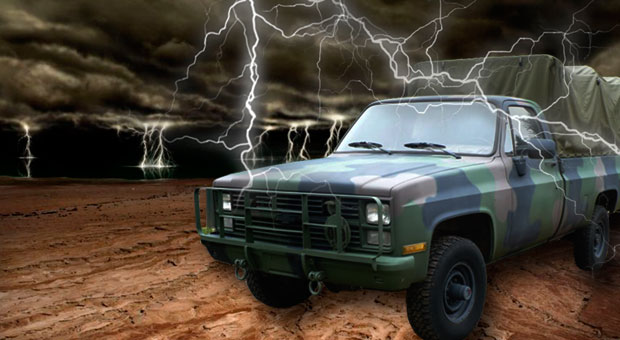



















There is a mistake I have made often enough that I finally gave myself a deadline for it.
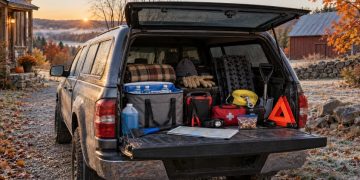
Every year, summer gear stays in the truck a little too long. Work gloves, maybe a cooler, a few tools, whatever accumulated during warm weather. Then one morning the windshield is white, the door handle is freezing cold, and I realize the scraper is still hanging in the garage.
That first frost should never be the reminder to prepare for cold weather.
My deadline is October 15.
By the middle of October, I want the truck changed over and ready for the colder months ahead. Depending on where you live, you may already have seen your first frost by then. In other parts of the country, winter still feels comfortably far away. Either way, mid-October gives me enough time to get ready before cold mornings, slick roads, early darkness, and weak batteries start becoming regular problems.
I am not preparing for a January blizzard yet. I am preparing for the ordinary problems that arrive first: frost on the windshield, an unexpected cold night, a truck that will not start, wet clothing, or a vehicle that slides far enough off the road that getting home becomes complicated.
Most of what I carry is inexpensive. The important part is putting it in the vehicle before I need it.
The Scraper Goes In First
This is the simplest item, and somehow it is still the one people forget.
I keep a proper ice scraper with a snow brush in the truck. I do not want to use a credit card, pour hot water on frozen glass, or sit there running the defroster for twenty minutes because I forgot a ten-dollar tool.
I also check the windshield washer fluid. Once freezing weather becomes possible, I want fluid rated for the temperatures I expect.
Visibility is a survival issue long before winter becomes severe.
I Keep A Real Blanket
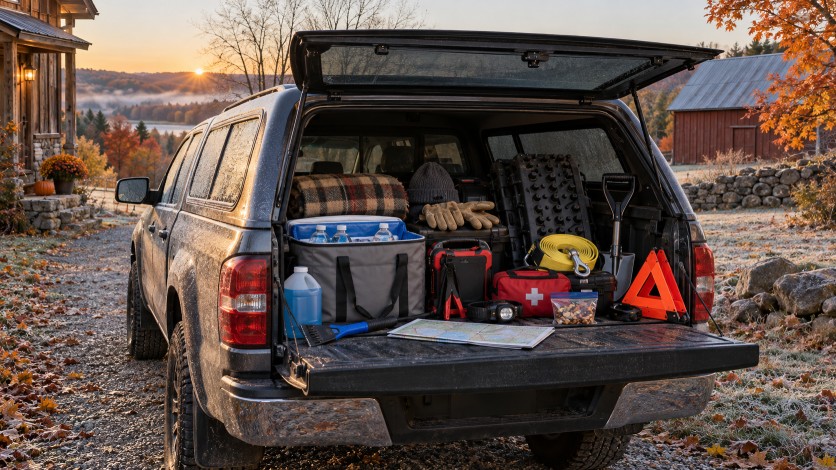
A breakdown that would be irritating in July can become dangerous in cold weather. That is why a heavy blanket goes behind the seat.
Wool is excellent because it keeps insulating when damp, but any good cold-weather blanket beats nothing. I also like having an emergency reflective blanket tucked into the kit, since it takes almost no space.
The blanket has uses beyond breakdowns. It can warm an injured person, cover a child, provide padding on cold ground, or add insulation if somebody has to wait several hours for help.
I would rather carry it all winter and never need it.
Gloves Need To Be Work Gloves
I keep warm gloves for driving and another pair I am willing to ruin.
Changing a tire, attaching a recovery strap, digging around a wheel, handling a cold jack, or touching frozen metal all become miserable with bare hands. A pair of insulated work gloves solves that cheaply.
I throw in a warm hat while I am at it. You may leave home wearing a light jacket because the truck has heat, and a breakdown changes that assumption in a hurry. The vehicle should hold enough clothing to let me stand outside safely for a while.
Traction Is Easier To Carry Than To Improvise
Snow is obvious. Thin ice and frozen mud can be worse, because drivers underestimate them.
I keep something that can help the drive wheels regain traction. That might be purpose-built traction boards, compact traction mats, or another product designed for the job. A small folding shovel joins the kit as winter gets closer, so I can clear packed snow from around a tire and give the tread something useful to bite into.
Spinning the wheels harder usually accomplishes very little. A few minutes spent creating traction can accomplish a great deal more.
The Tow Strap Needs To Match The Vehicle
A recovery strap can be extremely useful and extremely dangerous when people improvise.
I carry one rated appropriately for the vehicle, and I know where the manufacturer’s approved recovery points are.
That second part matters. I do not hook a strap onto whatever piece of metal looks strong enough, and I would never use a trailer hitch ball as a recovery attachment. Recovery loads can be enormous, and failed hardware can become a projectile.
If I do not know how to make the recovery safely, I call for help. The strap gives me another option. It does not give me permission to take unnecessary risks.
A Headlamp Beats Holding A Flashlight In Your Teeth
By mid-October, I notice another seasonal change every evening. Darkness comes earlier, and a roadside problem that would have happened in daylight a few months ago may now happen after sunset.
I keep a headlamp in the truck because it leaves both hands free. That matters while changing a tire, looking under the hood, connecting a jumper pack, attaching a strap, or walking along a dark roadside.
I check the batteries when the kit goes into the truck and keep spares nearby. A flashlight belongs there too, but if I had to choose only one, I would take the headlamp.
The Jumper Pack Gets Charged Before The Cold Arrives
Cold weather exposes weak batteries. One that seemed perfectly healthy through summer may struggle after a freezing night.
That is why a portable jump starter has become one of my favorite vehicle preparedness tools. I do not have to position another vehicle beside mine. I do not have to depend on somebody stopping. I can connect the pack, start the engine, and deal with the battery properly once I am somewhere safe.
There is one catch. The pack has to be charged.
I check mine during the October changeover and periodically through the winter. Electronics sitting forgotten in a truck are not preparedness. They are cargo.
Water Needs A Cold-Weather Plan
I always want drinking water in the vehicle, but winter makes storage more complicated, because normal drinking water eventually freezes if it gets cold enough.
So I manage the container instead. I use durable bottles and leave some expansion room rather than filling rigid containers right to the top. Wide-mouth bottles help, since partially frozen water is easier to deal with. Keeping bottles inside an insulated bag or a small cooler can also slow freezing down. When severe cold arrives, I may carry water out with me in the morning and bring it back inside at night.
I never add antifreeze, alcohol, salt, or anything else to drinking water in an attempt to keep it liquid.
If I become stranded, water matters far too much to gamble with.
A Few Small Things Around The Core Kit
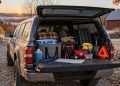
Once those basics are handled, I add the items that have earned their space: a basic first aid kit, a phone charging cable and power bank, a paper map of the area, a little cash, a reflective vest, emergency warning triangles, some calorie-dense food that tolerates temperature changes reasonably well, and a tire-pressure gauge.
I also make sure the spare tire, jack, and lug wrench are actually present and usable.
There is little value in carrying survival equipment while ignoring the tools designed to solve the most common roadside problems.
If I Get Stranded, The Truck Becomes Shelter
This is the part of winter vehicle preparedness I think people underestimate.
The kit matters most after I realize I am not getting home anytime soon. Maybe the road is blocked. Maybe the truck is stuck. Maybe visibility is so poor that continuing would be more dangerous than stopping.
At that point, I stop thinking like a driver and start thinking about shelter.
Stay With The Vehicle
Unless there is an immediate danger where the truck is sitting, I stay with it. A vehicle is larger and far easier for rescuers to find than one person walking through snow, and it gives me protection from wind and precipitation.
I contact help while I still have battery and signal. I give my location as accurately as I can and tell somebody what happened. Then I conserve the phone.
I make the vehicle visible with hazard lights, warning triangles, or other emergency markers when conditions let me place them safely.
Then Handle Warmth
My next concern is staying warm, and the trick is starting before I need to.
I put on the hat and gloves before I get seriously cold. I use the blanket. If there are passengers, we stay together and keep an eye on one another.
I also avoid unnecessary exertion. Trying to push a stuck vehicle for an hour or walking several miles through snow burns energy and soaks clothing with sweat, and once that clothing is wet, staying warm becomes much harder.
If I use the engine for heat, I make certain the exhaust pipe is completely clear of snow, and I keep checking it as conditions change. A blocked exhaust can allow deadly carbon monoxide into the vehicle.
I use fuel carefully rather than assuming I can leave the engine running indefinitely.
And Then The Waiting
Once all of that is handled, I settle in. Drink some water. Eat a little food. Move fingers, toes, arms, and legs from time to time, and keep clothing as dry as possible.
I pay particular attention to children, elderly passengers, and anyone showing confusion, unusual drowsiness, slurred speech, or worsening coordination.
Most importantly, I resist the urge to leave the vehicle simply because waiting is uncomfortable. A light or a building that looks close can be much farther away than it appears in snow, wind, darkness, or poor visibility.
Once the truck stops being transportation, it becomes something else. Shelter. A windbreak. A signal. A place rescuers know to look.
That is when every item I put behind the seat in October starts earning its space.
October 15 Is My Deadline
This is the rule that finally stopped me from getting caught by the first cold morning.
October 15 is the deadline.
By then the scraper is in, the blanket is in, and gloves and a warm hat are in. Traction gear is ready, the tow strap has been checked, the headlamp has good batteries, and the jumper pack is charged. Water has moved onto its cold-weather routine. Then I go through the tires, washer fluid, coolant, wipers, battery condition, spare tire, and the rest of the vehicle.

If you are reading this in the first half of October, there is still time. You have about two weeks to pull the winter gear out, inspect what you already own, replace anything that failed last year, and put the kit together without anybody rushing you.
That is exactly how I prefer to prepare.
Most people will eventually make the same seasonal swap. They will do it after the first frozen windshield. After the battery barely turns over. Or on the evening before the first real winter storm, when everybody else is standing in the same automotive aisle buying the same things.
I would rather be two weeks early than one freezing night late.
Cold weather gives us plenty of warning.
October 15 is when I stop ignoring it.
Others Are Watching Now: