















A hungry man thinks about food. A wise man thinks about what food does to a family, a church, a camp, or a whole community.
That second lesson has been understood for a long time in America. Native tribes, pioneer families, and Amish communities all knew that shared meals did more than fill the stomach. A meal could settle nerves, restore morale, heal arguments, welcome strangers, and remind people that they were still part of something larger than themselves.
In hard times, that matters more than most people think.
A prepper can store a year’s worth of beans and rice and still miss the deeper purpose of food. Food is fuel, yes. But it is also comfort, memory, order, fellowship, and trust. A table with bread on it can do work that a shelf of cans cannot.
That is why every serious family should think not only about how to store food, but how to use food to keep people together when life gets hard.

1. Native Feasts Were About More Than Eating
Among many Native peoples, food and community were tied together so closely that one hardly made sense without the other. A successful hunt, harvest, or fishing season naturally led to shared meals. Those meals honored the land, strengthened the tribe, and helped distribute provision where it was needed.
A feast was not just about abundance. It was about order. Elders were respected. Guests were received. Children watched how adults behaved. Gratitude was built into the meal itself. Food came with memory and meaning.
That kind of gathering gave people emotional strength. Hard seasons still came. Winters were still cold. Droughts still hit. Enemies still threatened. But a people who gathered regularly around shared food developed stronger habits of trust. They knew who belonged to them. They knew who would help carry a burden. They knew how to mark sorrow, gratitude, and victory together.
A shared meal helped turn a group of individuals into a people.
That is no small thing.
2. Pioneer Gatherings Helped Families Endure Isolation
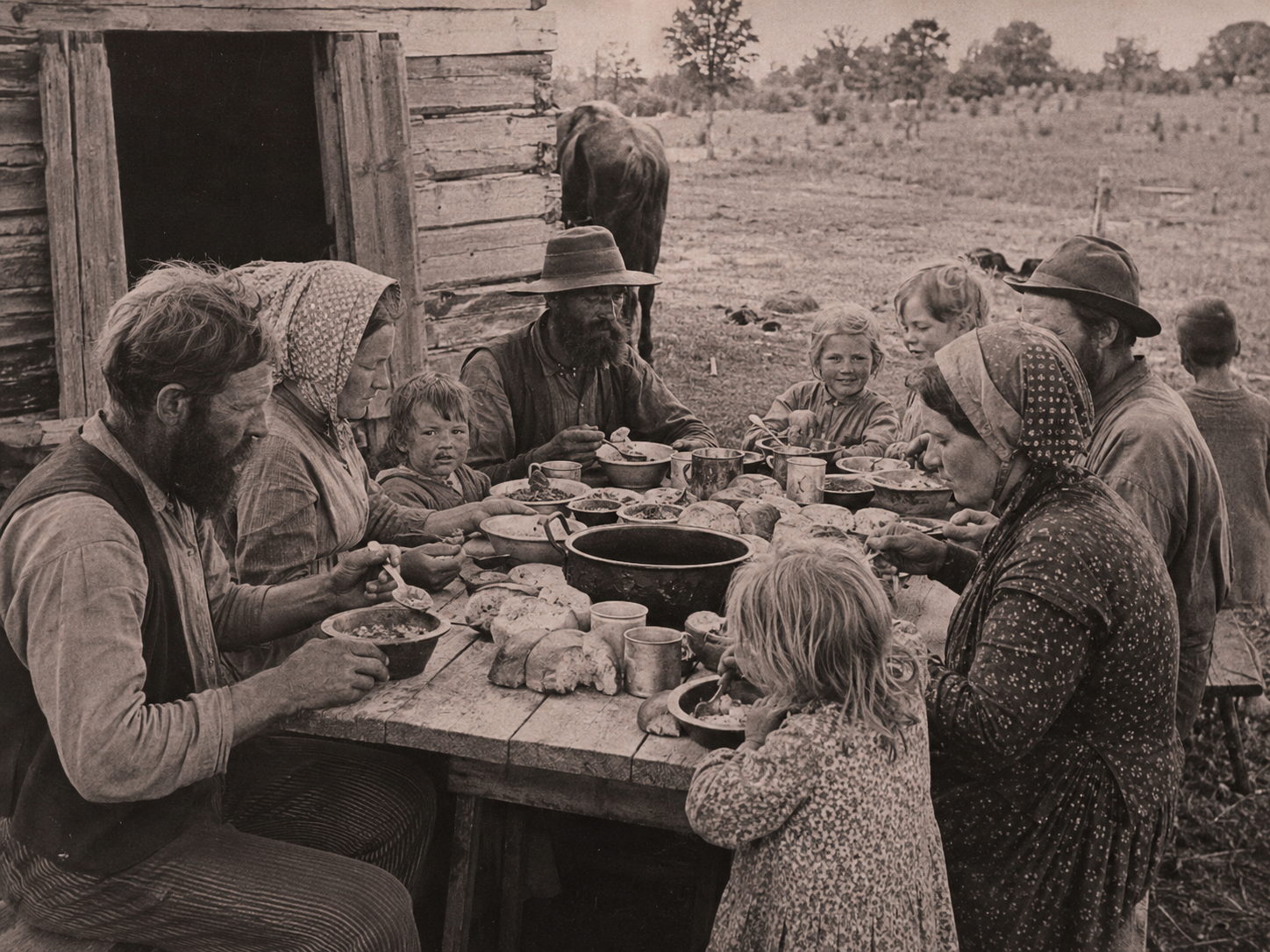
Pioneer life could be brutally lonely. Cabins were scattered. Travel was slow. Winters were long. Work was constant. In that kind of world, every gathering around food carried real weight.
A barn raising, harvest supper, church dinner, quilting day, or butchering day brought more than labor and calories. It reminded people that they were not fighting the frontier alone.
A woman who had spent weeks cooking over a rough hearth for her own family might suddenly find herself feeding twenty people after a harvest. A man worn down by fencing, plowing, and repairs could sit with neighbors and laugh for the first time in days. Children formed friendships. News traveled. Skills were exchanged. Advice was given. Worries were shared in plain language over stew, bread, and coffee.
That kind of meal strengthened morale because it restored perspective. A hard life feels less crushing when other people sit at the table and say, in one way or another, “We are carrying this too.”
Pioneer communities survived because they worked together, prayed together, and ate together. The shared table kept their hardships from turning into pure isolation.
3. Amish Meals Still Teach A Powerful Lesson
The Amish still understand what many modern Americans have forgotten. A community meal is not wasted time. It is one of the ways a people stays strong.
Amish life is full of shared labor, and shared labor almost always leads to shared meals. Barn raisings, harvests, weddings, funerals, Sunday gatherings, and church work all move naturally toward long tables, heavy dishes, and the kind of food that fills a body and settles a spirit.
These meals reinforce something essential. The community is real. It is not an idea. It is not a slogan. You can see it in the casseroles, the bread, the jars opened from the pantry, the chickens dressed, the pies cooling on the side table. You can hear it in the way people speak, serve, and stay after the meal is done.
That kind of meal also creates emotional steadiness. If a family has suffered loss, the community comes with food. If a building must be raised, the community comes with food. If there is a wedding, the community comes with food. In every case, the message is the same: you are not carrying life alone.
That message keeps people from breaking under pressure.
4. Shared Meals Build Trust Faster Than Speeches
A lot of people say they want stronger communities. Fewer people want to do the simple work that actually builds one.
Shared meals are one of the fastest ways to build trust because they lower defenses. People sit longer. They talk more honestly. They begin to notice who shows up, who serves first, who listens well, who brings something useful, and who can be counted on.
Trust grows through repeated contact, and meals make repeated contact easier.
That matters for preppers because trust is part of resilience. In hard times, you need to know which neighbors can work, which ones can cook, which ones can keep calm, which ones can pray, which ones can organize, and which ones can be trusted with responsibility.
You do not learn that from social media. You learn it across the table.
5. Food Lifts Morale In Ways Gear Cannot
Every experienced prepper knows that morale matters. A household can have stored water, first aid, backup heat, and a good defensive plan, but if the people inside start mentally unraveling, the whole position weakens.
Food helps hold morale together.
A hot meal after a storm. Fresh bread in the middle of a hard week. Soup shared with neighbors during a blackout. Coffee poured at daybreak after a long night. These things do more than feed the body. They restore normalcy. They remind people that life is still being lived, not just endured.
That is why comfort foods matter in storage. The prepper pantry should not be built only around calories and shelf life. It should include ingredients that help create a real meal and a little peace. Flour, spices, coffee, cocoa, soup ingredients, honey, jam, preserved fruit, baking staples, and the foods your family associates with safety and home all have value.
People fight harder to preserve a life that still feels human.
6. Use Food To Strengthen Community Before Trouble Starts
The best time to build community through food is before you need emergency help.
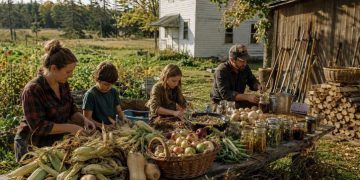
Invite another family over for a simple meal. Host a potluck after church. Cook something from the garden and bring it to an older neighbor. Organize a canning day. Share a fish fry, a stew night, or a harvest dinner when the tomatoes and beans come in. None of this has to be fancy.
In fact, simple is better.
A meal built around beans, cornbread, roasted meat, garden vegetables, soup, or homemade bread feels more honest than a polished performance. It tells people this is about fellowship, not show.
These habits make a difference over time. They help children connect food with generosity and gratitude. They teach families to think beyond themselves. They create a culture where showing up with a meal is normal, not rare.
That kind of culture becomes extremely valuable in hard times.
7. Practical Ideas For Hard Times
A prepper family can use food to strengthen people even when resources are tight.
One good approach is to plan for community meals in your storage strategy. Keep bulk staples that stretch well in a group setting: rice, beans, oats, flour, potatoes, onions, broth bases, canned meat, garden produce, and whatever local foods your family already uses well. Learn a few meals that can feed ten people without much fuss.
Soup is one of the best examples. So is stew. So are beans and cornbread, chowders, skillet meals, casseroles, fresh bread, and simple desserts from stored ingredients.
Another useful habit is to keep a “share shelf” mentality. This does not mean giving away your whole pantry. It means storing with enough margin that you can feed another family once in a while if the situation calls for it.
You should also think about the setting. A meal feels different when the table is clean, the lamp is lit, and someone takes the time to pray and serve with order. Presentation matters because dignity matters. Even in hardship, people need reminders that they are more than a problem to be managed.
8. The Table Still Matters
Native feasts, pioneer suppers, and Amish community meals all point to the same truth. Shared food strengthens people.
It strengthens families because it creates routine and memory. It strengthens communities because it builds trust. It strengthens morale because it gives comfort during strain. It strengthens resilience because people who eat together regularly are more likely to help one another when the pressure rises.
A prepper should think seriously about that.
The pantry matters. The water filter matters. The backup heat matters. But if you want a household or a community that can truly endure, then the table matters too.
Keep food on hand. Learn to cook from simple ingredients. Invite people in. Feed them when times are good. Feed them when times are hard. Let your home become a place where a hot meal still means order, gratitude, and fellowship.
Because in the end, food for the body keeps people going.
Food shared with others helps keep them strong.
Others Are Watching Now: