













Both faith and self-reliance are more often expressed through the frequent day-to-day applications than the rare catastrophic ones. It is one thing to die heroically for your beliefs, but quite another to live quietly for them.
When I search for examples of people who expressed their faith through the daily practice of self-reliance, I think of my grandparents, all of them, but especially my material grandfather. Their faith was expressed very practically through gardening, industry, preparedness and the defense of their families.
Gardening
Man often overestimates the depth his understanding of the ecosystem in which he lives. In the early 1900’s, we thought we understood farming and soil, even after we caused the Dust Bowl, sterilized our soil, poisoned our bodies, our land, and our water with pesticides and herbicides, contaminated many of our heirloom strains with crosspollination from GMOs and hybrids, and made our food less nutritious.
The Chinese Communist Party scientists and politicians thought that they understood the role sparrows played as pests that consumed rice, not realizing that the sparrows consumed far more pests to rice, than rice. With the Four Pests Campaign from 1958-1962, they disrupted the ecological balance and caused, the Great Chinese Famine, resulting in the death of many millions of Chinese. Possibly in excess of 50 million people.
We thought that we understood trees. Only in the past decade or so, has it been proven that trees are far more complex than previously thought, communicating amongst themselves, and passing both information and nutrients on to one another.
The problem is that we don’t know how much we don’t know. Our history books are essentially long lists of catastrophes and wars that we failed to predict, and which harmed us. No one knows what the next Black Swan will be, but we can say that there is great wisdom in storing food. Virtually all types of long-term catastrophes kill the same way in the end. They kill “the old-fashioned way” by famine and disease.
The fact is, even if you store a year or two worth of food, it’s going to go fast if family shows up and you can’t turn them away and what if the disruption lasts longer than a year or two? The only way to be truly prepared is to leave the 98% of Americans who don’t produce any of the food that they eat at all and join the 2% who grow at least some of the food that they eat.
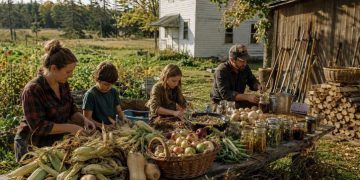
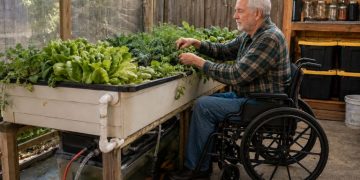
Expanding an existing garden is a much better plan than planning to till your lawn and plant seeds from a can you bought online. If you garden, you’ll have containers, tools, soil amendments, compost, seeds and water that you’ll need. You’ll also know what grows where in your yard and needs more or less drainage. Learning these things is a process that involves trial and error over entire seasons, so you don’t want to be sorting all that out when your family will go hungry if you get it wrong.
Your garden can begin with a single pot, but you have to start. Once you grow that first leaf of lettuce, you just start expanding your garden from there. Within a few years, you will be able to expand your garden in an emergency to feed your family or supplement your food storage with a good probably of success.
My grandparents were serious about gardening because it was the way most of the world fed themselves, from the beginning of time, until very recently. Whenever the bought a new property, the first thing they did was plant an orchard of fruit and nut trees. They grew up on farms, went to college, became doctors and engineers, but kept gardening.
They were teaching their children and grandchildren by example, just as their parent and grandparents did. Do your kids know where their food comes from? Have they planted seeds, grown food, and then harvested and eaten it? I sure hope so. Our future depends on it. Their future depends on it.
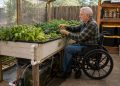
Gardening benefits us in more ways that just growing food. Gardening, composting, and related activities teach us things that perhaps cannot be learned in any other way. People who engage in horticulture learn patience. They learn that they reap what they sow. Many find more than lettuce and squash in the garden. Many find knowledge, wisdom, and faith. The unfathomable beauty and intricate complexity of natural systems at work in a healthy ecosystem support the design argument for the existence of a creator.
Industry
In addition to gardening, by grandparents were also always building things. At the beginning of the last century, every healthy American boy wanted to build a ham radio set, a boat, or a light plane to explore the world by radio waves, by sea or by air. They could build, sail and fly. It seemed my grandfathers could do or build anything, and they did.
They built homes. They built boats. They made fiberglass molds and poured hulls for speedboats and canoes. They built radio stations, put antennas on mountaintops, built laboratories, gardens, orchards, garages, island cabins, cattle ranches and boat barns. They reloaded ammo, they rebuilt motors, they did their own leatherwork, woodworking, and turned their own screws on taps and dies.
My father sometimes lamented my paternal grandfather’s many projects. Boys want their fathers’ time and approval. But I can see method to their madness. They built to leave a legacy, and they built to provide for their families. They built to be prepared.
Preparedness
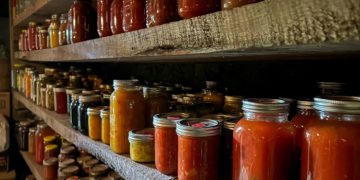
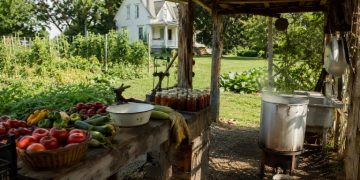
They canned the excess from the garden. They grew and canned enough fruits, jams and vegetables for their children’s families. They bought timberland for firewood and buried coal so we would be able to cook and heat our homes in winter. They stored grain, milled flour and baked bread.
My paternal grandfather was a physician in the nuclear program and one of the last physicians experienced in treating victims of nuclear weapons. While he virtually never spoke about his involvement as an adviser on the effects of ionizing radiation on the human body, he was definitely not an alarmist, today, I can look back on his many building projects and applying a knowledge of the effect of halving thickness of various materials on ionizing radiation, I now understand why he built a concrete and masonry spiral staircase where he did, and why he blocked vulnerable doors to the house by adding on rooms, and why he added a hot-tub on a second floor enclosed deck, which he chose to support with a bulky sheathed column that enclosed many tons of sand.
Engaging in dedicated preparedness over decades is the very definition of quietly living for your principles instead of heroically dying for them, and, done right, it will benefit your family for generations to come.
Defense
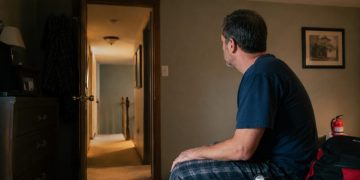
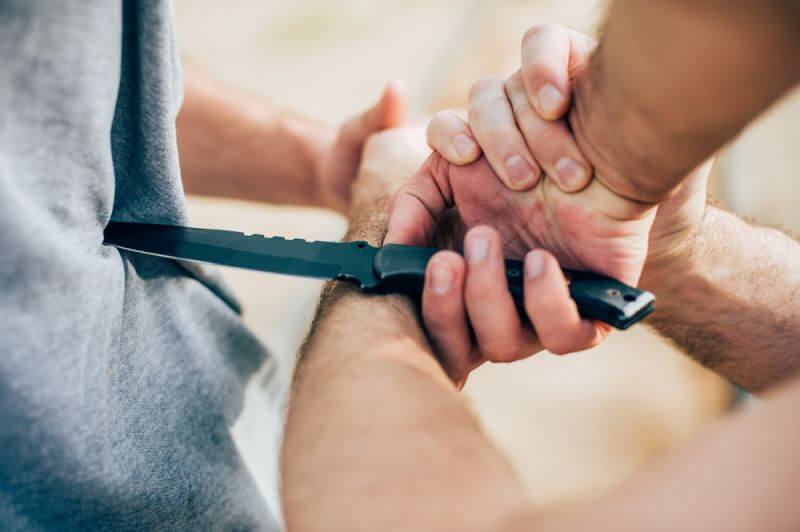
Defending yourself and your family is a responsibility, one that cannot be delegated … certainly not to an alarm monitoring company for a monthly fee. The only thing that will reliably stop a bad guy with a gun is good guys with guns and the parental drive and instinct to defend their children.
A camera is just going to film the crime. My cameras filmed many break-ins when I own a business. Never once did cameras or alarm monitoring lead to an arrest. One time, the officer was less than a block away when he got the call. By the time the alarm company calls the business and calls the police, the experienced smash-and-grab criminal is long gone.
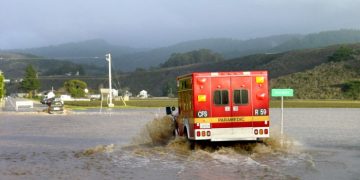
If it’s a volent crime, the average gunfight is over in 3.5 seconds, from the first shot to the last. Most of the time, all law enforcement can do is secure the scene and bag evidence.
The fact is, you are all that stands between your family and whatever comes through your door. I don’t say that to create fear, it’s simply the reality that every human being needs to prepare for.
My own family came to the USA in search of religious liberty. Some came to the first colonies in the 1600’s and others came in the 1800’s. They were driven from state to state by mobs and the extermination order in Missouri and eventually back out of the USA into the west.
We never know what the future may bring and we must defend our families and our religious liberty. The day may come when they come for people of faith one denomination at a time, at first, and then all of us in the end.
After studying the persecution of religious minorities in different conflicts, my advice is to live in an area where there are hundreds of thousands of millions of other people of your same faith, and to create a variety of options including fighting, hiding and escaping because we cannot know what the future may hold for us.
Summary
In my family, gardening, building, preparedness, and defense, are all expressions of our faith. The examples of my parents and grandparents, and the actions themselves, have taught me faith through self-reliance, and I’m sure that rings true for survivalists of many different faiths as well as survivalists who do not identify with any organized religion, but who are nonetheless spiritual people.
They are equally important to people who simply value correct principles embodied by the character ethic. Probably more so since so many academics attempted to divorce themselves, and education, from religion, the conservative values of the character ethic, and core American heuristic traditions, such as gardening, industry, preparedness and defense.
Others Are Watching Now:

































Society suffers from normalcy bias. We have it so good for so long that people think they can experiment with “fundamentally changing” our EXCEPTIONAL Nation and everything will be fine. For context, read “The Five Thousand Year Leap” by Cleon Skousen. Not only do we try to change our Founding Fathers design, social change is with arrogance to believe we should stray from our Creator’s design for us and traditional family.