










Most preppers spend their money on freeze-dried food, water filtration systems, and tactical gear, which makes perfect sense when you consider that physical supplies matter the most in a genuine emergency.
However, one of the most valuable and completely free resources available to anyone serious about preparedness is quietly sitting at the end of your street, largely overlooked by the prepping community.
The public library, in all its understated glory, is a treasure trove of practical survival knowledge, detailed local information, and community infrastructure that most people simply never think to tap into until it is too late.

Mining the Library Before Any Crisis Hits
There is no “being late to the party” when it comes to building your survival knowledge. The time is right now, while the lights are on, the internet is working, and there is no pressure bearing down on you.
Walking into your local library with a preparedness mindset completely changes how you see the place. Those quiet shelves full of books represent centuries of accumulated human knowledge, much of which is directly applicable to surviving without modern infrastructure.
Start with the practical skills sections. Libraries stock extensive collections on wilderness survival, bushcraft, foraging, first aid, homesteading, animal husbandry, and traditional farming methods. Books like those covering medicinal herbalism, food preservation through canning and fermentation, and basic carpentry are the kind of material that can substitute for years of hands-on experience when you need quick guidance in a crisis.
Rather than relying solely on digital resources that evaporate the moment your power goes out, physically reading and taking notes from these books builds knowledge that stays with you regardless of your device’s battery level. Even more, you can take pictures with your phone and print the sections of particular interest for your situation.
When I “scan” the public libraries in my area, I pay particular attention to older editions of practical manuals. The books published before the 1980s since they often contain more detailed instructions for doing things manually because they were written for audiences who could not simply Google a solution.
For example, an old farming almanac or a 1960s homesteading guide will walk you through processes with a level of granular, hands-on detail that modern books sometimes gloss over in favor of brevity. These older volumes frequently turn up in the library’s general stacks or in the local history section, and they are well worth your time.
The Irreplaceable Value of Local Maps
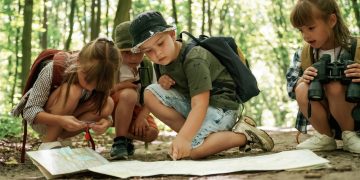
The maps section of your public library is arguably one of the most underrated resources in the entire building for preppers. While most people now rely exclusively on GPS navigation and digital mapping applications, those systems become completely useless in a grid-down scenario. Your library, on the other hand, holds physical copies of topographical maps, county road atlases, watershed maps, and sometimes even historical maps showing how the land was used generations ago.
Topographical maps are particularly valuable because they show elevation changes, ridgelines, valleys, and natural water features that do not appear on standard road maps. Understanding the terrain around your home or bug-out route in three-dimensional terms can help you identify natural shelter locations, high-ground positions, water sources, and alternative travel routes that stay off main roads. If you plan to move on foot during a crisis, this kind of geographic literacy is not optional.
County road atlases held at the library often include rural backroads, fire roads, and agricultural access routes that never appear in consumer navigation apps. Many of these routes connect population centers through quiet, low-traffic corridors that would become critically important during a mass evacuation when highways are gridlocked. Photographing or carefully copying these maps during your library visits gives you a navigational backup that works without any technology whatsoever.
Some libraries also maintain flood plain maps, FEMA hazard zone charts, and utility infrastructure overlays that show where power lines, water mains, and natural gas pipelines run through your region. Knowing where these systems are physically located can inform both your hazard awareness and your understanding of what local infrastructure might survive or fail during a specific type of disaster.
Personal tip: Buy a hand-held scanner that runs on batteries and use it to scan maps and books, then you can go with the SD card to a print center and print whatever you like in whatever size you prefer.
Local History as a Survival Blueprint
The local history section of your library is where things get genuinely fascinating from a preparedness standpoint. Communities have been dealing with disasters, resource scarcity, and infrastructure failures for as long as they have existed, and the records of how they managed those challenges are sitting right there on the shelves.
Historical accounts of how your community survived previous floods, droughts, blizzards, or economic collapses contain practical information that is directly applicable to modern preparedness. You can learn which neighborhoods flooded repeatedly before modern drainage systems were built, which areas of town were historically used as refuge during severe weather, and how local residents sourced food and water during extended disruptions decades or centuries ago. This is not abstract history; it is a functional guide to vulnerabilities and solutions specific to your exact geography.
Old newspapers archived at the library can reveal how past disasters unfolded in your community in real time, including which roads became impassable, which water sources dried up, and how quickly outside help arrived or failed to arrive. Reading these accounts gives you a realistic mental model of what a regional crisis actually looks like on the ground rather than relying on idealized disaster scenarios that may not match your local reality.
Some libraries also maintain records of old homesteads, farms, springs, and wells that no longer appear on modern maps. These historical land records can point you toward water sources, root cellars, and natural shelters that have simply been forgotten over time. Spending a few afternoons with a patient reference librarian in the local history section can genuinely uncover this kind of operationally useful information.
The Library as a Post-Crisis Hub
Once a crisis has actually occurred, the public library transforms from a research destination into something much more immediate and practically vital. Libraries are specifically designed as community institutions, which means they are often among the first public buildings to open as emergency resources during and after a disaster.
Many libraries have backup power systems and serve as official emergency warming or cooling centers depending on the season. They have bathrooms with running water when many private homes do not, and they have staff who are trained to connect people with community services and government assistance programs. In the hours and days following a major disaster, the library parking lot and entrance frequently becomes an informal gathering point where people share information, post notes about missing persons, and organize mutual aid among neighbors.
The physical books that seemed like such a luxury during normal times suddenly become mission-critical reference material after a grid failure. Medical reference books, pharmaceutical guides, surgical first aid manuals, and veterinary texts do not require electricity to consult. If someone in your group has a medical emergency and you cannot reach professional help, having a current edition of a comprehensive medical reference guide available is worth considerably more than the average person would guess until they actually need it.
Libraries also tend to function as informal information clearinghouses during crises because they are trusted, neutral community spaces where people are accustomed to sharing knowledge without commercial incentive. Information about shelter availability, road conditions, water distribution points, and government assistance often circulates through library spaces faster than through official channels because ordinary community members are sharing real-time observations rather than waiting for official announcements.
Do Your Homework Now Because It Pays Off Later
One often overlooked aspect of using the library as a prepper resource involves the human element rather than the physical collection. Reference librarians are professional researchers with deep knowledge of local resources, community organizations, and information systems. Developing a genuine relationship with your local librarians before any crisis occurs means you have a knowledgeable human contact point when you need help navigating an emergency situation.
Beyond the librarians themselves, libraries are gathering places for community-minded individuals who tend to be civically engaged, practically skilled, and oriented toward collective problem-solving. Community bulletin boards at libraries advertise local skill-share groups, gardening clubs, food preservation workshops, amateur radio clubs, and community emergency response training programs. Participating in these groups through the library’s community network builds the kind of real-world local relationships that form the backbone of genuine community resilience when things go wrong.
A Practical Action Plan
If you want to make the most of your public library as a preparedness resource, the approach is straightforward. Start by visiting during off-peak hours when reference librarians have time to talk and ask for a guided tour of the local history and map collections. Make a habit of checking out practical skills books and actually reading them rather than adding them to a reading list. Photograph or copy any maps that cover your immediate region and the areas along your potential evacuation routes. Attend at least one community program hosted at the library to start building local connections.
The library costs you nothing, requires no special membership or qualification, and contains more genuinely useful preparedness information than most commercially produced prepping guides will ever point you toward. The only investment required is your time and the willingness to walk through those doors with a different set of questions than most people bring with them.
Others Are Watching Now: