

















How convenient modern life is! Food and water are pretty easy to find, and there is a solution–but also a cost–for any problem you might have. As long as you have the money and the ignorance to rely on what the big industries provide to the herd, you may rest and wait for your days to pass by. We were born to survive, but prone to forget it.
But we’re not that kind of people! We rely on ourselves to live a good healthy life and survive the crisis. This is how our ancestors did it.
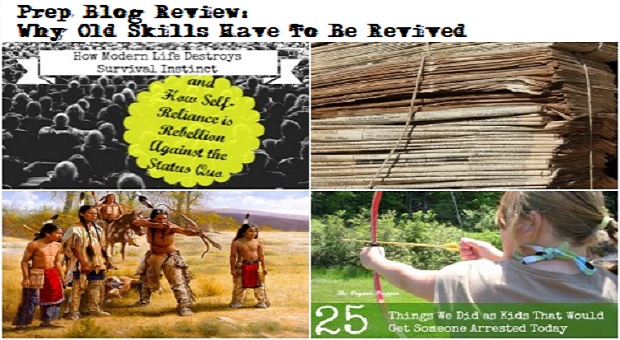
Let’s see what is to be said about old skills that would save our lives one day. We picked four articles to remind you how important is to keep alive what humanity once knew about survival.
- How Modern Life Destroys Survival Instinct
 ”Our world today would seem magical to our ancestors. Our needs are met almost immediately, we have clean water at the turn of a knob, heat at the push of a button, and light with the flip of a switch. Food is purchased in a box, ready to heat, and a person can prepare a meal in under 6 minutes using the microwave oven that’s a fixture in most modern kitchens.
Our world is clean, convenient, and loaded with abundant resources, things that took significant time and effort to produce in days gone by.”
Read the complete article on Ready Nutrition.
2. The Last Rebels: 25 Things We Did as Kids That Would Get Someone Arrested Today
 ”With all of the ridiculous new regulations, coddling, and societal mores that seem to be the norm these days, it’s a miracle those of us over 30 survived our childhoods.
Here’s the problem with all of this babying: it creates a society of weenies.
There won’t be more more rebels because this generation has been frightened into submission and apathy through a deliberately orchestrated culture of fear. No one will have faced adventure and lived to greatly embroider the story .”
.”
Read the complete article on The Organic Prepper.
3. 12 Off-Grid Ways Your Grandparents Re-Used Old Newspapers (That You Should Try)
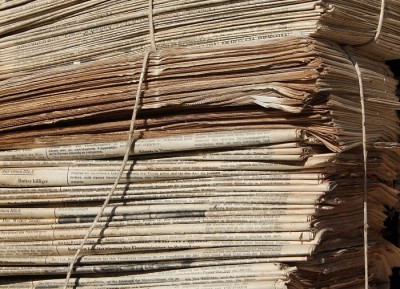 ”Over the past couple of decades, Americans has gone crazy for recycling. Most communities have a recycling program, and we feel good about saving our cans, bottles, boxes and newspapers and putting them at our curbs for a weekly pick-up.
But long before the phrase “reduce, reuse and recycle” was ever coined, your grandparents used their old newspapers for a wide variety of tasks.”
Read the complete article on Off the Grid News.
4. 8 Overlooked Survival Skills That Kept The Native Americans Alive
 ”I have a lot of respect for Native Americans — those who populated this land before the first European white man set foot on these shores.
History rarely mentions it, but countless thousands of those Indians were killed by disease and carried in the boats of those early traders. But before that, the American Indian had a thriving culture, in tune with nature and appreciative of the beauty around them.”
Read the complete article on Off the Grid News.

This article has been written by Gabrielle Ray for Survivopedia.
















































Comments 4