







I made a really good decision a few years ago; the decision to not wait.
Specifically, that decision was in regards to growing my own food. That had always been part of my long-term prepping plans; but it wasn’t something I did every day.
Little did I know it at the time, but that was a problem. I’d never been much of a gardener and had no idea how hard it was. To make matters worse, I live in a part of the country where the heat and lack of rainfall make it hard to get things to grow. If I had waited until a disaster struck to start gardening (my original plan) I would have died of starvation, trying to grow something to eat.
Gardening takes a lot more time and effort than I had originally realized, as any true gardener knows. But the most dangerous thing I didn’t realize wasn’t how much time it takes, but how long it takes to really get the soil in the garden in good shape, so that the plants will give you the maximum yield. You really can’t expect the garden to do good the first year; it takes that long just to get the soil in shape.
Plant Early
Another big lesson I had to learn was to plant early. I live in a hot climate, so the planting season starts early. It has to start early, because by mid-summer it’s too hot to grow anything. While that gives me two growing seasons, it can cut my first growing season short, if I don’t plant in time. One of my big mistakes was not understanding the planting times here, so my plants would die from the heat, before they bore fruit.
While that probably isn’t the problem where you are, I’m sure you have your own issues with planting times. In the northern part of the country, the problem is that you might have to wait to plant, due to the risk of a late-spring freeze. That’s where greenhouses come in handy.
>>Find out how to build a secret garden inside your apartment.
NO LAND NEEDED<<
I almost laugh now when I see greenhouses in my area. While it does get cold enough one or two nights a year to kill plants, that’s about it. So as long as I wait for January to get over, before planting, I don’t have any real need for a greenhouse. But there are many people who need them, yet don’t have them. Rather, they are waiting until the weather warms up to plant. That’s just as much of a mistake as me waiting to plant.
If you’re going to go through all the trouble to plant a garden, whether for survival or just for everyday use, then you want to get the maximum yield out of that garden. Many plants, like tomatoes and peppers, keep on producing, from the time they grow big enough to produce fruit, until that first frost in the fall. So, the earlier you can get them producing fruit, the more overall yield you’re going to get from each plant. Starting your seedlings in a greenhouse or even inside the house, can mean another four or more weeks of tomatoes from your plants.
How Big a Garden do You Need?
Growing your own food will quickly teach you how big a garden you need. The average home vegetable garden is enough to add some fresh produce to your diet, but not enough to keep you fed.
The average adult eats about a ton of food per year. If we expect to feed ourselves from our gardens, that’s what we’re going to have to be able to produce. That’s going to be difficult. What makes it worse, is that most of us don’t grow much in the way of grains in our gardens. Without those grains, you can forget about bread or any other sorts of baked goods.
Yet somehow many preppers have the idea that they can get by with a small garden. Some even believe the myth that they can grow everything they need in a four-foot square one. That’s simply not true. My garden, which consisted of 62 feet of 3 foot wide planting beds, wasn’t enough to grow all the vegetables we’d need for a year, let alone grains.
I had a neighbor once who grew all of his own produce. It took all of his backyard and half of mine. That’s not uncommon. You’ve probably read an article or seen a video sometime about someone who is growing all their own food, by turning their entire backyard into a garden. That’s just the amount of space that it takes, even with raised beds and space-efficient planting techniques. So where do people get the idea that they can get by with a small garden?
My garden has never reached the size it would need to, in order to grow all my own produce. But I am gradually expanding it, working towards the day when I can grow that much. I’m also stockpiling supplies, which will help me to do that.
Speaking of Stockpiling
Speaking of stockpiling, there’s a huge tendency in modern gardening to depend on commercial fertilizers and chemicals. But those aren’t going to be available to us in a post-disaster world. Nor, might I add, were they available to our ancestors who founded this country. They learned to use natural fertilizers and we should too.
Fertilizers
No garden will survive long without the right sort of nutrients. That’s what fertilizers are for; providing those nutrients. Therefore, I’d have to say that gardening, without composting, is like trying to raise a kitten, without any dog food in the house. If you’re going to count on that kitten surviving, you’d better have some sort of way of feeding it.
The truly great thing about composting is that it provides essentially free fertilizers for your garden. While you will need some other fertilizers to go with it, the compost itself does a lot, and takes almost nothing to make. All you need is a compost bin of some sort and the will to compost your scraps, rather than just throwing them away.
If you’re going to compost, then you may as well make your own mulch as well. I bought a chipper for my garden, which allowed me to turn cut off tree branches into wood chips for mulch. I could then spread the much around the base of my trees, bushes and in my garden to keep down the growth of weeds and help hold in moisture, reducing the amount of watering I needed to do.
Another really great fertilizer is fish emulsion. The first time around, we bought this, but then we found out how easy it is to make your own. So now we make fish emulsion from whatever fish scraps we have. I collect those in the freezer, until I have enough, then make the emulsion in a gallon-sized jar. Every time I do, I am reminded of the Pilgrims learning to use fish as a fertilizer, from their Indian teachers. The old methods don’t go away.
Pest Control
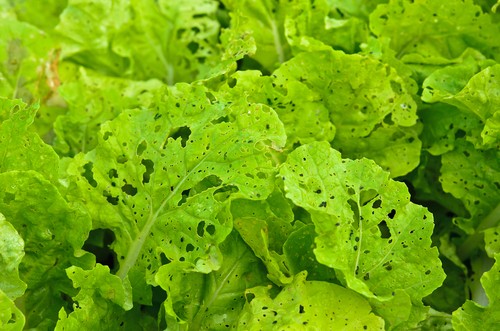
Another important part of gardening is pest control. If anything, the average American gardener spends more on chemicals for pest control, than they do for fertilizers. Not only do those chemicals cost a lot, but they aren’t going to be available in a post-disaster world. Besides, eating all those chemicals isn’t really good for your family.
The crazy thing is that there is a lot that can be done to control pests naturally. Some types of plants naturally act as insect repellants. Intermixing those through your garden will do a lot to keep the rest of the plants healthy.
Likewise, there are a number of beneficial insects, like ladybugs and praying mantis, which eat many of the insects which are there to kill your plants. A healthy population of these insects goes a long way towards keeping your garden healthy, without using chemicals.
Even some of the most common gardening chemicals, like Roundup, have natural alternatives, which work just as well and can be made from readily available ingredients. A natural alternative for Roundup, for example, can be made of vinegar, Epson salt and Dawn dishwashing liquid. I’ve used this formulation successfully for years.
Watering
For me, one of the most important parts of my gardening is watering. That’s because I live in a hot, dry climate. I need to water my gardens regularly, in order to keep things from dying. But here’s the rub; in a post-disaster world, where water is scarce, how are you going to keep your garden watered? This was a challenge for me.
To start with, I did all my watering at night, when the water would have an opportunity to soak into the ground, rather than just evaporating. I also had an underground watering system, using soaker hoses. This meant that I wasn’t wasting water.
In the event that the municipal water wasn’t available, I set up rainwater collection and I’m in the process of putting in a well. The well is necessary, as I get enough rainfall year-round for my garden. I have a pump, connecting my water storage tank to my subterranean watering system, so that I can use it without city water pressure. It, and the pump for the well, are both able to be run off of my off-grid power system.
If you and I are going to garden at the scale necessary to feed our families, we need to figure out how much water we will use and have a plan to harvest that much water, when the municipal water goes down. The gallon of water per day that people talk about needing for survival doesn’t take into consideration gardening. We’re going to need a lot more water than that.
Seeds
One other important thing I want to mention for survival gardening is the need to harvest and store seeds. It’s easy to go to the local garden center and buy the seeds you need for your garden or order them online. But we aren’t going to have those options available to use always.
The easy solution is to harvest and dry some of the seeds from each year’s crop, saving them for the next year. Seeds air dry easily and can be stored at room temperature, although keeping them in the freezer will help them last longer.
It’s About Changing Your Thinking
Really, the key here is changing your thinking about your gardening. If we think in terms of the typical vegetable garden, where we have access to everything at our local garden center, we’re not going to be ready for gardening in a post-disaster world. But if we can get ourselves to start gardening today, the way we’ll need to garden then, when the time comes, we’ll be ready.
Not only does gardening like we’re living in a post-disaster world help prepare us for what we’ll need to do, when the time comes, it also helps out our families by providing them with healthier food to eat. That makes it worthwhile, all by itself.
Others Are Watching Now:

















Thank You, Bill – for a good set of general guidelines. I am a 30+ year Master Gardener (In 2 disciplines, and I am certainly “set in my ways”. I would like to make 3 separate points. 1.) I use Only “Dense-pack” planting methods – also known as Bio-Intensive. My 1/4 acre garden grows about the same amount of food as someone else’s 3/4 to 1 acre garden. My rows are elevated (bunkered) about 10 inches and the porous growing soil goes about 18″ deep. Rows are 4 or 5 varieties wide ( 6″ spacing) with a 18″ wide walkway between them, covered in White Dutch Clover ( 3″ tall). 2.) If I see ANY spot of Bare Soil showing Anywhere – I cover it quickly. This gives my plants (All of them) a break from summer heat, protects All of the Soil Micro-Organisms, and reduces watering volume by 30 to 60 %. I use Only Drip watering pipes. 3.) If you use Any Seeds that are Not Open-Pollinated (NON-HYBRID), heritage varieties, or plant Any “Set-Outs” that you buy from a store, you are Way off the mark. You will get what you don’t expect, and Very Little Nutrition. and 4.) If you are placing Real Humus (Matured Cold Compost) around your plants (Not in the soil), you will be Richly Rewarded. Most folks do not know how to produce Humus from Cold Compost. So what they get is a Lot of Mulch – Good for Insulation and Water conservation – but Useless for plant nutrition. This overall Gardening Method is Knowledge Intensive – NOT Labor Intensive !
.In Florida, the best pest control is to dig that garden up in January. Before global warming, the robins would arrive in the Jacksonville area during the last week of January.. Our garden was dug and the birds would prowl the area, digging for bugs and grubs. Potatoes and English peas went in the ground on Valentine’s Day, per local tradition, and the peas would bear before aphids appeared. We double dug, piled up the soil, had ditches between beds filled with leaves to hold water. Each area and soil type has its peculiarities, but North Florida is an easy place to garden as long as you keep enriching your soil.
Your user name is skip the bs but you believe in the fairy tale of global warming? Get real.
Bill, Please share the formula (exact proportions) for a natural alternative for Roundup that you say you make with vinegar, Epson salt and Dawn dishwashing liquid–the one you say you have used successfully for years. Thank you,
Hi Bill, My go-to crop for SHTF is the sweet potato as it survives the STUN method of growing (Sheet Total Utter Neglect), it’s pest resistance, it produces prolifically, can be made into so many things and stores well, plus you can eat the greens. I would also be interested in the recipe for “natural Roundup” if you are willing to share. Thank you.
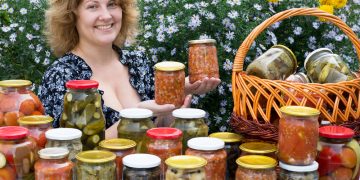
Hey, Bill. Thanks for the article. I would have liked to see something about canning. I’m sure that most gardeners also do some canning. I’ve been canning my container garden produce for as long as I’ve ha a garden. It’s really not that labor intensive when I use “cold-pack’. Prepare the fruit, warm it a bit, along with the jars, and cover with boiling water. Put it in the canner. I’ve even gotten to the point of using an asparagus cooker, which nicely holds one quart jar, to can leftovers whenI make a big pot ot stew. I love stew.. So, I have stew for to nights and can a quart for a “fast food” meal is I get home late after being out after dinner time. Yum! As someone said, “Yes, we can.”
Still kind of new gardening but I have had some success with aquaponics. IBCs are easy to find for your tank and grow bed but depending on location a grow media might be a deal beaker. I got lucky with $45 per IBC delivered and $10 for half ton of gravel. So for less than $100 per system with all the hardware and pump. I use feeder gold fish, $.17 a fish. If funding allows this year I might try going solar. Just trying to get people to think a bit outside the box. If you can run a system all year you could raise and grow all the food you would need. Sure a diet of fish and veggies everyday would get old but it would provide everything you need. I also did some container gardening and would water them from my aquaponics system. If anyone is interested, look up IBC aquaponics and don’t by back yard liberty I think it is called. You can learn everything you need to get going from free sources like YouTube and blogs.
Thanks Bill for your Expertise and comments through your emails. It is so good to help us get out of our box and enter our new paradigm of thinking. I am 63 a lifetime farmer and I see this world becoming a total deceit of things, our huge corporations whether it be chemical companies, drug industry, medications prescribed, medical industry, pharmacist, doctors, and above all lawyers. What a shame that we have to get 2nd and 3rd and 4th opinions,. Very little trust. And it is all because of the almighty dollar.. Sorry for pessimism, I praise my God for his word of truth and the free choice he gives each one to believe in it.
I have more seed varieties in more quantity refrigerated than everyone I know put together. There’s no substitute. My greatest agricultural challenge remains graft stock because the best cultivars are propagated by grafting. I haven’t got into liquid nitrogen graft stock storage and it’s highly technical regarding getting precisely right which is different for each variety and it requires a lot of testing to get the exact right protocol to not kill the graft stock. Perhaps some of the world will still be functional enough after I’ve moved far from troubles for me to order live graft stock or starts.
Good overview article, thank you.
Seed germination can be challenging, don’t underestimate it.
In addition to seed germination, we’re just starting to learn using cuttings to produce next generation plants. Just starting out doing it, will report our experiences as we go. Many plants such as sweet potatoes, white potatoes, tomatoes, many fruit plants, practically all herbs are some examples.
On compost, get some chickens, they produce the best compost with NPK values in the 5-4-5 range. We use wood sawdust pellets for their coop bedding for the carbon, chicken poop for the nitrogen, phosphorous and potassium. It needs about a month typically to go from the ammonia smell to where it smells like good dirt. We have enough chickens (20) to produce about a 55 gallon barrel of compost per month, perfect amount for our 2000 sq ft garden. We still compost house scraps and.
The other thing about compost is you can make great “Compost Tea” to help with establishing and maintaining the microbiome. Get a 55 gallon barrel, a porous bag, fill the bag with chicken compost and suspend in the barrel. Mix in about a cup of molasses for food for the bacteria and fill with filtered water. Using an inexpensive fish tank air pump to inject oxygen and stir every couple of days and you’ll be able to produce 50 gallons of tea per month. Drop a cheap 1/8 hp sump pump, connect a garden hose and root and leaf water the garden in a snap.
Similar teas can be made from worm castings (the best), fish emulsion, composted food scraps, etc.
For pest control, there is another tea you can make that will inoculate your plants with a specialized bacteria called Trichoderma. Trichoderma will attack the colonies of bugs that attack your plants but will leave the plant and roots alone. Buy a bag of cultured Trichoderma from your local garden or box store and typically it will also have an array of beneficial microbes that break down the nutrients as well
Don’t forget in addition to the organic NPK from compost to add the minor elements using Azomite.
We’re in Florida where we can grow 10 months of the year, so we fertilize every 30 days with the compost and every 45 days with the Azomite except in August and September when we’re restoring the soil with a nitrogen fixing cover crop like beans, Sunhemp, perennial peanut, etc
Greenhouses aren’t only for winter and mild climates, they work great in hot climates by converting them to shade tunnels. We live in Florida, so we use 6 mil plastic for late December to first of March to retain heat and protect against cold winds and occasional frost, We are open air from mid November to late December and again from late February to late April. We cover our greenhouses with 50-60% shade cloth from late April to mid November. By controlling the environment this way, we get a continuous growing season from the first of October to late July, adjusting the plants from cold to cool to warm to hot weather. In late July we sow some sort of legume to restore soil health and renitrogen the soil from late July to late September.
Last and definitely not least, if you’re on city water, start using hose end water filters that have activated carbon or catalytic carbon in them. Removing chlorine is a game changer for the microbiome and the essential microbial activity to break down the nutrients for uptake by the plants.
I’m blessed on the new garden site to have available both city and well water. And the city water line here is between their well and the treatment area- so wonder of wonders it is untreated deep well water. I’m slowly adding and adding raised beds to the new garden space. The mixed orchard is two years old now. I have one more new tree to plant – it’s going the shade the window where we sit to eat. A 4ft tall carefully raised dwarf mulberry will center an herb bed and create shade as it grows to its normal 12-15 foot height. My Christmas tree for two years was an 18” blue spruce that will soon be planted in a place to give the home one more layer of invisibility to the small town below. My compost pile gets the old hay and chicken droppings from the chicken coop. My kitchen scraps go in a 100+ gallon container covered with a tarp. There is a low faucet on one side with a short piece of old hose for filling containers I use in different garden areas. A water hose reaches it from a nearby waterline. I alter watering with well water then compost tea as needed. I have blackberries and raspberries to add in a new bed near a big pine tree so I can use the pine needles as mulch. My new, nearly ready, raised strawberry bed is nearby and some old multilayer towers will also hold strawberries. Further from the home I’m setting up a new sitting space surrounded by 7 grape vines planted last year and 4 more to set out this year. Five cups of mixed flowers, herbs and garden seeds will be raked in around the outside. They are left overs from the last 3 years. I have pvc pipe for playing with hydroponics for mostly greens. If it turns out well I’ll add more. I’m setting up drip systems this year. I used hoses last year but I’m nearly 80 and looking for less labor intensive methods. I had drip Systems in my old garden. These will run from 55 gallon drums here. I’m using small solar panels, tiny pumps, and a mixture of drip and misting systems volume controlled by timers. My last home had an off grid solar system I built from mostly used panels and reconditioned batteries. Here solar and wind are back ups with sufficient to run the home. The garden is exclusively solar. I have seed for grain and syrup production but I still need to prepare the areas for that. A grinder press for the cains is not too expensive. And excess seed is great chicken feed. I do have a grain mill but I don’t have good growing areas for sufficient grain to make pasta and breads for a full year but with corn and millet we can come close or get by. I’d also like to try aquaponics but with our areas native crawfish and fish. Perhaps by Fall.