

















Wants vs Needs
As the war in Ukraine ramped up, I was researching survival ordeals and one trend that I noticed, was that it was not uncommon, due to widespread power outages, for a young person to leave home in search of a place to charge their smartphone, only to never to be seen again.
It is natural to want more information immediately following a disaster. Under certain circumstances, it can be lifesaving, but it is typically not something that you should risk your life for.
Listening to the news is not a survival need. Most of the time, you are at least as likely to survive without it. In the immediate aftermath of disasters information is very often wrong, and outside of a narrow set of circumstances, not being able to communicate does not kill survivors.

When phones do work after a disaster, survivors often feel an urgent desire to check on people they care about. In emergency planning parlance, this type of communication is known as a “welfare check”, and the call volume of welfare checks often overloads the operational cell towers. Before phone companies developed the technology to assign elevated priority to certain types of calls, welfare checks regularly overloaded cell towers, preventing true emergency calls from getting through and preventing victims from obtaining lifesaving assistance.
Not so long ago, my ancestors in the western US often waited for years between letters from family on the east coast and in Europe. Receiving a letter from family was a big event where families learned of births, marriages, and deaths. Even in my lifetime, long distance phone calls used to be prohibitively expensive and international phone calls were even more so, so we wrote letters that were sent by airmail.
If your ancestors could wait years for news of loved ones, you can wait days, weeks or months. Create a family communications plan and when disaster strikes, focus on your immediate survival needs, help people who are close enough to help, execute your plan, and don’t risk your life to charge your cellphone or obtain local news that likely amounts to gossip and rumors.
Don’t Be Tech Dependent
One way to look at self-reliance is that it is all about not being dependent on things. Today, most people seem to be increasingly dependent on smartphones to the point that an alien observer might conclude phones are some sort of prosthetic appendage that we depend on to live, and unfortunately for your children, if you have any, this dependence is likely to increase exponentially as kids become dependent on AI for virtually anything that their ancestors used their minds for.
A few things some people can no longer do without smartphones:
- Look Up Answers to Questions – Do you have options other than search engines such as a paper phone directories, maps and books?
- Communicate – The ability to communicate even a couple of miles saves a lot of work and reduces exposure. Do you have a battery powered radio to hear news or emergency instructions?
- Navigate – Can you get from A to B without GPS? Do you have a compass and paper maps and know how to use them? A few months ago, some friends took our 4-year-olds out off-roading for the afternoon. When I pulled out a paper topographical map to note the route, the other dad looked at me like an alien popped out of my chest … and he is in the Air Force Reserve. Having a map and compass and knowing how to them is basic preparedness. It is not “nice to know.” As it turns out, a significant portion of the human brain evolved to help us map our world, navigate it, track the location of resources and threats, and adapt to new places. Recent studies have demonstrated habitual GPS use harms the human brain. (Bohbot VD, 2020) (Javadi, 2017)
- Respond to Emergencies – Is your first aid plan some app on your phone that doesn’t work without internet connectivity? If so, you’re not alone. Entire municipalities emergency response systems are totally dependent on apps that require connectivity to work. If that’s your emergency plan, you need a new plan.
- Remember Phone Numbers and Addresses – Before cellphones, people used to remember important phone numbers and addresses. If all your emergency contact info is in your phone, what’s your plan if there is a catastrophe and you end up with no phone, no connectivity? The really important numbers will fit on a laminated trifold the size of a credit card in your wallet … if you’re old fashioned enough that you still carry a wallet, that is. Carrying a small trifold in your wallet might be an inconvenience to some of you, but it could save your life. The choice is yours.
- Check the Weather – Today, you might just need to know whether to bring an umbrella or if you have to make time to shovel snow. In a catastrophe, you may need to know if a storm will give you cover for a nighttime escape to the mountains, what direction the wind is going to carry fallout or whether a hard frost is going to turn 200 Lbs of winter squash to mush if you don’t get it off the vine and out of the cold. Before weather apps and weather forecasters, each home had a battery powered radio, an analog weather station, and a farmer’s almanac, and it seems like the accuracy was a little better, at least out in the country.
- Cook – Do you look recipes up on your phone while you cook? How are you going to cook with no internet connectivity? You can add recipes to your survival library. If you do, be sure to add books on cooking with food storage, cooking with Dutch ovens, woodstoves, campfires and camping stoves.
- Listen to Music – Do you stream your music? If so, it’s time to invest in a music library.
- Play Games – If you play games on your phone, do they need internet connectivity to work? It may not sound like a survival need, but if you ever spend any time in a shelter, you’ll want some entertainment because there are flurries of activity followed by long periods of waiting. It doesn’t matter if it’s a safe room, a storm shelter, a fallout shelter or an American Red Cross shelter. If you don’t sock away some standalone games, compact books, a miniature deck of playing cards or a pack of Uno cards, you’ll wish you did, especially if you have kids. Keeping kids quiet and busy and giving them some sense of normalcy is important in emergencies.
- Worship – Even at church, everybody is looking up hymns, reading scripture, and looking up prayers or ordinances on their phones instead of using books, which is fine, until phones no longer work.
It’s bad enough that overuse of smartphone creates dependency, decreases your chances of survival, and is bad for your brain, but soon, increased dependence on AI will result in increased dependency, even poorer chances of survival, and increased brain rot.
If you add that to the total loss of privacy smartphones cause, and the harm that social media is doing to our kids and weigh that against the small measure of convenience that we gain in trade, it sounds like a really bad deal to me.
So, how do you fix all this? You could trade your smartphone in for a regular cellphone. More and more educated people are choosing to do just that all the time. For the rest of you convenience addicts, there some things that you can do without giving up your smartphones.
Prepare Your Smartphone to Function Offline
That means without connecting to the internet (via Wi-Fi, satellite internet access, or data), voice or SMS. This takes some doing, but it can be done. If you take the time to build a Digital Survival Library, your smartphone can continue to be a powerful survival tool even without the internet.
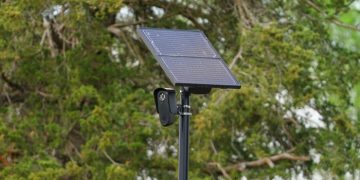
Have a way to keep your smartphone charged when the power is down. That way it will still function without the electrical grid.
Prepare a Family Radio Communications Plan
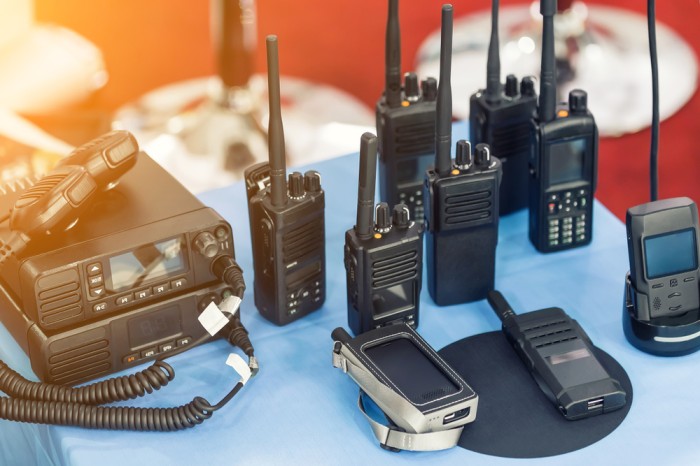
In the wake of catastrophes, the first communications to be reestablished are typically radio communications because all you need is two radios, power, and a plan. A family communications plan should include radio communication in case phones and internet are not working.
In its simplest form, a radio communications plan involves calling on a given frequency at a given time. Your plan might be to call from 11:00pm to 11:15pm on the 1st and the 15th day of each month on a specific frequency.
I strongly recommend participating in a regular radio net to maintain familiarity with your equipment and to ensure that it stays charged and doesn’t get tucked away in a closet and forget about. If that happens, it may not work when you need it to.
If you family is so far away that the radio equipment necessary to communicate reliably over that distance is too expensive or beyond your skill level, then make friends with amateur radio operators near you and near your family members and ask them to relay messages on your behalf. Most radio operators are happy to do so, and they are forbidden from charging for this service.
Summary
Don’t risk your life unnecessarily. Use technology but don’t become dependent on it. Create a small hard copy of important contact information, including addresses and keep it in your wallet. Make a family radio communications plan and practice it regularly.
Others Are Watching Now:






References
Bohbot, V. D., D. L. (2020, April 14). Habitual use of GPS negatively impacts spatial memory during self-guided navigation. Retrieved from pmc.ncbi.nlm.nih.gov:
https://pmc.ncbi.nlm.nih.gov/articles/PMC7156656/
Javadi, A. E. (2017, March 21). Hippocampal and prefrontal processing of network topology to simulate the future. Retrieved from nature.com:
https://www.nature.com/articles/ncomms14652











































DONT PANIC
With small laptops, phones and radios, if there is a power outage, eventually rechargeables will wear down and you will have to recharge them. If its regular USB, they make a power pack for this purpose, and your car can support them through a power port adapter too.
Its been said a solar event could mess up communications, too, and if is bad enough, it could mess things up until repairs can be made, which could take a while, in which case your news might come by word of mouth from your neighbors, so, a good backup plan would be to get to know your neighbors while he lights are still on, and also to know and learn your general area without help from google maps, maybe even buy a couple paper maps or download and print some pages just to have them.
Your car: Its all done with computers, so if innerwebs goes down, so does your local gas station, so, how much gas is in your car, what do the tires look like, air and fuel filter, fuel mileage, and so forth, and do you keep spare fuel, how much, what quality, how old, and and and. Think ahead a little bit, food pantry, first aid and heating and comfort, but again, and above all, DONT PANIC. Blessed be